
Introduction
Coagulation and flocculation are essential steps in modern water purification, yet many homeowners are only vaguely aware of what these processes do or why they matter. A practical coagulation flocculation water treatment home safety checklist helps bridge that gap by turning technical treatment concepts into simple, observable actions that support safer drinking water at home. Whether your water comes from a municipal supplier, a private well, a rainwater system, or a household treatment unit, understanding these treatment stages can help you identify warning signs, ask better questions, and maintain safer water conditions.
At a basic level, coagulation and flocculation are designed to remove tiny suspended particles that do not settle out easily on their own. These particles can include clay, silt, organic matter, microbes attached to solids, and other fine contaminants that make water cloudy. During coagulation, a chemical coagulant is added to destabilize those particles. During flocculation, gentle mixing encourages them to collide and form larger clumps, called flocs, which can then be removed more effectively by sedimentation, filtration, or both.
For homes connected to public water systems, these processes usually happen at a treatment plant before water ever reaches the tap. For some rural households, small community systems, emergency setups, or specialized home and off-grid systems, similar principles may apply at a smaller scale. In either case, residents benefit from understanding the process because treatment failures, source-water changes, plumbing conditions, and maintenance lapses can all affect final water quality.
This article explains what coagulation and flocculation are, where water-quality problems commonly begin, what safety risks to watch for, how to inspect and test household water conditions, and what prevention steps make the biggest difference. It also addresses common myths and reviews the role of water regulations. For broader background, readers may also explore resources on water treatment systems, deeper technical material in this complete guide, and related information on water science.
What It Is
Coagulation and flocculation are linked but distinct treatment stages used to clarify water. They are especially important when water contains fine suspended solids that are too small to settle naturally. These solids often carry electrical charges that keep them separated from one another. Because they remain dispersed, the water stays turbid, and filtration becomes more difficult.
Coagulation
Coagulation is the initial chemical step. A coagulant, such as aluminum sulfate (alum), ferric chloride, or another approved chemical, is introduced into the water. The coagulant neutralizes the electric charges on fine particles, allowing them to stop repelling one another. Once destabilized, the particles are more likely to come together.
Flocculation
Flocculation follows coagulation. Water is gently mixed so the destabilized particles can collide and bind into larger, visible masses called flocs. These flocs are heavier and easier to remove through settling tanks, filters, or a combination of both. Proper flocculation requires controlled mixing. Too little movement may not form strong flocs, while too much movement can break them apart.
Why these steps matter in household safety
Even if coagulation and flocculation occur at a central treatment plant rather than inside the home, the quality of those steps affects what arrives at the tap. Poor coagulation can leave excess turbidity, reduce disinfection performance, and allow more particles to pass into distribution systems. Since some microbes and contaminants can attach to solids, effective particle removal helps support overall water safety.
For homeowners using private systems, package plants, emergency treatment setups, or rainwater treatment, knowing the basics of coagulation and flocculation can improve operation and reduce mistakes. If you are researching treatment principles in more detail, the article on causes and sources offers useful context on why water becomes difficult to treat in the first place.
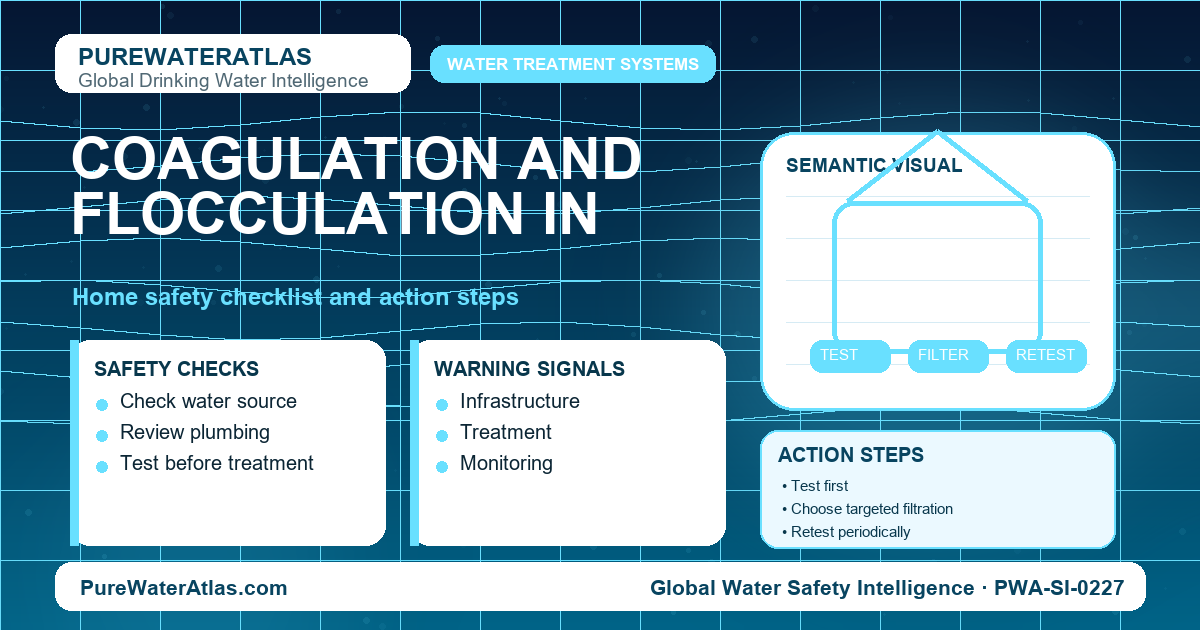
Simple household checklist: understanding the process
- Know whether your home uses municipal water, well water, cistern water, or another source.
- Find out whether coagulation and flocculation occur at a utility plant, community system, or on-site treatment unit.
- Read your utility’s annual water-quality report if available.
- Identify any home treatment devices that affect turbidity, sediment, or particulate removal.
- Keep records of filter changes, maintenance visits, and water-quality test results.
Main Causes or Sources
Water-quality problems that make coagulation and flocculation necessary usually begin at the source. Surface water sources such as rivers, lakes, and reservoirs often contain suspended soil, algae, natural organic matter, and runoff from storms. Groundwater is usually clearer, but it can still contain iron, manganese, fine sediments, and seasonal changes that complicate treatment.
Natural sources of turbidity and suspended matter
- Soil erosion: Rainfall and land disturbance wash fine particles into streams and reservoirs.
- Algae and plant material: Warm weather and nutrient-rich conditions can increase organic particles in source water.
- Natural organic matter: Decaying vegetation contributes color, odor, and dissolved or particulate organics.
- Seasonal turnover: Reservoir mixing can change turbidity and organic content over time.
- Wildfire and drought impacts: Burned watersheds and low-flow conditions can alter particle loads and treatment needs.
Human-related causes
- Construction activity: Earthmoving can send large amounts of sediment into nearby water bodies.
- Agricultural runoff: Sediment, manure, and nutrients can affect source-water quality.
- Industrial discharge: Depending on controls, waste streams may influence solids and chemical content.
- Urban stormwater: Roads, rooftops, and developed areas carry particles and pollutants into source waters.
- Distribution system disturbances: Main breaks, repairs, or flow changes can stir up settled material.
Household-level contributing factors
Even if treatment is effective at the plant, conditions inside the home can still create concerns. Corrosion, plumbing debris, neglected filters, sediment in storage tanks, and biofilm inside fixtures can all influence water clarity and confidence in safety.
This is where a coagulation flocculation water treatment inspection mindset becomes useful. Homeowners should not assume all water-quality issues originate at the utility. Internal plumbing and storage conditions often play a role.
Checklist: main sources to review at home
- Check whether recent storms or flooding affected your area’s water source.
- Ask your utility if treatment changes were made due to seasonal turbidity or algae.
- Inspect household pre-filters for sediment buildup.
- Review whether your home has old galvanized pipes, scaling, or visible corrosion.
- Examine storage tanks, cisterns, or rainwater systems for settled material.
- Note whether cloudy water appears after plumbing repairs or local water-main work.
Health and Safety Implications
Coagulation and flocculation are not just about making water look clear. They also support public health by improving removal of particles that may shield microorganisms, interfere with disinfection, or carry other contaminants. When these steps are poorly controlled, the result may be higher turbidity, reduced treatment efficiency, and greater concern about microbial safety.
Microbial concerns
Fine suspended particles can protect bacteria, viruses, and protozoa from disinfectants. If particles are not removed effectively, chlorine or other disinfectants may not reach all microorganisms efficiently. This does not mean every cloudy sample is dangerous, but it does mean turbidity can be an important signal that treatment performance or distribution conditions need attention.
Households interested in pathogen-related risks may benefit from broader reading in water microbiology and from reviewing discussions of health effects and risks.
Chemical and operational concerns
Improper coagulant dosing can also create problems. Underdosing may leave too many particles behind, while overdosing can produce excess sludge, poor settling, and in some systems, residual treatment chemicals if subsequent steps are not properly managed. In regulated public systems, treatment operators monitor these variables carefully, but breakdowns, unusual source-water events, or equipment failures can occur.
Aesthetic issues versus safety issues
Not all water problems are equally hazardous. Cloudiness, color changes, or sediment can be aesthetic problems, operational warnings, or both. A harmless burst of trapped air can make water appear milky for a few moments, while persistent turbidity may indicate sediment disturbance or a larger issue. Homeowners should learn to distinguish temporary appearance changes from signs that deserve testing or professional evaluation.
Coagulation flocculation water treatment risk signs
- Water that remains cloudy after standing for several minutes.
- Visible particles, flakes, or sediment in drinking water.
- Sudden changes in water color after storms, flooding, or utility repairs.
- Filters clogging much faster than normal.
- Unusual taste or odor combined with turbidity.
- Boil-water notices, treatment advisories, or utility service alerts.
- Repeated gastrointestinal illness in the household with suspected water-quality issues.
Home safety checklist: health-focused actions
- Do not ignore persistent cloudy water, especially if accompanied by odor or color changes.
- Use an alternative drinking-water source if local authorities issue a warning.
- For private wells or cisterns, test after floods, heavy storms, or long periods of nonuse.
- Keep vulnerable household members in mind, including infants, older adults, pregnant individuals, and immunocompromised people.
- Seek professional advice when multiple warning signs occur together.
Testing and Detection
Household water safety decisions are strongest when based on direct observation plus targeted testing. A proper coagulation flocculation water treatment household testing approach does not mean homeowners need to run a full treatment lab. It means using practical methods to detect signs of poor clarification, contamination risk, or treatment failure.
Visual inspection
Visual checks are simple and useful. Fill a clear glass with cold water and observe it under good light. If the cloudiness clears from the bottom upward within a minute or two, trapped air may be the cause. If the cloudiness persists or particles settle to the bottom, sediment or suspended solids are more likely. Also inspect toilets, faucet aerators, filter housings, and appliance screens for buildup.
Utility reports and system records
Public water systems typically publish annual consumer confidence reports or similar water-quality summaries. These may include turbidity values, treatment information, source descriptions, and compliance details. If you use a private treatment unit, review maintenance logs, installation documents, and service reports. Records often reveal gradual changes before obvious problems appear.
Field indicators for homeowners
- Turbidity observations: Persistent cloudiness may indicate unresolved particulate matter.
- Filter loading rate: Rapid clogging can signal elevated sediment or poor pretreatment.
- Staining: Brown, yellow, black, or reddish stains may point to metals or sediment issues.
- Tank sediment: Material collecting in storage systems can indicate poor source protection or treatment gaps.
Lab testing
Certified laboratory analysis is the best option when there is concern about contamination or ongoing water-quality changes. Tests may include turbidity, total coliform bacteria, E. coli, pH, iron, manganese, total dissolved solids, hardness, and site-specific contaminants. If your concern is tied to poor coagulation or flocculation upstream, turbidity and microbial indicators are particularly relevant, though a laboratory or local health authority can help determine the right panel.
When to test
- After flooding, wildfire runoff events, or severe storms.
- When water suddenly changes in clarity, color, taste, or odor.
- After plumbing repairs, new treatment installation, or prolonged vacancy.
- When a private well or cistern has not been tested recently.
- When family members suspect water-related illness.
Inspection checklist for the household
A practical coagulation flocculation water treatment inspection routine may include:
- Inspect incoming water at the first tap after the pressure tank or main entry point.
- Check pre-filters, cartridge housings, and sediment traps.
- Open and inspect faucet aerators for trapped debris.
- Review water softeners, carbon filters, or UV units for overdue service.
- Look inside toilet tanks or storage vessels for settled sediment or slime.
- Confirm that treatment bypass valves are in the correct position.
- Document changes with dates, photos, and notes.
Prevention and Treatment
Prevention begins with source awareness, system maintenance, and prompt response to unusual water conditions. For most households, the goal is not to perform coagulation and flocculation manually, but to support the treatment chain by keeping home systems clean, using proper filtration, and responding quickly when conditions change. A strong coagulation flocculation water treatment home safety checklist emphasizes preparation as much as reaction.
Source protection
If you rely on a private well, cistern, or rainwater system, keep contaminants out before they ever reach treatment equipment. Protecting the source lowers the burden on filters and disinfectants and reduces the chance that suspended solids will overwhelm household systems.
- Maintain proper drainage away from wells and storage structures.
- Seal well caps and access points securely.
- Keep septic systems, animal areas, chemicals, and fuel storage well away from water sources.
- Clean roof catchments and gutters if using rainwater collection.
- Remove accumulated sediment from tanks on a scheduled basis.
Appropriate treatment selection
No single device solves every water problem. Sediment filters remove larger particles, but very fine turbidity may require more advanced pretreatment. Carbon filters improve taste and odor but are not designed to handle heavy sediment loads. UV disinfection works best when water is already clear, because particles can block UV light. Reverse osmosis has specific strengths but may not be ideal as a first defense against large amounts of suspended matter.
If your source water regularly becomes cloudy, discuss pretreatment design with a qualified water-treatment professional. In some settings, package clarification systems or professionally managed coagulation/flocculation steps may be warranted before filtration and disinfection.
Coagulation flocculation water treatment maintenance tips
- Replace sediment cartridges on schedule or sooner if pressure drop increases.
- Sanitize filter housings and storage tanks according to manufacturer guidance.
- Flush infrequently used taps to reduce stagnation and sediment release.
- Clean faucet aerators and showerheads regularly.
- Inspect pressure tanks, cisterns, and booster systems for internal buildup.
- Keep service records for all treatment units.
- Never guess at chemical dosing in small treatment systems; use trained guidance and verified instructions.
Coagulation flocculation water treatment protection steps
When water quality is uncertain, households can reduce risk with simple protective measures:
- Use bottled or otherwise verified safe water for drinking, infant formula, and cooking during active advisories.
- Follow boil-water instructions exactly when issued by health or utility authorities.
- Do not rely on taste or appearance alone to confirm safety.
- Isolate and correct plumbing sources of debris, corrosion, or cross-connection concerns.
- Arrange professional assessment if your home system repeatedly shows turbidity or sediment issues.
Response checklist when warning signs appear
- Stop using visibly abnormal water for drinking until the cause is understood.
- Check whether neighbors have the same issue.
- Contact your water utility or local health department if on a public supply.
- Collect samples as instructed if testing is needed.
- Inspect filters, tanks, and fixtures for sediment release or equipment failure.
- Disinfect and flush systems only when appropriate to the specific problem.
Common Misconceptions
Water treatment terms often sound technical, so misconceptions are common. Clearing up these myths helps homeowners make better decisions and avoid false reassurance.
Misconception 1: Clear water is always safe water
Water can look perfectly clear and still contain microbes, dissolved chemicals, or contaminants without any visible sign. Coagulation and flocculation improve clarity, but appearance alone is not a guarantee of safety.
Misconception 2: Cloudy water is always dangerous
Not necessarily. Temporary cloudiness may come from harmless air bubbles. However, persistent turbidity should still be taken seriously until the cause is identified, especially if it follows storms or repairs.
Misconception 3: Household carbon filters fix all treatment problems
Carbon filters are useful for taste, odor, and some chemical reduction, but they are not universal solutions. They can become fouled quickly if the water carries heavy particulate loads and may not address microbial hazards by themselves.
Misconception 4: More treatment chemical always means better treatment
Coagulation chemistry must be carefully controlled. Too little chemical can fail to destabilize particles, while too much can create new operational issues. Effective treatment depends on the correct dose, proper mixing, and successful downstream removal.
Misconception 5: Private well owners do not need to think about coagulation and flocculation
Even if a private well does not use formal coagulation/flocculation, the principles still matter. Fine suspended solids, iron, manganese, and organic material can influence filtration, disinfection, and household water safety. Understanding clarification helps owners choose the right treatment sequence.
Misconception 6: One normal test result means the problem is solved forever
Water quality changes over time. Seasonal shifts, storms, infrastructure changes, and maintenance issues can all alter conditions. Ongoing observation and periodic testing remain important.
Regulations and Standards
Water treatment is governed by regulations, operator standards, and performance targets designed to protect public health. In many countries, public water systems must meet legal limits for turbidity, microbial indicators, disinfectant levels, and other water-quality measures. Coagulation and flocculation play a major role in achieving those standards, especially for surface-water treatment.
Public water systems
Municipal and community systems are typically required to monitor source water, treatment performance, and distribution quality. Operators adjust coagulation and flocculation based on raw-water conditions, pH, temperature, and other variables. Treatment plants also track sedimentation, filtration, and disinfectant performance to verify that water remains within required limits.
Consumer reporting and transparency
Many utilities must provide customers with periodic water-quality reports. These reports often include contaminant results, treatment descriptions, and explanations of any violations or corrective actions. Homeowners should review these documents instead of waiting for obvious problems at the tap.
Private systems and homeowner responsibility
Private wells and some small systems may not be regulated in the same way as public supplies. That means homeowners often carry direct responsibility for testing, maintenance, and treatment decisions. Regulations for private systems vary by region, but safe practice always includes routine inspection, periodic laboratory testing, and prompt response to changes in water quality.
Standards that matter to homeowners
- Operational turbidity goals or limits for treated water.
- Microbial monitoring requirements for public systems.
- Certified product standards for filters and treatment devices.
- Local requirements for well construction, backflow prevention, and plumbing safety.
- Testing recommendations from health departments for private water sources.
Checklist: how to use standards at home
- Read your utility’s annual report and keep a copy.
- Verify that installed treatment devices are certified for their intended use.
- Follow local health department guidance on private well testing frequency.
- Schedule professional inspection after floods, contamination events, or major plumbing changes.
- Do not assume compliance at the treatment plant guarantees perfect conditions inside household plumbing.
Conclusion
Coagulation and flocculation are foundational steps in water treatment because they help remove the fine particles that make water cloudy, complicate filtration, and sometimes interfere with disinfection. For homeowners, the value of understanding these processes lies in practical awareness. A reliable coagulation flocculation water treatment home safety checklist includes knowing your water source, watching for persistent turbidity or sediment, reviewing utility reports, maintaining home treatment equipment, and arranging testing when warning signs appear.
Just as important, households should recognize the difference between normal variation and meaningful risk. Temporary cloudiness from air bubbles may be harmless, but recurring sediment, storm-related changes, rapid filter clogging, or official advisories deserve prompt attention. The best approach combines observation, maintenance, documentation, and professional support when needed.
By applying sound coagulation flocculation water treatment maintenance tips, using sensible coagulation flocculation water treatment protection steps, and responding to coagulation flocculation water treatment risk signs early, homeowners can reduce uncertainty and improve confidence in the water they use every day. Continued learning also helps; resources on water treatment systems, water science, and water microbiology can provide useful next steps for anyone who wants a deeper understanding of water quality and household safety.
Read the full guide: Water Treatment Systems Guide
Explore more in this category: Water Treatment Systems Articles