Introduction
The municipal water treatment process best filters homeowners, facility managers, and water professionals evaluate are those that work with-not against-the way public water is already treated. Municipal water systems are designed to make source water safe for distribution at a community scale. They typically remove sediment, reduce pathogens, control corrosion, and apply disinfection before water ever reaches a building. However, water quality can still change between the treatment plant and the tap due to aging infrastructure, disinfection byproducts, local plumbing materials, taste and odor issues, or contaminants that are difficult to remove completely with conventional methods.
That is why point-of-use and point-of-entry treatment systems remain important even when a home or business is connected to a regulated city supply. Choosing the right solution requires understanding the treatment steps used by municipal systems, the contaminants most likely to remain, and how different technologies compare in performance, cost, and maintenance. In many cases, the best filter is not a single product but a treatment strategy tailored to the local water profile.
This article explains how municipal water treatment works, what issues can still affect finished water, and how to select effective post-treatment options. It also covers municipal water treatment process reverse osmosis systems, municipal water treatment process carbon filters, practical testing methods, maintenance needs, and a municipal water treatment process buying guide for making informed choices. For broader background on available technologies, readers can also explore /category/water-treatment-systems/ and the in-depth overview at /municipal-water-treatment-process-complete-guide/.
What It Is
A municipal water treatment process is the sequence of physical, chemical, and biological steps used by public utilities to convert raw source water into drinking water that meets regulatory standards. Depending on the source-surface water from rivers, lakes, and reservoirs, or groundwater from wells-the process can vary, but most systems include several common stages.
Typical stages in municipal treatment
- Source water intake: Water is drawn from a natural source and screened to remove large debris such as leaves, sticks, and trash.
- Coagulation and flocculation: Chemicals are added to destabilize fine suspended particles, allowing them to clump together into larger masses called floc.
- Sedimentation: The heavy floc settles out of the water in basins or clarifiers.
- Filtration: Water passes through media such as sand, gravel, anthracite, or other materials to remove remaining suspended solids and microorganisms.
- Disinfection: Chlorine, chloramine, ozone, or ultraviolet treatment is used to reduce bacteria, viruses, and other pathogens.
- Conditioning and distribution: Utilities may adjust pH, add corrosion inhibitors, or fluoridate the water before pumping it through distribution lines.
When people search for the municipal water treatment process best filters, they are usually not asking how the plant itself filters water. They are trying to determine which additional systems are best for addressing residual issues in treated municipal water at the home, apartment, office, school, or commercial site. These systems may include activated carbon filters, sediment prefilters, reverse osmosis units, ultraviolet disinfection devices, ion exchange softeners, specialty media for lead or arsenic, and whole-house combinations.
It is important to distinguish between municipal treatment and building-level treatment. Municipal systems are optimized for high-volume public health protection. Residential and commercial filters are optimized for polishing water quality, improving taste, addressing location-specific contaminants, and reducing exposure to substances that may enter or persist after the public treatment stage.
Main Causes or Sources
Even after municipal treatment, several factors can influence the quality of the water that comes out of the tap. Understanding these sources is essential when selecting the municipal water treatment process best filters for a specific property.
Source water contamination
Water utilities begin with raw water that may contain natural and man-made contaminants. These can include sediment, organic matter, agricultural runoff, industrial pollutants, metals, and microbial pathogens. Conventional treatment reduces many of these contaminants effectively, but treatment performance depends on source quality, seasonal variability, and plant design.
Distribution system issues
Water can degrade as it moves through miles of pipes, storage tanks, pumps, and service lines. Common problems include:
- Corrosion of pipes and fixtures: This may release lead, copper, iron, or other metals into the water.
- Biofilm growth: Microbial films can develop in sections of the distribution system or premise plumbing.
- Water main breaks or disturbances: These may temporarily increase turbidity or contamination risk.
- Disinfectant decay: Residual chlorine or chloramine may weaken over distance or time.
Disinfection byproducts
Disinfection is essential for preventing waterborne disease, but chlorine and related disinfectants can react with natural organic matter to form byproducts such as trihalomethanes (THMs) and haloacetic acids (HAAs). Utilities are required to control these compounds, but levels may vary across a service area.
Taste, odor, and aesthetic concerns
Many consumers seek extra treatment not because the water is unsafe, but because it has an unpleasant taste, odor, or appearance. Chlorine taste, earthy or musty odors, dissolved minerals, cloudiness from entrained air, and rust discoloration are common reasons people install filters.
Household plumbing and fixture materials
The quality of treated municipal water can be strongly affected by the plumbing inside a building. Older service lines, brass fittings, galvanized pipes, and water heaters can contribute metals, sediment, and corrosion products. Water that sits in pipes overnight may have different characteristics than freshly flushed water.
Readers interested in a more focused review of contamination pathways can see /municipal-water-treatment-process-causes-and-sources/ and additional resources at /category/global-water-quality/.
Health and Safety Implications
Municipal drinking water in regulated systems is generally much safer than untreated water, but that does not mean all risks disappear. The health significance of residual contaminants depends on their concentration, duration of exposure, and the vulnerability of the individual consuming the water.
Microbial risks
The primary goal of municipal disinfection is to control pathogens that can cause gastrointestinal illness and more severe infections. Failures in treatment or distribution can allow bacteria, viruses, or protozoa to reach consumers. Although outbreaks are relatively rare in well-managed systems, they can be serious when they occur.
Lead and copper exposure
Lead is one of the most important post-treatment concerns because it often enters water after it leaves the treatment plant. It can leach from lead service lines, solder, and some plumbing components. There is no safe level of lead exposure, especially for infants and children, where even low levels are associated with developmental and neurological harm. Copper can also leach from plumbing and may cause gastrointestinal symptoms at elevated levels.
Disinfection byproducts and long-term exposure
Long-term exposure to elevated disinfection byproducts has been associated with increased health concerns in some studies. Utilities monitor and control these compounds, but consumers who want further reduction often look to municipal water treatment process carbon filters or reverse osmosis systems for additional removal.
Nitrate, PFAS, and emerging contaminants
Some municipal systems may face challenges with contaminants such as nitrate, per- and polyfluoroalkyl substances (PFAS), pharmaceuticals, and industrial compounds. Not all contaminants are removed equally well by traditional treatment processes. In these cases, targeted filtration technologies become especially important.
Who is most vulnerable?
- Infants and young children
- Pregnant individuals
- Older adults
- People with weakened immune systems
- Kidney patients or individuals on medically restricted diets
These groups may need more conservative treatment choices and more frequent testing. A detailed discussion of risks and exposure pathways is available at /municipal-water-treatment-process-health-effects-and-risks/ and in the broader safety section at /category/drinking-water-safety/.
Testing and Detection
The best filtration decision starts with data. Without testing, it is easy to buy a system that addresses the wrong problem or fails to treat the contaminant of concern. Testing helps identify whether the issue is aesthetic, operational, or health-related.
Start with public water quality reports
Utilities typically publish annual Consumer Confidence Reports that summarize detected contaminants, disinfectants, treatment methods, and compliance status. These reports provide a useful baseline, but they do not fully represent what is happening in a specific building because water quality can change in local plumbing.
In-home and building-specific testing
Targeted testing at the tap is often the most practical approach. Key parameters may include:
- Lead and copper: Especially important in older homes and buildings.
- Chlorine or chloramine: Useful when evaluating taste, odor, and carbon filter selection.
- Hardness: Relevant for scaling, appliance protection, and softener sizing.
- Total dissolved solids (TDS): Helpful as a general indicator, though not a contaminant-specific test.
- pH and alkalinity: Important for corrosion potential.
- Nitrate, arsenic, PFAS, or other regional contaminants: Needed when local conditions suggest elevated risk.
- Bacteria: More common as a concern in building plumbing, private storage, or after repairs.
Lab testing versus field kits
Field kits can be useful for screening chlorine, hardness, pH, and some metals, but certified laboratory analysis is more reliable for lead, PFAS, disinfection byproducts, nitrate, arsenic, and many other health-related contaminants. For serious purchasing decisions, lab data usually provides the clearest guidance.
Signs that warrant further investigation
- Metallic, chemical, or musty tastes
- Staining on fixtures or laundry
- Blue-green, reddish, or black discoloration
- Scale buildup on kettles and faucets
- Cloudy water that does not clear
- Known lead plumbing or old service lines
- Recent construction, water main work, or plumbing repairs
Testing should also be repeated after a treatment system is installed. Verification confirms that the selected filter is actually performing as expected and helps establish a maintenance schedule.
Prevention and Treatment
Prevention and treatment work best together. Prevention focuses on flushing stagnant water, replacing problematic plumbing, using certified components, and monitoring water quality. Treatment adds a barrier that targets the contaminants most likely to remain in municipal water at the point of use or point of entry.
Municipal water treatment process treatment comparison
No single technology is ideal for every situation. The right choice depends on what you need to remove, how much water you use, whether whole-house treatment is necessary, and how much maintenance you are willing to perform.
Sediment filters
Sediment filters capture particulate matter such as rust, sand, silt, and scale. They are often installed as prefilters to protect downstream equipment.
- Best for: Visible particles, rust, and protecting carbon or membrane systems
- Strengths: Low cost, simple, effective as a first stage
- Limitations: Do not remove dissolved chemicals, metals, or pathogens
Municipal water treatment process carbon filters
Activated carbon is one of the most common and useful technologies for treated city water. Carbon filters adsorb chlorine, many taste and odor compounds, some organic chemicals, and certain disinfection byproducts. Catalytic carbon can also improve reduction of chloramine in some applications.
- Best for: Chlorine taste, odor, some volatile organic compounds, and aesthetic improvement
- Strengths: Widely available, effective, affordable, improves drinking experience
- Limitations: Performance varies by design and contact time; not ideal alone for dissolved salts, nitrate, or many heavy metals unless specially formulated
For many municipal supplies, a high-quality carbon filter is the most practical first upgrade because it addresses the most noticeable complaints while reducing certain chemical residuals.
Municipal water treatment process reverse osmosis
Reverse osmosis, often called RO, uses a semi-permeable membrane to reduce a broad range of dissolved contaminants, including many salts, metals, nitrate, fluoride, and certain industrial chemicals. RO systems are commonly installed under the sink for drinking and cooking water.
- Best for: Lead, arsenic, nitrate, fluoride, TDS reduction, and broad contaminant reduction
- Strengths: One of the most comprehensive point-of-use technologies available
- Limitations: Produces reject water, requires prefiltration, slower output, and periodic membrane replacement
RO is often considered among the municipal water treatment process best filters when the goal is maximum reduction of dissolved contaminants. However, it may be unnecessary for every home if the main concerns are just chlorine and taste.
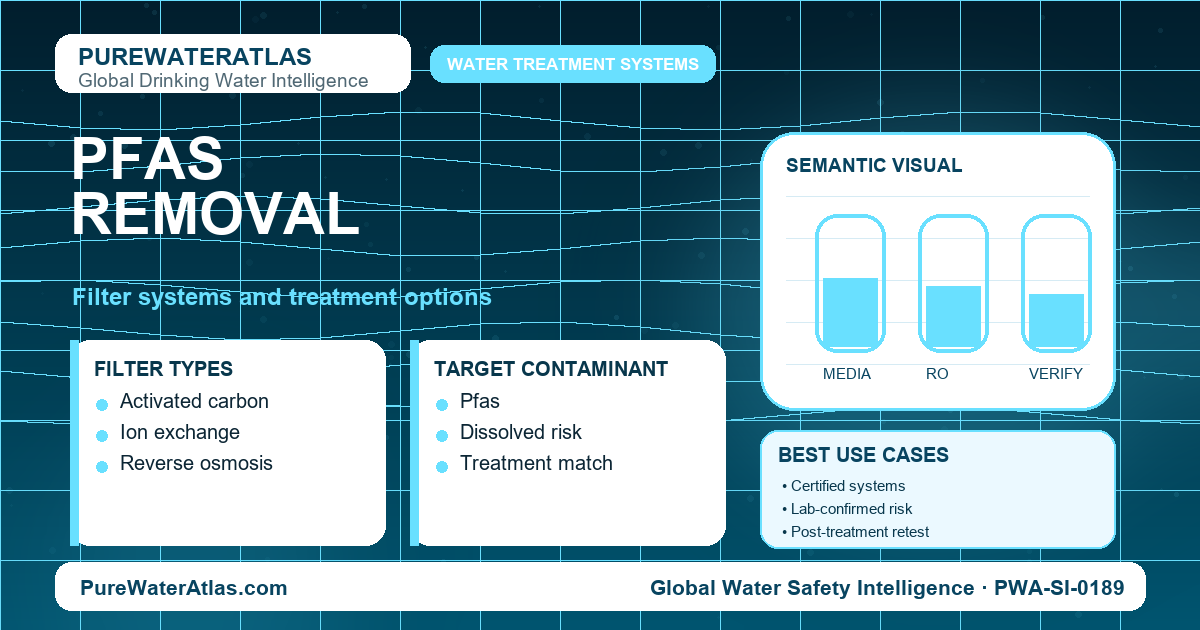
Specialty filters for lead, arsenic, and PFAS
Some certified media are designed specifically for difficult contaminants. These include adsorptive media, ion exchange resins, and selective cartridges. If testing identifies a specific problem, it is often better to choose a certified targeted system than a generic “all-in-one” product with vague claims.
Water softeners
Ion exchange softeners remove calcium and magnesium hardness. They are valuable for protecting pipes, water heaters, and appliances, but they are not general-purpose drinking water purifiers.
- Best for: Hard water, scale control
- Strengths: Reduces spotting and improves appliance efficiency
- Limitations: Does not remove many regulated contaminants; may increase sodium unless managed properly
Ultraviolet disinfection
UV systems inactivate microorganisms by damaging their genetic material. They are more common with private wells, but in certain municipal settings-such as large buildings, stored water, or immunocompromised occupants-they can add an extra barrier.
Point-of-use versus whole-house systems
- Point-of-use: Installed at a single tap, typically the kitchen sink. Best for drinking and cooking water. Often the most economical option for RO or premium filtration.
- Point-of-entry: Installed where water enters the building. Best for chlorine reduction, sediment control, and overall water conditioning throughout the home.
Many of the best setups combine both: a whole-house sediment and carbon system for general treatment, plus an under-sink RO unit for drinking water.
Municipal water treatment process buying guide
When comparing systems, focus on verified performance rather than marketing language. Important buying criteria include:
- Certified contaminant reduction: Look for independent certification to recognized standards for the contaminants you care about.
- Flow rate and capacity: The system should meet household demand without excessive pressure loss.
- Compatibility with disinfectant type: Chlorine and chloramine may require different carbon media and contact times.
- Installation space: Under-sink, countertop, inline, and whole-house systems have different footprint requirements.
- Maintenance complexity: Consider how often filters must be replaced and whether service is easy to perform.
- Total cost of ownership: Include replacement cartridges, membrane costs, water waste, electricity if applicable, and professional service.
- Water quality goals: Taste improvement, lead reduction, scale control, and comprehensive purification are different goals and may need different solutions.
Municipal water treatment process filter maintenance
Even the best filter fails if it is not maintained. Maintenance is a central part of treatment effectiveness and safety.
- Replace cartridges on schedule or sooner if flow drops significantly.
- Sanitize housings and storage tanks according to manufacturer instructions.
- Monitor pressure, leaks, and bypass conditions.
- Change RO membranes as needed based on water quality and rejection performance.
- Use only compatible replacement parts from reputable sources.
- Retest water periodically to confirm actual performance.
Neglected filters can become clogged, lose contaminant removal capacity, or in some cases support microbial growth. A realistic maintenance plan should be part of any purchasing decision.
Common Misconceptions
“Municipal water is always perfectly clean, so home filters are unnecessary.”
Municipal water is treated and regulated, but it can still contain chlorine, disinfection byproducts, hardness minerals, and contaminants introduced by distribution systems or building plumbing. Filters are not always necessary, but in many cases they are beneficial and sometimes strongly recommended.
“If water looks clear, it is safe.”
Many contaminants are invisible. Lead, nitrate, dissolved chemicals, and many microbial hazards cannot be detected by appearance alone. Clear water is not the same as contaminant-free water.
“Reverse osmosis is always the best choice.”
RO is highly effective, but it is not automatically the best answer for every home. If your main issue is chlorine taste, a quality carbon filter may provide excellent results at lower cost and with less maintenance. The best treatment depends on the actual contaminant profile.
“Carbon filters remove everything.”
Activated carbon is extremely useful, but it does not remove all dissolved contaminants equally. It is particularly effective for chlorine and many organic taste and odor compounds, but it is not a universal solution for nitrate, sodium, or all metals.
“Filter replacement schedules are just marketing.”
Replacement intervals are based on contaminant loading, flow, and media exhaustion. Once a filter’s capacity is reached, performance can drop sharply. Following maintenance guidelines is a basic part of system safety.
“Whole-house systems make under-sink filtration unnecessary.”
A whole-house system is excellent for sediment, chlorine, and conditioning, but a dedicated point-of-use system may still be the best option for high-level drinking water purification, especially when using RO or specialty cartridges.
Regulations and Standards
Municipal drinking water quality in many countries is governed by national or regional regulations that establish maximum contaminant levels, treatment technique requirements, monitoring protocols, and reporting obligations. In the United States, for example, public water systems are regulated under the Safe Drinking Water Act. Similar frameworks exist in many other jurisdictions.
What regulations cover
- Microbial contaminants such as coliform bacteria
- Disinfectants and disinfection byproducts
- Inorganic chemicals such as arsenic, nitrate, and copper
- Organic chemicals including certain industrial solvents and pesticides
- Radionuclides in applicable areas
- Treatment and corrosion control requirements
Why compliance is important but not sufficient for every situation
Regulatory compliance indicates that a utility is meeting public standards, often based on system-wide sampling and averaging. It does not guarantee that every tap in every building has identical water quality at every moment. Premise plumbing, localized corrosion, and household-specific contaminants can still create site-level concerns.
Filter certification standards
When selecting treatment products, independent certification is one of the most important quality indicators. Look for systems tested to recognized standards for the specific contaminant claims being made. Reputable certifications help verify that a product can reduce contaminants under defined conditions rather than relying on unsupported advertising.
Plumbing and installation standards
Materials that come into contact with drinking water should also meet accepted safety requirements. Low-lead plumbing components, approved tubing, and properly installed fittings reduce the chance that a treatment system introduces new contamination problems.
Consumers should treat regulations as a strong baseline, not the endpoint of decision-making. Site-specific testing, certified treatment, and routine maintenance remain essential parts of drinking water protection.
Conclusion
Understanding the municipal treatment chain is the foundation for choosing the right follow-up filtration at the tap. Public systems do an essential job by removing pathogens, solids, and many contaminants before water enters the distribution network. Still, issues such as chlorine taste, disinfection byproducts, lead from plumbing, hardness, PFAS, and other dissolved contaminants can remain or appear later in the system.
The municipal water treatment process best filters are those matched to verified water quality needs. Carbon filters are often the best first step for improving taste, odor, and chlorine-related concerns. Reverse osmosis is one of the strongest choices for broad dissolved contaminant reduction, especially for drinking and cooking water. Sediment filters protect downstream equipment, softeners manage hardness, and specialty media address contaminants such as lead, arsenic, or PFAS when testing shows they are present.
The most effective approach is data-driven: review utility reports, test your tap water, compare technologies carefully, and choose certified systems with a realistic maintenance plan. In many homes, the best solution is a layered strategy that combines whole-house pretreatment with targeted point-of-use purification. With the right testing, treatment comparison, and filter maintenance practices, consumers can build a safer, more reliable water quality plan that complements municipal treatment rather than assuming it solves every issue alone.
Read the full guide: Water Treatment Systems Guide
Explore more in this category: Water Treatment Systems Articles