
Introduction
The question is tap water safe to drink causes and sources is more important than many people realize. In most communities, tap water is treated, monitored, and delivered through large public systems designed to protect health. For millions of households, it is a reliable and affordable source of drinking water every day. At the same time, safety is not a simple yes-or-no issue. Water quality can vary by region, water source, plumbing condition, treatment performance, environmental contamination, and even what happens inside a home after water enters the building.
Understanding tap water safety requires looking at where water comes from, how it is treated, what kinds of contaminants can enter it, and how those contaminants are identified and controlled. Public water systems may draw from rivers, lakes, reservoirs, or groundwater aquifers. Each source has its own strengths and vulnerabilities. Surface water can be affected by stormwater runoff, industrial discharge, agricultural chemicals, and microbial contamination. Groundwater is often better protected from immediate pollution but can still contain naturally occurring minerals, arsenic, radionuclides, or contaminants that seep through soil over time.
Many people assume that if water looks clear, smells normal, and tastes acceptable, it must be safe. In reality, some of the most important hazards in drinking water cannot be seen, smelled, or tasted. Lead, nitrates, certain bacteria, disinfection byproducts, and many chemical contaminants may not cause obvious warning signs. That is why monitoring, testing, and regulation are essential parts of drinking water safety.
This article explains the major issues behind tap water safety in a practical and educational way. It explores what tap water safety means, the most important contamination pathways, the health and safety implications of poor water quality, the role of testing, and the steps households and communities can take to reduce risk. Readers looking for broader background may also find useful information in this complete guide to tap water safety, along with additional resources in the drinking water safety category and the water science category.
What It Is
Tap water is water delivered through a public or private distribution system for drinking, cooking, bathing, cleaning, and other household uses. When people ask whether tap water is safe to drink, they are really asking whether it meets accepted standards for microbiological, chemical, and physical quality at the point of use. Safety depends on more than treatment at a water plant. It also depends on distribution infrastructure, plumbing materials, storage conditions, and local environmental factors.
In public health terms, safe drinking water is water that does not contain harmful levels of pathogens, toxic chemicals, or other contaminants that can cause acute or chronic illness. It should also be sufficiently treated to reduce disease-causing organisms while avoiding treatment failures or unintended harmful byproducts. In addition, water should be acceptable in appearance, odor, and taste, because these factors influence whether people trust it and use it consistently.
The issue often involves several different dimensions:
- Source water quality: the condition of rivers, lakes, reservoirs, or aquifers before treatment.
- Treatment effectiveness: the ability of filtration, disinfection, and other processes to remove or neutralize contaminants.
- Distribution system integrity: whether pipes, storage tanks, and pumps keep water protected as it travels to homes.
- Household plumbing: whether lead, copper, bacteria, or sediment enter water inside the building.
- Monitoring and compliance: whether utilities test regularly and respond quickly when standards are not met.
The phrase is tap water safe to drink household exposure is especially relevant because risk can change once water reaches the home. Even if water leaves a treatment plant in excellent condition, contamination may still occur due to old service lines, corroded plumbing, stagnant water in pipes, contaminated wells, or cross-connections. That means a local or even household-specific issue can affect safety, even when the broader municipal system is functioning properly.
For a deeper discussion of health outcomes linked to water contaminants, readers can review health effects and risks associated with tap water quality.
Main Causes or Sources
To answer the question is tap water safe to drink common sources, it is necessary to identify where contamination can begin and how it moves through the water system. Contaminants generally come from natural geology, human activity, treatment processes, infrastructure problems, or household plumbing. Some are short-term problems, while others develop slowly over many years.
Natural Contaminants in Source Water
Not all drinking water contamination is caused by industry or poor maintenance. Some substances occur naturally in soil and rock and can dissolve into water supplies. Depending on local geology, these may include arsenic, fluoride, manganese, iron, uranium, radon, or high mineral content. Groundwater is particularly influenced by geological conditions because it spends long periods in contact with subsurface materials.
Natural contaminants are not automatically dangerous at all levels, but some can become a serious concern when concentrations exceed health-based guidelines. Arsenic is one of the best-known examples because it can be present in groundwater without any obvious color or odor changes.
Microbial Contamination
Pathogens are among the most immediate threats to drinking water safety. These include bacteria, viruses, and parasites such as E. coli, Salmonella, norovirus, Giardia, and Cryptosporidium. They can enter source water through sewage overflows, failing septic systems, livestock waste, wildlife activity, flood events, and stormwater runoff.
Surface water is especially vulnerable because it is exposed directly to the environment. If treatment barriers fail or disinfection is inadequate, pathogens can pass into the distribution system. In private wells, microbial contamination may occur when the well casing is damaged, floodwater enters the well, or nearby septic systems leak.
Agricultural Runoff
Farming activity can affect both surface water and groundwater. Fertilizers contribute nitrates and phosphates, while pesticides and herbicides may enter water through runoff, spray drift, or leaching into soil. Animal agriculture may also contribute pathogens, antibiotics, and nutrient pollution.
Nitrates are particularly important in rural areas and private wells. Elevated nitrate levels are dangerous for infants and can interfere with the blood’s ability to carry oxygen. Agricultural pollution is one of the clearest examples of how land use decisions influence drinking water quality far beyond the farm itself.
Industrial and Commercial Pollution
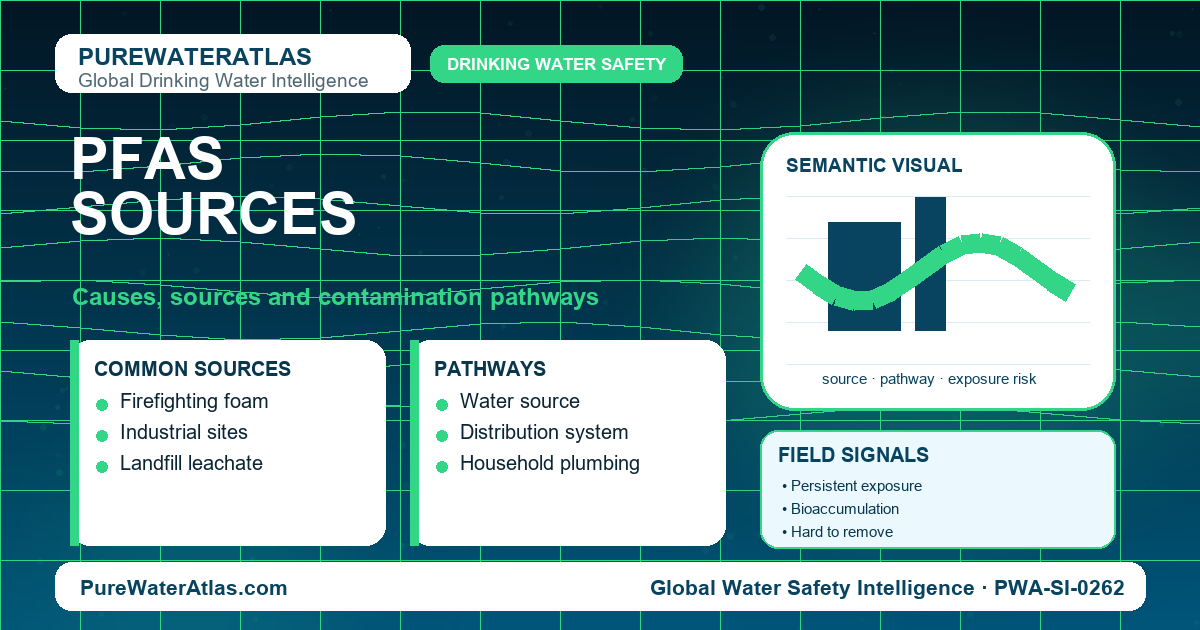
Industrial facilities may release heavy metals, solvents, petroleum compounds, PFAS, and other synthetic chemicals into the environment if waste is not handled properly. Historical contamination can remain in soil and groundwater for decades. Even after a facility closes, old disposal sites, landfills, and contaminated industrial zones may continue to affect nearby water supplies.
Commercial sources such as dry cleaners, gas stations, airports, and manufacturing plants can also contribute chemicals that move into groundwater or local watersheds. Some contaminants persist for a long time and travel slowly, making them difficult and expensive to remove.
Water Treatment Problems
Treatment plants are designed to remove particles, organic matter, microbes, and some chemicals. However, problems can arise from equipment failure, operator error, inadequate maintenance, high source-water contamination, or sudden changes caused by storms and flooding. In some cases, treatment chemicals themselves can lead to concerns if not controlled correctly.
For example, disinfectants such as chlorine are essential for killing pathogens, but they can react with organic matter in water to form disinfection byproducts. These byproducts are regulated because long-term exposure at elevated levels may increase health risks.
Distribution System Failures
Once treated water enters the distribution network, it must travel through pipes, valves, storage tanks, and service lines before reaching homes. Leaks, pressure loss, pipe breaks, corrosion, and biofilm growth can all affect safety. Intrusion can occur when contaminants enter the system through damaged infrastructure, especially during low-pressure events.
Older systems may have aging pipes made of materials now known to present risks. Corrosion can release metals such as lead and copper into water. Sediment buildup may also influence taste, color, and microbial growth.
Household Plumbing and Fixtures
One of the most overlooked answers to is tap water safe to drink household exposure is the plumbing inside the building itself. Lead service lines, lead solder, brass fixtures, corroded copper pipes, water heaters, faucet aerators, and underused plumbing sections can all affect water quality. Water that sits in pipes overnight or during long periods of nonuse may pick up metals or support bacterial growth.
Homes, schools, and older buildings are especially important to evaluate because internal plumbing can create contamination even when the utility’s water meets standards at the main connection point.
Private Wells and Small Systems
People who rely on private wells face a different risk profile than users of large municipal systems. Wells are not always subject to the same routine regulatory monitoring. Their safety depends heavily on location, construction quality, maintenance, nearby land use, and owner testing practices. Common well contaminants include bacteria, nitrates, arsenic, iron, sulfur, and local industrial or agricultural pollutants.
Small water systems may also face challenges due to limited funding, aging infrastructure, and reduced access to advanced treatment technologies.
Health and Safety Implications
The phrase is tap water safe to drink risk factors captures an important point: the health impact of drinking water depends on both the contaminant and the person exposed. Some hazards cause immediate illness, while others increase risk gradually over long periods. Age, pregnancy, immune status, nutrition, and overall health can influence vulnerability.
Short-Term Health Effects
Acute effects are often associated with microbial contamination or high-level chemical exposure. Symptoms may include nausea, vomiting, diarrhea, stomach cramps, fever, dehydration, or flu-like illness. For healthy adults, some infections may be mild and self-limiting. For infants, older adults, and immunocompromised individuals, the same exposure can be far more serious.
Short-term effects may also result from sudden contamination events such as sewage intrusion, flood-related well contamination, chemical spills, or treatment failures. In such cases, boil-water advisories or do-not-drink notices may be issued.
Long-Term Health Effects
Chronic exposure is often more difficult to recognize because symptoms may not appear immediately. Long-term intake of contaminants such as arsenic, lead, certain disinfection byproducts, PFAS, uranium, or industrial chemicals may be associated with increased risks of cancer, organ damage, endocrine effects, reproductive issues, developmental problems, or neurological harm.
Lead deserves special attention because even low-level exposure can harm children’s developing brains and nervous systems. Adults may also experience cardiovascular, kidney, or reproductive effects. Since lead often comes from plumbing rather than source water, household-level testing is especially important.
Vulnerable Populations
Not everyone faces the same level of risk from the same water. Groups with higher vulnerability include:
- Infants, especially for nitrate exposure and formula preparation
- Young children, who are more sensitive to lead and some chemicals
- Pregnant people and developing fetuses
- Older adults
- People with weakened immune systems
- Individuals with kidney disease or other chronic health conditions
Risk is also shaped by consumption patterns. People who drink large amounts of tap water, use it for infant formula, or consume beverages prepared with tap water may have greater exposure than those who drink less.
Psychological and Community Impacts
Unsafe or uncertain tap water can undermine trust in public institutions and create financial burdens when households switch to bottled water or install treatment devices. Communities affected by contamination may face stress, confusion, and unequal access to reliable information. Water safety is therefore not only a health issue but also a social, economic, and environmental justice concern.
Testing and Detection
Because many contaminants cannot be noticed by taste, sight, or smell, is tap water safe to drink detection depends on proper testing. Detection can occur at several levels: source-water monitoring, treatment plant monitoring, distribution-system sampling, household testing, and specialized laboratory analysis after a suspected incident.
What Utilities Test For
Public water systems typically test for regulated contaminants according to legal schedules and risk-based requirements. These may include microbial indicators, disinfectant residuals, turbidity, nitrates, lead, copper, certain metals, volatile organic compounds, pesticides, and disinfection byproducts. Larger systems often conduct frequent operational testing to verify that treatment processes are working correctly.
Results are generally summarized in consumer confidence reports or similar public documents. These reports can help households understand where their water comes from, what has been detected, and whether standards were met.
Household Testing Options
Homeowners can use certified laboratory testing, utility-provided testing guidance, or in some cases screening kits for specific concerns. Laboratory testing is the most reliable method when accuracy matters, especially for lead, arsenic, nitrates, bacteria, and PFAS. Screening kits may be useful for preliminary checks, but they vary in quality and usually do not replace formal analysis.
Household testing is especially advisable when:
- The home has old plumbing or possible lead service lines
- The water has changed in taste, odor, or color
- The household uses a private well
- There has been flooding, construction, or a nearby contamination event
- Residents include infants, pregnant people, or medically vulnerable individuals
Common Indicators That Prompt Testing
Although dangerous contaminants may be invisible, some warning signs should still prompt investigation. These include reddish or brown staining, metallic taste, rotten egg odor, cloudy water, scale buildup, sudden sediment, low pressure after pipe repairs, or recurring gastrointestinal illness in the household. These signs do not always mean water is unsafe, but they justify further evaluation.
Limitations of Sensory Judgment
One of the biggest mistakes people make is assuming that clear, cold water is automatically safe. Lead has no obvious taste or smell at hazardous levels. Nitrates are also colorless and tasteless. Many microbes cannot be detected without laboratory methods. That is why structured monitoring matters more than casual observation.
Readers interested in a more focused discussion can explore testing and detection methods for tap water safety.
How Often Testing Should Occur
Frequency depends on the water source and level of risk. Public systems follow regulatory schedules, while private well owners should generally test regularly for bacteria, nitrates, and other locally relevant contaminants. Additional testing is recommended after flooding, repairs, changes in taste or appearance, or local reports of contamination. Long gaps between tests can allow serious problems to go unnoticed.
Prevention and Treatment
The topic is tap water safe to drink prevention includes both system-wide public health strategies and practical steps at the household level. Prevention is more effective and often less expensive than responding after contamination has caused illness or widespread concern.
Source Water Protection
The first defense is protecting the watershed or aquifer itself. This may include controlling industrial discharges, improving agricultural practices, managing stormwater, maintaining septic systems, limiting hazardous waste releases, and creating protected zones around reservoirs and wells. Cleaner source water reduces treatment burden and lowers the chance of dangerous contaminants reaching consumers.
Effective Water Treatment
Modern treatment systems can include coagulation, sedimentation, filtration, activated carbon, membrane technologies, ion exchange, softening, oxidation, and disinfection. The right combination depends on the contaminants present. Treatment plants also need trained staff, ongoing maintenance, backup systems, and emergency response plans.
No single technology removes everything. For example:
- Chlorination is effective against many pathogens but does not remove dissolved metals.
- Activated carbon can reduce some organic chemicals and taste issues but is not a universal solution.
- Reverse osmosis can remove many dissolved contaminants but wastes some water and requires maintenance.
- Ultraviolet treatment can inactivate certain microbes but does not provide a residual disinfectant in pipes.
Distribution System Maintenance
Utilities reduce risk by replacing aging mains, controlling corrosion, maintaining pressure, flushing lines, cleaning storage tanks, and monitoring disinfectant residuals. Corrosion control is especially important for preventing lead and copper release. In many communities, infrastructure investment is one of the most important long-term measures for protecting tap water quality.
Household Risk Reduction
Individuals can take useful precautions, particularly in older homes or areas with known issues. These include:
- Running cold water for a short period after water has been sitting in pipes
- Using only cold water for drinking and cooking, since hot water may dissolve metals more readily
- Cleaning faucet aerators regularly
- Replacing old plumbing fixtures when appropriate
- Using certified filters matched to specific contaminants
- Following manufacturer guidance for filter replacement and maintenance
Certified treatment devices should be chosen based on actual water test results. A filter that works for chlorine taste may not remove lead, and a lead filter may not address nitrates or microbial contamination. Selection should always be contaminant-specific.
Private Well Protection
Well owners should inspect the wellhead, maintain proper casing and caps, keep contamination sources away from the well, test regularly, and disinfect or repair the system when needed. Wells should also be evaluated after floods, heavy storms, or nearby construction. Since private wells often lack continuous oversight, owner responsibility is central to safety.
Emergency Measures
When contamination is suspected or confirmed, public health agencies may recommend boiling water, using bottled water, avoiding water for formula preparation, or installing temporary treatment devices. It is important to follow the specific advisory. Boiling kills many pathogens, but it does not remove lead, nitrates, or most chemical contaminants and can even concentrate some dissolved substances if water evaporates.
Common Misconceptions
Public discussion of tap water often includes oversimplified claims. Correcting these misunderstandings helps people make better decisions.
If Water Is Clear, It Must Be Safe
This is false. Many dangerous contaminants are invisible and have no taste or odor. Appearance alone is not a reliable safety measure.
Bottled Water Is Always Safer Than Tap Water
Not necessarily. Bottled water is not automatically of higher quality, and in some cases it comes from the same kinds of sources as municipal water. Safety depends on source, treatment, storage, and regulation. Bottled water may be useful during emergencies, but it is not a universal replacement for well-managed tap water.
Boiling Water Solves Every Problem
Boiling is helpful for many biological contaminants, but it does not remove metals, salts, nitrates, or most industrial chemicals. It should be used only when appropriate to the specific advisory.
Only Old Cities Have Tap Water Problems
While aging infrastructure is a major issue, rural wells, suburban systems, and newer developments can also experience contamination. Agricultural runoff, industrial chemicals, local geology, and construction-related issues affect many types of communities.
Filters Remove Everything
No filter removes all contaminants. Treatment effectiveness depends on design, certification, condition, maintenance, and the exact contaminants present. Using the wrong filter can create false confidence.
Municipal Compliance Means Every Home Has Identical Water Quality
Not always. Utility compliance data describe the system overall, but water quality at the tap can still vary due to household plumbing, stagnation, and internal building conditions. This is why point-of-use testing remains valuable.
Regulations and Standards
Drinking water safety relies heavily on regulations, enforceable limits, and public reporting. In many countries, national laws establish maximum contaminant levels or similar standards for regulated substances. These rules are designed to reduce disease risk, require monitoring, and create accountability for public water suppliers.
How Standards Are Set
Regulatory standards usually consider toxicology, epidemiology, treatment feasibility, analytical detection limits, and cost of implementation. Health agencies may identify ideal health goals and then translate them into enforceable standards that utilities can realistically monitor and achieve. This means some limits reflect both health science and practical treatment capability.
What Regulations Usually Cover
- Microbial contaminants such as indicator bacteria and treatment performance targets
- Inorganic chemicals such as arsenic, nitrate, and certain metals
- Organic chemicals such as solvents, pesticides, and industrial compounds
- Disinfection byproducts formed during treatment
- Lead and copper control programs linked to corrosion and plumbing materials
- Reporting, notification, and corrective action requirements
Public Reporting and Transparency
One of the most important protections for consumers is access to water quality information. Utilities are generally expected to notify the public when serious violations occur and to provide periodic summaries of monitoring data. Transparency allows residents to ask informed questions, compare results over time, and decide whether additional household measures are necessary.
Limits of Regulation
Regulation is essential, but it is not perfect. Some contaminants may be unregulated, newly emerging, or tested infrequently. Sampling may not capture every temporary spike or every building-specific problem. Small systems and private wells may also fall outside the most robust oversight frameworks. As a result, regulations are a foundation for safety, not a guarantee that every possible issue has been eliminated.
For more context on how local conditions differ around the world, readers may wish to explore the global water quality category.
Conclusion
The question of whether tap water is safe to drink depends on a chain of factors that begins at the source and continues all the way to the faucet. In many places, tap water is a safe and highly regulated resource, but that safety depends on strong source protection, effective treatment, sound infrastructure, consistent monitoring, and attention to household plumbing conditions. Contamination can arise from natural geology, pathogens, agricultural runoff, industrial chemicals, treatment failures, aging pipes, and private well vulnerabilities.
Understanding is tap water safe to drink causes and sources helps people move beyond assumptions and focus on evidence. Water that looks normal may still contain harmful substances, while concerns can often be clarified through proper testing and public reporting. The most practical approach is informed caution: review local water quality reports, test when household or well conditions justify it, use certified treatment when needed, and follow health advisories closely.
Ultimately, safe tap water is both a personal and public responsibility. Utilities, regulators, policymakers, and households all play a role in protecting it. By understanding contamination pathways, is tap water safe to drink risk factors, and the value of is tap water safe to drink detection and is tap water safe to drink prevention, consumers can make better decisions and support stronger water systems for everyone.
Read the full guide: Drinking Water Safety Guide
Explore more in this category: Drinking Water Safety Articles
1 thought on “Is Tap Water Safe to Drink: Causes and Sources”