
Introduction
For many households, turning on the kitchen faucet is a routine act that requires little thought. Yet a common and important question remains: is tap water safe to drink health effects being considered? The answer is often yes in many regulated public water systems, but it is not always simple. Water safety depends on where the water comes from, how it is treated, whether it travels through aging infrastructure, and whether contamination occurs before it reaches the glass.
Tap water safety is not a single all-or-nothing issue. Water may meet legal standards and still have taste, odor, or mineral characteristics that concern consumers. In other cases, water may contain contaminants at levels that create real public health concerns, especially for infants, pregnant people, older adults, and people with weakened immune systems. Understanding the possible is tap water safe to drink medical concerns helps people make informed decisions about filtration, testing, and when to seek expert guidance.
This article explains what tap water safety means, what can affect it, how health effects may appear, and what practical steps can reduce risk. It also covers is tap water safe to drink symptoms, is tap water safe to drink exposure levels, and is tap water safe to drink long term risks. For broader background, readers may also explore drinking water safety, a general overview at this complete guide, and additional science resources in water science.
What It Is
Tap water is water delivered through a plumbing system for drinking, cooking, bathing, and cleaning. In most communities, it comes from a public water utility that draws water from rivers, lakes, reservoirs, or underground aquifers. The water is typically treated to remove particles, reduce microbes, and adjust chemistry before distribution. In rural or private settings, tap water may come from an individual well, which places more responsibility on the property owner for monitoring and maintenance.
When people ask whether tap water is safe to drink, they are really asking several different questions:
- Does it contain harmful microorganisms such as bacteria, viruses, or parasites?
- Does it contain chemicals, metals, or byproducts at unhealthy concentrations?
- Are there short-term or long-term health effects associated with regular consumption?
- Are some people more vulnerable than others?
- Has the water been tested properly and recently?
Safe drinking water generally means that contaminants are below levels associated with meaningful health risk based on current scientific evidence and regulations. However, “safe” does not mean absolutely pure. Nearly all water contains dissolved minerals, trace compounds, and small amounts of naturally occurring or human-made substances. Safety depends on type, concentration, duration of exposure, and individual health status.
It is also important to distinguish between aesthetic issues and health hazards. Water that smells like chlorine, has a metallic taste, or appears cloudy for a moment may not necessarily be dangerous. On the other hand, water can look clean and still contain microbes, lead, nitrates, arsenic, PFAS, or other harmful contaminants. This is why visual inspection alone cannot determine safety.
Public concern often focuses on whether occasional exposure is dangerous or whether the bigger issue is cumulative intake over time. In reality, both matter. Acute contamination can cause sudden illness, while lower-level exposure over months or years may contribute to chronic disease risks.
Main Causes or Sources
The safety of tap water can be affected at multiple points: at the source, during treatment, in the distribution system, and inside household plumbing. Understanding these sources is central to answering the question is tap water safe to drink health effects in any specific location.
Natural contaminants
Some water sources contain naturally occurring substances from rocks, soil, and environmental conditions. These may include:
- Arsenic, which can enter groundwater from natural geologic formations
- Fluoride, which occurs naturally in some areas and may also be added for dental health
- Iron and manganese, often affecting taste, color, and staining
- Radionuclides, such as radium or uranium in certain groundwater sources
- Hardness minerals like calcium and magnesium, which are usually not harmful but affect scale buildup and taste
Microbial contamination
Microorganisms are among the most significant immediate threats to drinking water. Contamination may occur when sewage, animal waste, storm runoff, or failing septic systems enter water supplies. Common concerns include:
- Bacteria such as E. coli, Campylobacter, or Salmonella
- Viruses such as norovirus or hepatitis A
- Parasites such as Giardia and Cryptosporidium
These hazards are especially relevant after floods, treatment failures, pipe breaks, or inadequate disinfection. Readers interested in this area may find useful background in water microbiology.
Chemical pollution
Human activity can introduce a wide range of chemicals into water sources. These include:
- Agricultural runoff, including nitrates, fertilizers, herbicides, and pesticides
- Industrial discharges, which may contain solvents, heavy metals, and persistent chemicals
- Landfill leachate, carrying mixed contaminants into groundwater
- Household chemicals entering wastewater systems
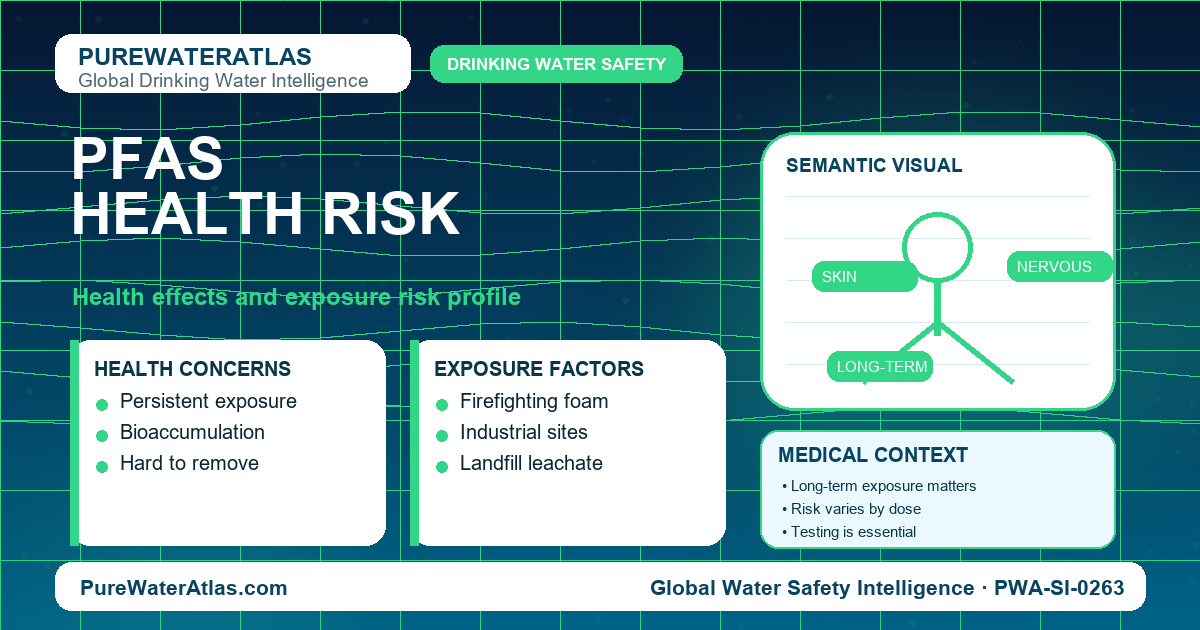
- PFAS, a group of persistent synthetic chemicals often called “forever chemicals”
Treatment and disinfection byproducts
Water treatment protects public health, but certain treatment processes can produce byproducts. For example, when chlorine reacts with organic matter in water, compounds such as trihalomethanes and haloacetic acids can form. These are regulated because prolonged exposure above guideline levels may increase health risks.
Distribution system and plumbing issues
Water can leave a treatment plant in good condition and still become problematic later. Aging pipes, storage tanks, and premise plumbing can contribute contaminants such as:
- Lead from older service lines, solder, or fixtures
- Copper from corroding pipes
- Biofilm-associated microbes in stagnant plumbing
- Rust and sediment from deteriorating infrastructure
Lead is one of the most widely discussed risks because no level is considered ideal for children. Corrosion control programs reduce the likelihood of metals leaching into water, but failures in treatment chemistry or old plumbing can still create exposure.
Private wells
Private wells can provide excellent water, but they also present special risks because they are not usually monitored by municipal utilities. Well water may be affected by:
- Nearby septic systems
- Agricultural contamination
- Shallow groundwater pollution
- Poor well construction or maintenance
- Natural arsenic, manganese, sulfur, or radionuclides
For a more focused discussion of contamination pathways, see causes and sources of tap water safety concerns.
Health and Safety Implications
The health effects of tap water depend on the contaminant, the dose, the duration of exposure, and the person exposed. A small amount of a contaminant may pose little risk to a healthy adult but be more serious for an infant or someone with kidney disease. This is where is tap water safe to drink exposure levels becomes essential. Toxicology is based on concentration and repeated intake, not merely the presence of a substance.
Short-term health effects
Acute health effects are often related to microbial contamination or high-level chemical exposure. These may appear within hours or days. Typical is tap water safe to drink symptoms of unsafe water exposure can include:
- Nausea
- Vomiting
- Diarrhea
- Abdominal cramps
- Fever
- Headache
- Skin irritation in some exposure settings
These symptoms are not specific to water contamination, so they do not prove that tap water is the cause. However, if multiple household members become ill, if there has been a boil-water advisory, or if water has a sudden unusual appearance or smell, contaminated drinking water should be considered as a possible factor.
Long-term health risks
The issue of is tap water safe to drink long term risks is especially important because some contaminants do not cause immediate illness. Instead, they may contribute to health problems after chronic exposure. Examples include:
- Lead: associated with reduced cognitive development in children, behavioral problems, and cardiovascular or kidney effects in adults
- Arsenic: linked to skin changes, cardiovascular effects, and increased cancer risk with prolonged exposure
- Nitrates: especially dangerous for infants, where they can interfere with oxygen transport and contribute to methemoglobinemia
- Disinfection byproducts: some studies associate long-term exposure above recommended levels with increased cancer or reproductive concerns
- PFAS: under study for links to cholesterol changes, immune effects, hormone disruption, liver effects, and certain cancers
Exposure levels and dose
Is tap water safe to drink exposure levels cannot be judged by a single universal number because different contaminants behave differently. Important factors include:
- The measured concentration in water
- How much water a person drinks daily
- Body size and age
- How long exposure has been occurring
- Whether exposure also occurs through cooking, infant formula preparation, or workplace contact
For example, a concentration that may be low-risk for an adult may be more significant for a formula-fed infant because infants consume more water relative to body weight.
Vulnerable groups
The question is tap water safe to drink vulnerable groups highlights an important public health principle: risk is not distributed equally. People who may face higher risk include:
- Infants and young children, due to developing organs and higher intake relative to body size
- Pregnant people, because contaminants can affect fetal development
- Older adults, who may have more chronic health conditions or reduced physiologic resilience
- Immunocompromised individuals, who are more susceptible to infections from microbes
- People with kidney or liver disease, who may process contaminants less effectively
These is tap water safe to drink medical concerns mean that a water quality report acceptable to the general population may still justify additional precautions in some households.
Medical evaluation and when to seek help
Most mild gastrointestinal illnesses resolve without proving a water source, but medical evaluation is advisable when symptoms are severe, prolonged, or affect high-risk individuals. Seek professional care if there is persistent vomiting, significant diarrhea, dehydration, blood in stool, confusion, high fever, or illness in infants, elderly adults, or immunocompromised people. If a known contamination event has occurred, clinicians may recommend specific testing or reporting to public health authorities.
Testing and Detection
Because unsafe water often looks normal, testing is the most reliable way to determine risk. Public utilities perform routine monitoring for regulated contaminants, but household-specific testing may still be necessary, especially for lead, copper, and well water issues.
Public water system testing
Municipal suppliers test source water, treated water, and distribution systems according to regulatory schedules. Results are often summarized in annual consumer confidence reports. These reports may include information on:
- Detected contaminants and their concentrations
- Maximum contaminant levels or treatment technique requirements
- Source water type
- Violations, if any
- Advice for sensitive populations
These reports are valuable, but they do not always reflect every building or every tap at every moment. Local plumbing conditions can still affect water quality inside the home.
Home testing
Household testing can be useful when:
- The home has old plumbing or possible lead service lines
- The water has changed in color, odor, or taste
- A private well is used
- There has been flooding or a plumbing repair
- A household member is medically vulnerable
Testing options include certified laboratory analysis, mail-in kits, and screening tools. Laboratory testing is generally more reliable for decision-making. It is important to choose tests based on suspected concerns rather than relying on a single generic kit.
What to test for
The right panel depends on the location and context, but common targets include:
- Total coliform and E. coli
- Lead and copper
- Nitrate and nitrite
- Arsenic
- PFAS where relevant
- pH, hardness, iron, and manganese
- Volatile organic compounds in some settings
Signs that should prompt testing
Although appearance alone is not enough, certain changes should not be ignored:
- Brown, red, or yellow discoloration
- Cloudiness that persists
- Rotten egg or chemical odors
- Metallic or bitter taste
- Recurring gastrointestinal illness with no clear explanation
Interpretation matters
Test results should be interpreted against health-based standards and practical context. A “detectable” level is not always a dangerous level, but neither should elevated findings be dismissed. When lead, arsenic, nitrates, bacteria, or other high-priority contaminants are found, prompt action is warranted. For more practical detail, see testing and detection methods for tap water safety.
Prevention and Treatment
Improving tap water safety involves both system-level solutions and household actions. The best approach depends on whether the issue is microbial, chemical, or plumbing-related.
Municipal-level prevention
- Protecting source waters from agricultural, industrial, and sewage contamination
- Using effective treatment processes such as filtration and disinfection
- Maintaining corrosion control to reduce lead and copper leaching
- Replacing aging water mains and lead service lines
- Conducting regular monitoring and public notification
Household prevention steps
Consumers can reduce risk with several practical measures:
- Read local water quality reports annually
- Test home water when there is a specific concern
- Use cold water for drinking and cooking, especially in older homes, because hot water can dissolve metals more readily
- Flush stagnant water from pipes before use after several hours of nonuse
- Clean faucet aerators periodically
- Maintain water heaters, plumbing, and private wells
Filtration and treatment devices
Not all filters do the same thing. Choosing the right method depends on the contaminant of concern:
- Activated carbon: can improve taste and reduce chlorine, some organic chemicals, and some PFAS depending on design
- Reverse osmosis: effective for many dissolved contaminants including nitrates, arsenic, lead, and some PFAS
- Ion exchange: useful for certain dissolved ions
- Ultraviolet disinfection: can inactivate many microbes but does not remove chemicals
- Distillation: removes many contaminants but is slower and energy intensive
Consumers should look for independently certified products and maintain them according to manufacturer instructions. A neglected filter can lose effectiveness or even become a source of contamination.
Boiling water
Boiling is effective for many microbial risks, which is why it is commonly recommended during a boil-water advisory. However, boiling does not remove metals such as lead or contaminants such as nitrates. In fact, boiling can slightly concentrate some dissolved substances as water evaporates. Therefore, boiling is helpful only for certain hazards.
Private well treatment
Well owners should test regularly and tailor treatment to results. Shock chlorination may be used after certain microbial contamination events, but persistent problems often require structural repair, improved drainage, disinfection systems, or specialized filtration.
What to do during a contamination event
- Follow official guidance immediately
- Use bottled or properly treated water for drinking, infant formula, cooking, and brushing teeth if recommended
- Do not assume refrigeration, freezing, or simple straining makes water safe
- Seek updated instructions from local utilities or health departments
Common Misconceptions
Misinformation can make water decisions harder. Several common beliefs deserve clarification.
If water is clear, it is safe
This is false. Many dangerous contaminants are colorless, tasteless, and odorless. Lead, nitrates, and many microbes cannot be detected by sight alone.
Bottled water is always safer than tap water
Not necessarily. Bottled water is not automatically higher quality, and standards vary by product and jurisdiction. In many areas, regulated tap water is tested more frequently than bottled water. Bottled water may be useful during emergencies or for specific medical needs, but it is not an automatic guarantee of superior safety.
Boiling fixes every water problem
Boiling helps with many pathogens but not with all contaminants. It does not remove heavy metals, most dissolved chemicals, or hardness. In some cases, it can worsen concentration of nonvolatile contaminants.
All filters remove everything
Different technologies target different problems. A pitcher filter designed to improve taste may not remove arsenic, nitrates, or all PFAS. Matching the filter to the contamination profile is essential.
Municipal water that meets standards poses zero risk
No environmental exposure is entirely risk-free. Regulations are designed to reduce risk to very low levels based on available evidence, but they cannot guarantee the absence of all contaminants or all future concerns. Standards also evolve as science advances.
Only old homes have water quality issues
Older plumbing increases certain risks, especially lead, but newer systems can also experience contamination from source water pollution, treatment failures, stagnant plumbing, or emerging contaminants.
Regulations and Standards
Drinking water safety is shaped by scientific review, public health policy, engineering capacity, and ongoing monitoring. In many countries, public water systems must meet legally enforceable standards for specific contaminants and treatment processes. These standards are based on toxicology, epidemiology, feasibility, and risk management.
How standards are set
Regulators generally assess:
- Whether a contaminant is known or suspected to cause health effects
- At what concentrations effects become more likely
- How often the contaminant appears in water systems
- Whether reliable testing methods exist
- Whether treatment methods can reduce the contaminant effectively
This results in enforceable limits, action levels, or treatment technique rules. Some contaminants also have non-enforceable health goals that are more protective but may be difficult to achieve universally.
Public notification and consumer information
When serious violations or contamination events occur, utilities are generally required to notify the public. This may include boil-water notices, do-not-drink advisories, or warnings for specific groups such as infants. Annual reports are another key transparency tool, although they should be read with an understanding that they summarize system-wide data and may not capture building-specific issues.
Why standards change over time
Scientific knowledge evolves. A substance once considered low priority may later receive more attention as better data emerge. This is particularly relevant for PFAS, certain disinfection byproducts, and other emerging contaminants. Updated standards do not necessarily mean water was ignored in the past; rather, they often reflect improved detection methods and better understanding of health effects.
The role of local conditions
Even under national standards, local geology, infrastructure age, climate events, and source water vulnerability create important differences from one community to another. Floods, wildfires, drought, agricultural runoff, and industrial legacies can all change the water risk profile. That is why national regulations are important but not sufficient by themselves for household decision-making.
Conclusion
So, is tap water safe to drink health effects considered carefully? In many communities, tap water is safe and remains one of the most monitored food-related products people consume. Still, safety depends on source water quality, treatment performance, distribution infrastructure, household plumbing, and individual vulnerability. The most important lesson is that water safety is evidence-based, not guesswork.
Understanding is tap water safe to drink symptoms, is tap water safe to drink long term risks, and is tap water safe to drink vulnerable groups allows consumers to respond appropriately rather than relying on myths or assumptions. Gastrointestinal illness, unusual water characteristics, plumbing age, and local contamination history are all valid reasons to investigate further. Reviewing utility reports, arranging targeted testing, and using the correct treatment method can greatly reduce risk.
For healthy adults in well-managed systems, tap water is often a practical and safe choice. But that general reassurance should not prevent action where specific problems are suspected. Thoughtful attention to is tap water safe to drink exposure levels and related is tap water safe to drink medical concerns is especially important for infants, pregnant people, older adults, and immunocompromised individuals.
Reliable knowledge is the best protection. Readers who want to continue learning can explore drinking water safety, review the broader complete guide, study contamination pathways in causes and sources, learn more about testing and detection methods, and browse foundational topics in water science and water microbiology.
Read the full guide: Drinking Water Safety Guide
Explore more in this category: Drinking Water Safety Articles