
Introduction
Safe drinking water is one of the foundations of public health, yet many people are unsure how safety is defined, measured, and maintained. The topic of drinking water safety standards removal involves more than simply running water through a filter. It includes understanding what contaminants may be present, which limits are set by regulatory agencies, how different treatment technologies work, and how homeowners, facility managers, and communities can verify that treatment remains effective over time.
Drinking water can contain physical, chemical, biological, and radiological contaminants from both natural and human-made sources. Some are visible, such as sediment or discoloration, while others are invisible and odorless, such as lead, nitrate, arsenic, disinfection byproducts, or disease-causing microorganisms. Because of this wide range of possible hazards, water treatment must be matched to the actual problem. A system that improves taste may not remove pathogens. A filter certified for chlorine reduction may not be suitable for arsenic or PFAS. In other words, effective risk reduction depends on informed selection, proper installation, routine monitoring, and ongoing maintenance.
For readers seeking foundational background, broader resources on safe water practices can be found in drinking water safety and in this complete guide to drinking water safety standards. This article focuses on how standards relate to contaminant removal, which drinking water safety standards filtration methods are commonly used, what drinking water safety standards treatment systems are available, and how to judge drinking water safety standards effectiveness in real-world use.
Whether water comes from a municipal supply, a private well, a rural small system, or an institutional building, safety depends on the same core principles: identify hazards, test accurately, use appropriate treatment, maintain the system, and verify performance. Understanding these principles helps consumers make better decisions and supports more resilient water quality protection at every level.
What It Is
Drinking water safety standards are the rules, guideline values, performance benchmarks, and operational practices used to determine whether water is safe for human consumption. These standards may be mandatory under law or advisory in nature, depending on the contaminant and the jurisdiction. In practical terms, they define acceptable concentrations of contaminants, treatment goals, monitoring schedules, and sometimes required treatment techniques.
When discussing drinking water safety standards removal, the key idea is that treatment is judged against a target. That target may be a maximum contaminant level, an action level, a health advisory, a turbidity requirement, or a microbial treatment requirement expressed as log reduction. Standards are not all the same. Some contaminants have numeric limits, while others are controlled through process requirements because measuring real-time risk is difficult.
Common categories of drinking water contaminants include:
- Microbiological: bacteria, viruses, protozoa, and indicator organisms such as total coliforms or E. coli
- Chemical: lead, arsenic, nitrate, fluoride, solvents, pesticides, PFAS, and industrial compounds
- Physical: sediment, suspended solids, turbidity, and corrosion-related particles
- Radiological: radium, uranium, and gross alpha or beta emitters
- Aesthetic parameters: taste, odor, color, iron, manganese, and hardness
It is important to distinguish health-based contaminants from aesthetic issues. Water that tastes unpleasant is not always dangerous, and water that looks clear is not always safe. The role of standards is to move assessment beyond appearance and into measurable quality indicators.
Removal and treatment can occur at several points:
- Source protection: keeping contamination out of rivers, reservoirs, aquifers, and wells
- Centralized treatment: utility-scale treatment before distribution
- Point-of-entry treatment: whole-building systems treating all incoming water
- Point-of-use treatment: treatment at a single tap, often for drinking and cooking water
For example, if a home has elevated lead due to plumbing, a point-of-use certified filter may be appropriate. If a private well contains arsenic throughout the house supply, a point-of-entry or dedicated arsenic removal system may be more suitable. If microbial contamination is detected, disinfection and source correction may be necessary rather than simple cartridge filtration.
Those interested in the broader science behind contamination pathways may also explore water science and water microbiology.
Main Causes or Sources
Contaminants enter drinking water through a variety of pathways. Some originate in the source water itself, while others are introduced during treatment, storage, or distribution. Understanding these origins is essential because treatment choice depends heavily on source characteristics and the type of contaminant involved.
Natural geological sources
Many groundwater contaminants come from the surrounding geology. Arsenic, uranium, radium, fluoride, manganese, and iron may dissolve naturally into water as it passes through rock and soil. Hardness minerals such as calcium and magnesium are also geologically derived. These substances are not caused by pollution in the conventional sense, but they may still pose health or operational concerns if concentrations exceed recommended levels.
Agricultural runoff
Farms can contribute nitrate, nitrite, pesticides, sediment, and microbial contamination from manure. Nitrate is a particular concern in agricultural areas with shallow groundwater, especially for private wells. Nutrient loading can also trigger algal blooms in surface waters, increasing the risk of toxins and complicating treatment operations.
Industrial and commercial activities
Manufacturing, mining, waste disposal, firefighting foam use, dry cleaning, and fuel storage can introduce solvents, heavy metals, petroleum compounds, and persistent chemicals such as PFAS into source water. Some of these compounds are difficult to detect without targeted testing and may require specialized treatment media.
Urban infrastructure and stormwater
Urban runoff can carry oil, metals, salts, microbes, and organic contaminants into waterways. Aging infrastructure may also allow cross-connections, backflow incidents, or intrusion into distribution systems. Sewer leaks and poor drainage can further increase contamination risks, particularly after heavy rainfall.
Water treatment and distribution system issues
Water can meet standards leaving the treatment plant but degrade before reaching the consumer. Corrosion in pipes can release lead or copper. Biofilms can develop in plumbing systems. Dead-end lines, storage tanks, low disinfectant residuals, and pressure losses can all affect water quality. The phenomenon of contamination from plumbing is especially important in schools, older homes, and large buildings with stagnant water conditions.
Household plumbing and fixtures
Even if utility water complies with regulations, household plumbing materials may introduce contaminants. Lead service lines, brass fixtures, solder, galvanized pipes, and deteriorating interior plumbing can all affect tap water. This is why final water quality at the point of consumption may differ from water quality in utility compliance reports.
For a deeper look at contamination pathways, readers can review drinking water safety standards causes and sources.
Health and Safety Implications
The purpose of drinking water standards is to reduce both immediate and long-term health risks. Some contaminants cause acute illness within hours or days, while others contribute to chronic disease over years of exposure. Vulnerability also varies by age, health status, pregnancy, and immune function.
Microbial risks
Pathogens in drinking water can cause diarrhea, vomiting, fever, dehydration, and severe gastrointestinal disease. Organisms of concern may include bacteria such as E. coli, viruses such as norovirus, and protozoa such as Giardia and Cryptosporidium. Infants, older adults, and immunocompromised individuals are especially vulnerable. Because microbial exposure can have rapid consequences, disinfection and barrier protection are core elements of drinking water safety.
Lead and developmental toxicity
Lead is among the most concerning drinking water contaminants because even low levels of exposure can affect brain development, behavior, and learning in children. In adults, lead exposure may contribute to cardiovascular and kidney problems. Since lead usually enters water through plumbing rather than the source itself, treatment decisions often involve corrosion control, fixture replacement, flushing, and certified point-of-use filters.
Nitrate and infant health
Elevated nitrate in drinking water can interfere with oxygen transport in infants, leading to methemoglobinemia, sometimes called blue baby syndrome. For this reason, private well users in agricultural areas are often encouraged to test nitrate regularly, especially if infants or pregnant women are in the household.
Arsenic and chronic disease
Long-term arsenic exposure is associated with increased risks of cancer, skin changes, cardiovascular effects, and other chronic health outcomes. Since arsenic is odorless and tasteless, affected households may not know there is a problem unless water is tested.
Disinfection byproducts and chemical mixtures
Disinfectants are essential for microbial safety, but under certain conditions they can react with natural organic matter to form disinfection byproducts. Utilities manage this through optimization of source water control, treatment processes, and distribution system practices. More broadly, real drinking water often contains complex mixtures of low-level contaminants rather than a single pollutant, which is why standards, treatment, and monitoring are all needed together.
Detailed discussion of contaminant impacts is available in drinking water safety standards health effects and risks.
Testing and Detection
Testing is the bridge between suspicion and action. Without accurate data, treatment may be unnecessary, misapplied, or insufficient. Effective water safety management therefore begins with identifying which contaminants need to be tested, how often, and by what method.
When testing is necessary
- When using a private well or small non-regulated supply
- When moving into a new home with unknown plumbing or water quality history
- When there is a change in taste, odor, color, or sediment
- After flooding, plumbing work, or pressure loss events
- When local environmental conditions suggest risks such as nitrate, arsenic, or PFAS
- When infants, pregnant women, or medically vulnerable individuals are present
Types of testing
Laboratory testing is the most reliable method for measuring regulated and emerging contaminants. Certified laboratories can analyze for metals, nutrients, organics, microbes, and radiological parameters. Field kits may be useful for screening pH, chlorine, hardness, and some simple indicators, but they are not always sufficient for compliance-level decisions.
Microbiological testing often relies on indicator organisms rather than testing for every possible pathogen. Chemical testing requires selecting analytes based on location, land use, plumbing materials, and known regional concerns. For example, private well users may need baseline testing for coliform bacteria, nitrate, pH, total dissolved solids, and any regionally relevant metals or organics.
Sampling matters
Water quality data are only as good as the sample collected. First-draw samples may be required for lead, while flushed samples may be used for source characterization. Sterile procedures are necessary for microbial testing. Sample preservation, timing, temperature control, and chain of custody all influence result quality.
Interpreting results
A lab report should be compared against applicable drinking water standards or health advisories. If a contaminant exceeds a standard, the response may involve:
- Confirmatory retesting
- Identifying the contamination source
- Selecting a treatment system certified or validated for that contaminant
- Implementing immediate risk-reduction steps, such as alternative drinking water or boil advisories where appropriate
Testing should continue after treatment installation. This is the only way to confirm drinking water safety standards effectiveness in actual operating conditions. Manufacturer claims alone are not enough; source water chemistry, flow rate, cartridge age, and user practices all affect performance.
Prevention and Treatment
Prevention is always preferable to treatment, but many situations require both. The most effective strategy is a multi-barrier approach: protect the source, maintain infrastructure, monitor water quality, and apply treatment matched to identified contaminants.
Prevention strategies
- Protect wellheads and source waters from runoff, chemicals, and waste disposal
- Inspect private wells, caps, and seals regularly
- Replace or manage lead-containing plumbing materials
- Maintain disinfectant residuals and distribution system integrity in managed systems
- Flush stagnant plumbing in buildings after low use periods
- Use backflow prevention devices where needed
Core drinking water safety standards filtration methods
Different technologies remove different contaminants. No single filter addresses every risk. The following are among the most common drinking water safety standards filtration methods and treatment approaches.
Activated carbon
Activated carbon is widely used to reduce chlorine, taste, odor, and many organic chemicals. It can also help with some volatile organic compounds and certain byproducts. However, standard carbon filters are not reliable for dissolved salts, nitrate, arsenic, or many metals unless specifically designed and certified for those contaminants. Carbon is popular in pitchers, faucet filters, under-sink systems, and whole-house units for aesthetic improvement.
Reverse osmosis
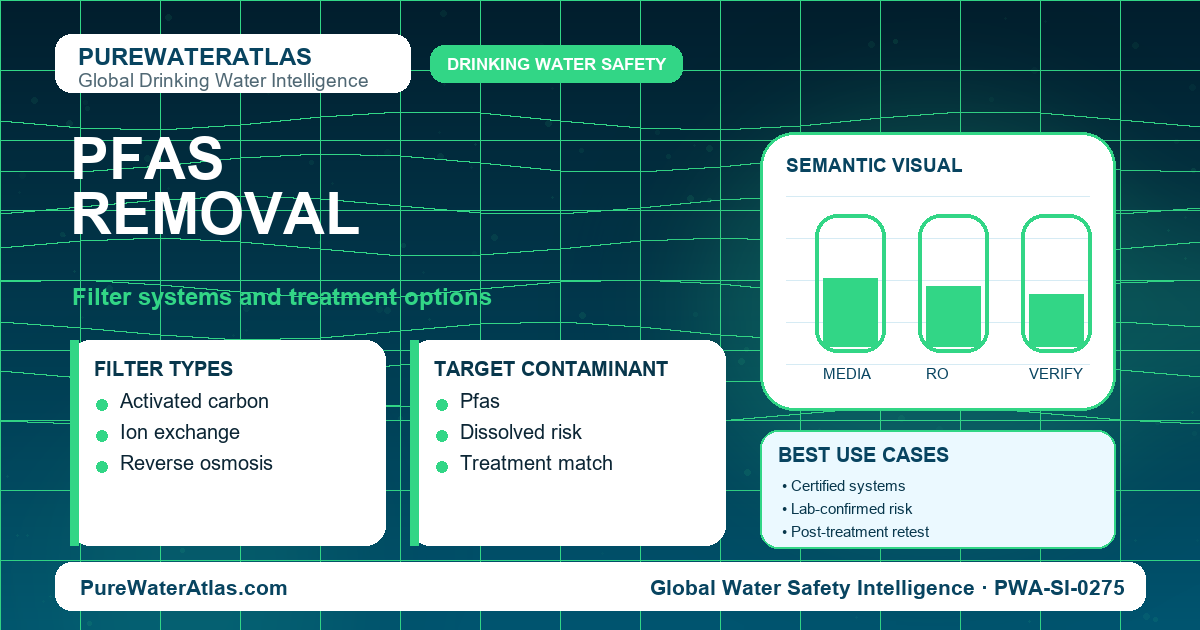
Reverse osmosis is one of the most versatile point-of-use technologies. It uses a semipermeable membrane to reduce many dissolved contaminants, including arsenic, nitrate, fluoride, lead, and certain PFAS compounds. It is often considered among the drinking water safety standards best filters for broad-spectrum reduction at the kitchen tap. However, performance depends on membrane condition, pressure, pretreatment, and waste stream management. It usually treats only one tap unless a larger system is installed.
Ion exchange
Ion exchange media can remove specific dissolved ions such as nitrate, hardness minerals, or certain metals. Water softeners, for example, exchange calcium and magnesium for sodium or potassium. Specialized ion exchange resins can also target contaminants like nitrate or PFAS in some applications. Proper design is essential because competing ions in the water can reduce performance.
Distillation
Distillation boils water and condenses the steam, separating it from many dissolved solids and metals. It can be effective for some contaminants but is slower and more energy-intensive than many alternatives. Volatile compounds may require additional carbon treatment to ensure adequate control.
Ultraviolet disinfection
UV systems inactivate many microorganisms by damaging their genetic material. They are effective when the water is sufficiently clear and the unit is properly sized and maintained. UV does not remove chemicals or particles, and it provides no residual disinfectant in plumbing. It is often used for private wells where microbiological control is needed after particles are removed.
Chlorination and other disinfectants
Chemical disinfection can control bacteria and viruses and, in some system designs, help manage iron bacteria or sulfur-related issues. Chlorine remains one of the most important public health tools in drinking water treatment. However, dose, contact time, pH, and organic matter all affect performance. In homes, shock chlorination may be used after well contamination events, but recurring contamination requires source correction and sometimes continuous treatment.
Mechanical filtration and sediment removal
Sediment filters remove larger particles and are commonly used as pretreatment for more specialized technologies. They protect downstream components such as carbon blocks, UV units, and reverse osmosis membranes. While useful, sediment cartridges alone are not a complete water safety solution for dissolved or microbial hazards.
Adsorptive media
Specific media such as activated alumina, iron-based media, or specialty sorbents can target arsenic, fluoride, and other contaminants. These systems can be highly effective when selected for the correct water chemistry and maintained according to design specifications.
Choosing drinking water safety standards treatment systems
Appropriate drinking water safety standards treatment systems should be chosen based on:
- The exact contaminant and concentration
- The required reduction target relative to applicable standards
- Point-of-use versus point-of-entry needs
- Flow rate and daily water demand
- Source water chemistry, including pH, hardness, and competing ions
- Independent certification or performance validation
- Maintenance cost, replacement schedules, and user capacity
When evaluating drinking water safety standards best filters, independent certification is critical. Look for product testing against recognized standards from credible certifying bodies. Marketing language such as “purifies,” “advanced,” or “laboratory tested” should not replace verified contaminant reduction claims.
Drinking water safety standards maintenance
Even high-quality systems fail if neglected. Drinking water safety standards maintenance includes cartridge changes, membrane replacement, UV lamp replacement, media regeneration, disinfection, pressure checks, and periodic post-treatment testing. A filter that is past its service life may lose effectiveness or, in some cases, become a site for microbial growth.
Maintenance best practices include:
- Following manufacturer replacement intervals
- Keeping a written service log
- Sanitizing systems when recommended
- Monitoring changes in flow rate, taste, or pressure
- Testing treated water on a schedule appropriate to the contaminant risk
The true measure of drinking water safety standards effectiveness is not installation day performance but sustained performance over time under actual use conditions.
Common Misconceptions
“Clear water is safe water”
Many dangerous contaminants are invisible, odorless, and tasteless. Lead, nitrate, arsenic, and many synthetic chemicals may be present without any visible warning signs.
“Any filter is better than none”
A filter that is not designed for the contaminant of concern may provide little or no protection. In some cases, relying on the wrong treatment can create a false sense of security and delay proper action.
“Boiling solves all water problems”
Boiling can kill many pathogens, but it does not remove heavy metals, nitrate, PFAS, or many other chemical contaminants. In fact, boiling may concentrate some dissolved substances as water evaporates.
“Bottled water is always safer”
Bottled water is not automatically superior to properly treated tap water. It may be appropriate as a temporary response to contamination, but it is not a long-term substitute for diagnosing and correcting water quality problems at the source or tap.
“If the utility meets standards, the tap is always safe”
Water quality can change in building plumbing. Lead, copper, biofilm-related issues, and stagnation can affect water between the main distribution system and the faucet.
“Maintenance can wait until taste changes”
Many systems stop performing before obvious sensory changes occur. Waiting for a bad taste or odor can mean operating with reduced treatment effectiveness for weeks or months.
Regulations and Standards
Drinking water regulations vary by country and region, but most modern systems share common principles: identify contaminants of concern, establish health-based limits or treatment techniques, require monitoring, and enforce corrective action when standards are not met.
In the United States, public water systems are primarily regulated under the Safe Drinking Water Act, with standards developed and enforced through federal and state programs. Public systems must monitor for regulated contaminants, report results, and take action when violations occur. Some contaminants are governed by maximum contaminant levels, while others are managed through treatment technique requirements or action levels.
Private wells, however, are often not regulated in the same way. That means well owners bear responsibility for testing, treatment, and maintenance. This regulatory gap is one reason consumer education is so important in the context of drinking water safety standards removal.
Internationally, health-based guideline values from organizations such as the World Health Organization inform national programs. Local conditions, available technology, population risk, and economic considerations influence how those guidelines are implemented.
Why standards evolve
Standards change over time because science changes. Improved toxicology, better epidemiology, new analytical methods, and increased awareness of emerging contaminants all shape regulation. PFAS is a clear example of a contaminant class receiving growing regulatory attention as evidence and testing capabilities expand.
Product certification and treatment claims
Regulations for water quality should be distinguished from certification standards for treatment devices. A contaminant limit in drinking water is not the same as a filter certification standard, although the two are closely related. Consumers should seek systems independently certified for the contaminants they need removed, under realistic operating conditions.
Good regulation also depends on communication. Consumer confidence reports, boil water notices, lead service line inventories, and public testing summaries help people understand local risks and respond appropriately.
Conclusion
Safe drinking water is achieved through a combination of science, regulation, testing, and appropriate treatment. The concept of drinking water safety standards removal is not just about buying a filter. It is about identifying actual contaminants, understanding applicable standards, selecting validated treatment, and confirming long-term performance through careful maintenance and retesting.
The most effective drinking water safety standards filtration methods and drinking water safety standards treatment systems are those matched to the specific water quality problem. Activated carbon may improve taste and reduce certain chemicals, reverse osmosis can address many dissolved contaminants, UV can support microbial control, and specialty media can target specific pollutants. But none of these options should be chosen based on assumptions alone.
Consumers and water managers should prioritize accurate testing, independent certification, and routine drinking water safety standards maintenance. That is the best way to ensure drinking water safety standards effectiveness over time and to identify the drinking water safety standards best filters for a given situation.
Ultimately, drinking water safety is a shared responsibility. Regulators set standards, utilities manage treatment and distribution, manufacturers provide treatment technologies, and consumers play an essential role in monitoring and maintaining water quality at the point of use. When these pieces work together, the result is not only better compliance, but better protection for health, confidence, and long-term resilience.
Read the full guide: Drinking Water Safety Guide
Explore more in this category: Drinking Water Safety Articles