Introduction
Safe drinking water is one of the foundations of public health. People use it every day for drinking, cooking, preparing infant formula, washing produce, and supporting basic sanitation. Because water is consumed so often and by people of all ages, even low-level contamination can become important over time. This is why drinking water safety standards health effects are such a critical topic for households, healthcare professionals, utilities, regulators, and community leaders.
Drinking water safety standards are designed to limit harmful contaminants and reduce the chance of illness, injury, and chronic disease. These standards are based on toxicology, epidemiology, engineering, and risk assessment. They help determine how much of a substance may be tolerated, when corrective action is needed, and how water providers should monitor treatment performance. In practical terms, they serve as guardrails intended to protect the public from pathogens, metals, chemicals, and other hazards that can enter water supplies.
The health consequences of unsafe water vary widely. Some contaminants cause immediate gastrointestinal illness, skin irritation, or neurological symptoms. Others are associated with delayed outcomes such as developmental problems, kidney damage, cardiovascular issues, endocrine disruption, or elevated cancer risk. The pattern often depends on the contaminant type, concentration, duration of exposure, and the age and health status of the exposed person.
Understanding these issues can help readers ask better questions about local water quality reports, home treatment options, and risk communication. For broader context, readers may also explore drinking water safety resources and a more comprehensive overview in this complete guide to drinking water safety standards.
This article explains what drinking water safety standards are, where water hazards come from, how exposure affects health, how contamination is tested and detected, what prevention and treatment steps are available, and how regulations are developed and applied. It also addresses common misunderstandings that can make water risks seem either more alarming or less serious than they really are.
What It Is
Drinking water safety standards are formal limits, treatment requirements, monitoring rules, and operational goals intended to make water safe for human consumption. They apply to public water systems and, in some contexts, also influence private well guidance, healthcare recommendations, and product certification. These standards may be legally enforceable or advisory, depending on the contaminant and jurisdiction.
At the core of water safety standards is the idea that not all contaminants pose the same degree of risk. Some microorganisms can cause disease after very small exposures. Some metals are harmful because they accumulate in the body. Some chemicals become dangerous primarily with repeated exposure over many years. As a result, standards often distinguish among:
- Microbiological hazards, such as bacteria, viruses, and parasites
- Chemical contaminants, including pesticides, solvents, industrial compounds, and disinfection byproducts
- Inorganic substances, such as arsenic, lead, nitrate, fluoride, and other metals or minerals
- Physical or aesthetic indicators, such as turbidity, color, taste, odor, and sediment, which may signal treatment problems
- Radiological contaminants, including naturally occurring or industrial radioactive substances
Standards can include maximum contaminant levels, treatment technique requirements, action levels, and health-based goals. A maximum contaminant level is typically the highest allowed concentration of a substance in drinking water. A treatment technique may be required when direct measurement is difficult or when process control is the best method of protection, as in some microbial risks. An action level may trigger corrosion control, public notification, or mandatory remediation.
The phrase drinking water safety standards exposure levels refers to the amount of a contaminant considered acceptable, tolerable, or concerning under specific assumptions. These exposure levels are not arbitrary. They are derived using laboratory studies, human data where available, uncertainty factors, and estimates of how much water people drink over time. They may differ across countries because of different policy choices, source water conditions, and regulatory methods.
It is also important to understand that standards are population-based tools. They aim to reduce risk for communities, but they do not guarantee zero risk in every individual or every situation. A contaminant below a regulatory limit may still be a concern for some people with special medical needs, and temporary spikes can occur even in otherwise well-managed systems. That is why water quality standards must be paired with ongoing monitoring, treatment maintenance, and public communication.
Main Causes or Sources
Contamination can enter drinking water at many points, from the original water source to the treatment plant, distribution system, plumbing, or household storage container. Identifying the source is essential because the best control strategy depends on where and how the contamination occurs. Readers looking for a focused discussion can see this page on causes and sources of drinking water safety issues.
Natural sources
Some contaminants occur naturally in groundwater, lakes, rivers, or aquifers. Arsenic can leach from certain rock formations. Fluoride occurs naturally in some regions at beneficial or excessive levels. Uranium and radon may be present in geologically affected areas. Hardness minerals, manganese, and iron may also appear due to local geology. Natural occurrence does not automatically mean safe; several naturally occurring contaminants can cause serious health problems if concentrations are too high.
Agricultural runoff
Farming can affect water quality through fertilizers, pesticides, herbicides, and animal waste. Nitrate contamination is a major concern in agricultural regions, especially for infants. Manure and runoff can introduce pathogens such as E. coli, Cryptosporidium, and Giardia into surface water or shallow groundwater. Seasonal weather events, irrigation patterns, and soil conditions influence how much contamination reaches water supplies.
Industrial and commercial activity
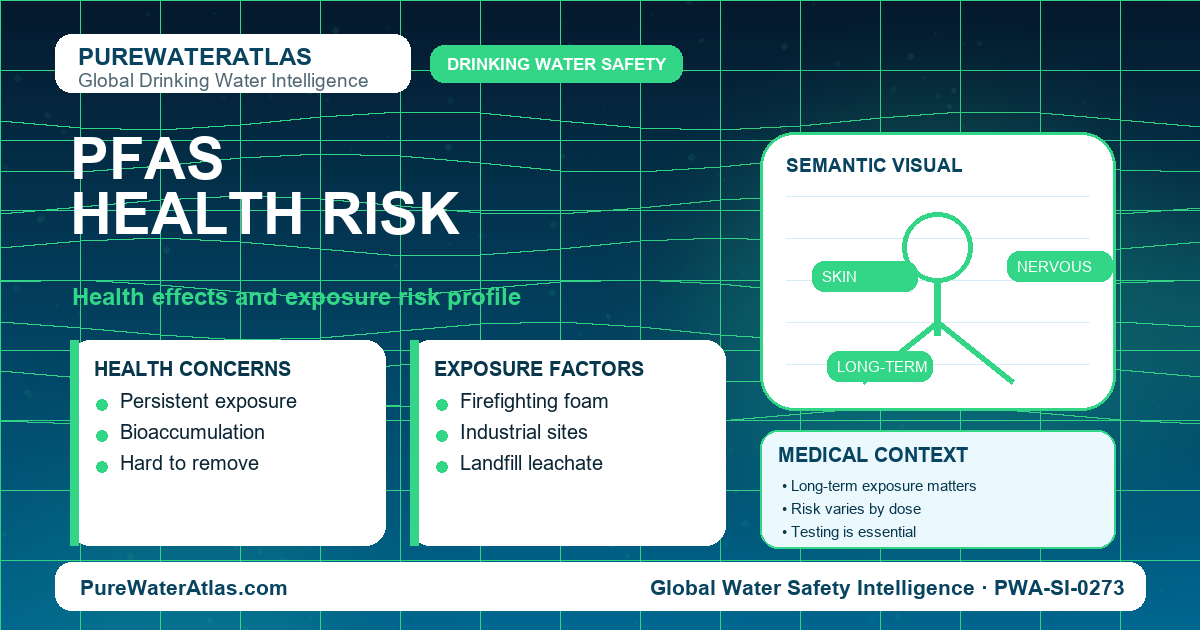
Manufacturing, mining, landfills, dry cleaning, fuel storage, and chemical processing can release hazardous substances into water sources. These may include heavy metals, solvents, petroleum hydrocarbons, PFAS, and other persistent compounds. Industrial contamination can be difficult to address when chemicals remain in soil and groundwater for years or migrate slowly over long distances.
Municipal wastewater and sewage
Failing sewer systems, wastewater discharges, storm overflow events, and septic system problems can introduce microbial and chemical contamination into source water. This raises the risk of acute infectious disease outbreaks, especially after floods or infrastructure failures. In many communities, aging pipes and heavy rain events increase the likelihood of contamination episodes.
Treatment and distribution system failures
Even if source water is relatively clean, failures in treatment or distribution can create hazards. Inadequate filtration, insufficient disinfection, equipment breakdowns, or low disinfectant residuals can allow pathogens to survive. Cracks in pipes or cross-connections can let contaminated water enter the distribution system. Corrosion in household plumbing or service lines can release lead and copper into otherwise treated water.
Household plumbing and storage
The final water quality at the tap can be affected by building plumbing materials, water heater conditions, and storage practices. Lead solder, brass fixtures, old service lines, and biofilm growth can influence exposure. Water sitting in pipes overnight may contain higher concentrations of certain metals. Improperly maintained filters can also become contamination points.
These varied sources explain why water safety is not just about the original source. It is a chain of protection from watershed management to treatment, infrastructure maintenance, and consumer awareness.
Health and Safety Implications
The main purpose of standards is to reduce health harm. The relationship between contamination and illness depends on dose, duration, route of exposure, individual susceptibility, and the nature of the contaminant. Some effects are short term and noticeable. Others are subtle and may only become apparent after years of exposure.
Short-term symptoms and acute effects
The phrase drinking water safety standards symptoms often relates to immediate or near-term health effects after consuming contaminated water. Microbial contamination is one of the most common causes of acute symptoms. These may include:
- Nausea and vomiting
- Diarrhea
- Abdominal cramps
- Fever
- Dehydration
- Fatigue and weakness
Acute chemical exposure can also produce symptoms, though this is less common in routine public water settings. Depending on the contaminant, people may experience headaches, dizziness, skin or eye irritation, metallic taste, confusion, or signs of poisoning. Nitrate exposure in infants can impair oxygen delivery and lead to serious illness. Very high levels of copper may cause gastrointestinal symptoms, while sudden spikes in contaminants from spills or treatment failures may produce distinct odor, taste, or color changes.
Chronic effects and long-term risks
Many of the most serious concerns involve repeated low-level exposure over months or years. This is where drinking water safety standards long term risks become especially important. Long-term exposure to certain contaminants has been associated with:
- Increased risk of bladder, kidney, skin, or other cancers
- Kidney and liver damage
- Neurological impairment
- Developmental delays in children
- Reproductive and pregnancy-related complications
- Endocrine disruption
- Cardiovascular effects
- Bone or skeletal changes in specific exposure scenarios
Lead is a major example of a contaminant with long-term developmental implications. Even relatively low exposure in children can affect learning, behavior, and attention. Arsenic has been linked to cancer and cardiovascular outcomes. Long-term nitrate exposure is under ongoing study for broader health effects beyond infant methemoglobinemia. Certain disinfection byproducts may increase cancer risk when present over long periods above recommended limits. PFAS and similar persistent chemicals have raised concern because of possible immune, metabolic, developmental, and hormonal effects.
Vulnerable populations
Risk is not evenly distributed. Drinking water safety standards vulnerable groups include those who may be harmed at lower exposure levels or who experience more severe consequences from the same contamination. These groups include:
- Infants, especially those consuming formula mixed with tap water
- Children, because of developing brains and bodies
- Pregnant people and developing fetuses
- Older adults
- People with weakened immune systems
- Individuals with kidney disease, liver disease, or certain metabolic conditions
- Patients in hospitals, nursing homes, or dialysis settings
For example, a water contaminant that causes mild illness in a healthy adult may pose a serious threat to an immunocompromised person. Likewise, exposure that appears low in the general population may still be unacceptable for infants or people with specialized medical conditions. This is one reason why clinicians may give water-use advice tailored to a patient’s age, treatment status, or organ function.
Medical concerns and clinical significance
The category of drinking water safety standards medical concerns includes both direct diagnosis and broader public health management. Clinicians may need to consider contaminated water when patients present with unexplained gastrointestinal illness, unusual metal exposure, or signs of repeated low-dose toxic exposure. Medical concern also extends to infection control in healthcare settings, where water quality can affect aerosol-generating devices, ice machines, sterile processing support systems, and high-risk patient care.
From a public health standpoint, water contamination can lead to school closures, boil-water advisories, emergency bottled water distribution, and neighborhood-level health investigations. In severe cases, contamination undermines trust in public systems and creates social as well as medical consequences.
Testing and Detection
Water safety depends heavily on accurate testing. Without monitoring, harmful changes may go unnoticed until people become ill. Testing can be performed by public utilities, certified laboratories, health departments, environmental agencies, and in some cases by homeowners using approved sampling methods. More detailed information is available in this resource on testing and detection methods.
Routine compliance monitoring
Public water systems are generally required to test for specific contaminants on a schedule set by regulations. Frequency depends on system size, source type, historical results, treatment method, and contaminant characteristics. Some measures, such as disinfectant levels and turbidity, may be checked frequently or continuously. Others, such as certain synthetic organic chemicals, may be monitored less often if past risk is low.
Microbiological testing
Microbial analysis often includes total coliform testing, E. coli confirmation, and evaluation of treatment barriers. Utilities may also assess source water vulnerability and filtration effectiveness. Because pathogens can cause rapid outbreaks, microbiological monitoring is central to protecting public health. However, the absence of one indicator organism does not always mean all microbial risks are absent.
Chemical analysis
Chemical testing may look for metals, nitrates, volatile organic compounds, pesticides, PFAS, radionuclides, and byproducts of disinfection. Certified labs use standardized methods with specific detection limits. Interpretation matters: a “non-detect” result does not always mean zero; it means the concentration is below the method’s detection threshold. Lower detection capability can be especially important for contaminants of emerging concern.
Point-of-use and household testing
Homeowners, especially those using private wells, often need additional testing. Well water is not typically monitored by a public utility, so owners are responsible for checking bacteria, nitrate, and region-specific hazards such as arsenic or uranium. Household testing may also be useful when residents suspect plumbing-related lead, taste and odor problems, or changes after flooding, construction, or plumbing repairs.
Interpreting exposure levels
Understanding drinking water safety standards exposure levels requires context. A single result above a standard may indicate an urgent issue, a sampling anomaly, or a temporary problem requiring confirmation and corrective action. Repeated findings are more informative than isolated values. Results should be reviewed in relation to:
- The contaminant’s health-based limit
- The type of standard involved, such as enforceable limit or action level
- Duration and frequency of exposure
- Population affected, including vulnerable individuals
- Source and treatment conditions
Consumers can often access annual water quality reports from utilities. These reports summarize detected contaminants, compliance status, and source information. For private wells, users should keep written records of all test results to track trends over time.
Prevention and Treatment
Protecting drinking water requires multiple layers of defense. Prevention is usually more effective and less costly than responding after contamination has occurred. The ideal strategy begins before pollutants enter the water source and continues through treatment, distribution, and household use.
Source water protection
Communities can reduce risk by protecting watersheds, restricting hazardous discharges, managing agricultural runoff, maintaining septic systems, and monitoring industrial activities. Land-use planning plays a large role. Strong source protection helps lower treatment burden and reduces the chance of contamination events.
Water treatment processes
Public water systems use combinations of coagulation, flocculation, sedimentation, filtration, and disinfection to remove or inactivate contaminants. Some systems also use activated carbon, ion exchange, membrane filtration, reverse osmosis, or advanced oxidation for specific chemicals. Corrosion control is especially important for minimizing lead and copper release from pipes.
The appropriate treatment depends on the contaminant. For example:
- Disinfection targets microbial pathogens
- Filtration improves particulate and pathogen removal
- Activated carbon can reduce some organic chemicals and taste or odor issues
- Ion exchange can remove nitrate or certain minerals
- Reverse osmosis can reduce many dissolved contaminants, though not all systems perform equally
Those researching treatment options may find useful context in water treatment system resources.
Household risk reduction
Consumers can take practical steps when contamination is suspected or confirmed:
- Follow boil-water advisories exactly as issued
- Use certified point-of-use filters matched to the specific contaminant
- Flush taps after water has been sitting in pipes, especially in older homes with possible lead plumbing
- Use cold water for drinking and cooking when metal leaching is a concern
- Test private wells regularly and after floods or repairs
- Replace filter cartridges on schedule
- Use alternate water sources for infant formula or high-risk individuals when directed by health authorities
Medical treatment and public health response
There is no single medical treatment for all contaminated water exposure. Management depends on the contaminant and the severity of illness. Acute gastrointestinal infection may require rehydration and, in some cases, medical testing or targeted therapy. Heavy metal exposure may call for blood testing, clinical monitoring, or specialist referral. In contamination events, health authorities may issue exposure guidance, screening recommendations, and instructions for vulnerable groups.
For ongoing drinking water safety standards medical concerns, clinicians may assess exposure history, timing of symptoms, water source, home plumbing conditions, and whether other household members are affected. In many situations, eliminating the exposure source is the most important intervention.
Common Misconceptions
Water safety is often misunderstood. Clear communication helps people respond appropriately rather than ignoring risk or assuming the worst.
If water looks clear, it is safe
This is false. Many dangerous contaminants, including lead, nitrate, arsenic, viruses, and PFAS, are invisible and may not change taste or smell. Clear water can still be unsafe.
Bottled water is always safer than tap water
Not necessarily. Bottled water quality varies by source, treatment, storage conditions, and oversight. In many places, well-managed tap water is highly safe and regularly monitored. Bottled water may be useful during emergencies, but it is not automatically superior.
Boiling removes all contaminants
Boiling is helpful for many microbial risks, but it does not remove metals, nitrates, or most chemical contaminants. In some cases, boiling can even concentrate certain dissolved substances as water evaporates.
A home filter solves every water problem
Different filters are designed for different contaminants. A carbon filter may improve taste and reduce some chemicals, but it may not remove nitrate, arsenic, or dissolved metals effectively. Certification and contaminant-specific performance matter.
Standards guarantee zero risk
Regulatory limits are intended to reduce risk to acceptable levels, not eliminate all possible harm under all conditions. Scientific uncertainty, variable exposure, and individual susceptibility mean risk management is always a matter of degree.
Only poor or remote communities face water safety issues
Water contamination can affect urban and rural communities, wealthy and low-income neighborhoods, and public systems as well as private wells. Aging infrastructure, industrial legacies, climate events, and plumbing materials can create risk in many settings.
Regulations and Standards
Water safety standards are shaped by science, law, economics, engineering feasibility, and public health policy. Governments and international agencies establish frameworks that define which contaminants must be monitored, what limits apply, and how violations are handled.
How standards are developed
Regulators typically review toxicological studies, human health evidence, occurrence data, treatment feasibility, and exposure assumptions. A health-based goal may first be established based on the level expected to pose minimal risk. From there, an enforceable standard may be set after considering whether laboratories can measure the contaminant reliably and whether water systems can remove it using available technology at a reasonable scale.
This process explains why health goals and legal limits are not always identical. Health goals may be more protective in theory, while enforceable standards reflect what can be monitored and achieved consistently across a wide range of systems.
Enforcement and public notification
When utilities exceed certain limits or fail treatment requirements, they may be required to notify consumers, perform corrective actions, increase sampling, or provide alternate water. Public notification is a critical part of risk reduction because prompt action by consumers can reduce exposure while repairs are underway.
Differences across regions
Standards vary internationally. Some countries adopt precautionary limits earlier for emerging contaminants, while others prioritize infrastructure or cost considerations differently. Local environmental conditions also matter. Regions with arsenic-rich geology or severe agricultural nitrate issues may focus more intensively on those hazards. Readers interested in broader international context can explore global water quality topics.
Why regulations still evolve
Science changes over time. Improved analytical methods detect contaminants at lower levels. Long-term epidemiological studies reveal new health links. Treatment technologies improve. Public expectations also shift. For these reasons, regulations are periodically revised, and new contaminants may be added to monitoring programs. This ongoing evolution is a sign of active public health protection, not necessarily proof that previous systems were ineffective.
Still, regulation alone is not enough. Implementation, funding, infrastructure renewal, operator training, emergency planning, and transparent reporting are all essential. Communities with aging systems or limited resources may struggle to meet standards consistently, which is why investment in water infrastructure remains a major public health priority.
Conclusion
Drinking water safety standards exist to reduce illness, protect vulnerable populations, and guide utilities in managing complex risks from microbes, metals, chemicals, and infrastructure failures. Understanding drinking water safety standards health effects helps people interpret water quality reports, recognize meaningful warning signs, and take appropriate action when concerns arise.
The health implications of unsafe water range from short-term gastrointestinal symptoms to serious chronic outcomes involving development, organ function, and cancer risk. These outcomes depend on the contaminant, the level and duration of exposure, and the characteristics of the individual affected. That is why drinking water safety standards symptoms, drinking water safety standards long term risks, drinking water safety standards vulnerable groups, drinking water safety standards exposure levels, and drinking water safety standards medical concerns all deserve careful attention as part of one larger public health framework.
No single measure guarantees safe water in every situation. Effective protection requires source control, reliable treatment, strong monitoring, sound regulations, infrastructure maintenance, and informed consumers. Whether a person relies on a large municipal utility or a private well, staying engaged with water quality information is an important part of protecting household health.
When questions arise, consumers should consult local water reports, certified laboratories, healthcare professionals, and public health agencies. Safe water is not something to assume blindly, but it is something that can be actively protected through good science, good policy, and practical prevention.
Read the full guide: Drinking Water Safety Guide
Explore more in this category: Drinking Water Safety Articles