
Introduction
Safe drinking water is one of the foundations of public health, yet many people are unsure how to recognize early signs that water quality may be compromised. The who drinking water guidelines warning signs topic is especially important because not every problem with water is obvious, and not every obvious change means the water is unsafe. Some contaminants create clear changes in color, smell, or taste, while others are completely invisible. Understanding the difference between nuisance issues and true safety concerns helps households, building managers, and communities respond appropriately.
The World Health Organization provides a risk-based framework for drinking water quality that focuses on preventing contamination, identifying hazards, and protecting health. These guidelines do not simply list contaminant limits. They also emphasize source protection, treatment performance, operational monitoring, and rapid investigation when warning signs appear. In practical terms, this means water users should pay attention to changes in appearance, odor, taste, plumbing performance, and health patterns among people using the water.
Many people begin to investigate only after a major problem occurs, such as gastrointestinal illness, discolored tap water, or a boil-water advisory. However, warning signs often appear earlier. An unusual metallic taste, sulfur odor, recurring cloudiness, staining on fixtures, or sudden stomach upset in multiple household members may indicate the need for prompt testing. Learning the who drinking water guidelines taste and odor concerns, recognizing who drinking water guidelines visible signs, and understanding who drinking water guidelines health symptoms can help identify risks before they become serious.
This article explains what these warning signs mean, where they come from, what health and safety implications they may have, and when testing is appropriate. It also covers practical prevention steps, common misunderstandings, and the role of international standards. Readers looking for broader background may also find helpful information in drinking water safety resources and in a broader overview at this complete guide to WHO drinking water guidelines.
What It Is
The WHO drinking water guidelines are internationally respected recommendations designed to protect human health from contaminants and conditions found in drinking water. They are used by governments, utilities, health agencies, engineers, and water professionals as a scientific basis for regulations, water safety plans, and treatment decisions. The guidelines focus primarily on health-based risks, including microbial hazards, chemicals of concern, and radiological issues, while also recognizing that consumers often detect problems first through sensory and physical clues.
When discussing who drinking water guidelines warning signs, it is helpful to separate them into three broad categories:
- Sensory warning signs, such as unusual taste, odor, or mouthfeel.
- Visible warning signs, such as color changes, particles, cloudiness, scale, corrosion, or staining.
- Health-related warning signs, such as gastrointestinal symptoms or skin irritation that appear after water use.
WHO guidance makes an important distinction between acceptability and safety. Water may be microbiologically safe but still have poor taste or odor, making consumers reject it. Conversely, water may look and taste normal while containing harmful microorganisms, nitrates, heavy metals, or other contaminants. This is why relying on appearance alone is not enough.
The WHO framework is preventive rather than reactive. It encourages a system-wide view: protecting the source, applying effective treatment, maintaining distribution systems, and using surveillance and testing to verify safety. If water users notice warning signs, the appropriate response is to investigate rather than assume the problem is harmless or, on the other hand, panic without evidence.
In everyday use, the phrase who drinking water guidelines risk indicators can refer to practical clues that suggest a greater chance of contamination or treatment failure. Examples include recent flooding, nearby sewage leaks, changes in water pressure, old lead-containing plumbing, algal blooms in a source water body, agricultural runoff, industrial activity, or a sudden shift in water taste and odor. These indicators do not always confirm contamination, but they do signal the need for closer attention.
Main Causes or Sources
Water quality warning signs can arise from many different sources, and the cause often depends on whether the supply comes from a municipal system, a private well, a small community source, or stored household water. WHO guidance emphasizes understanding the full pathway from source to consumer because contamination can occur at any stage.
Microbial contamination
Microorganisms are among the most urgent drinking water hazards because bacteria, viruses, and protozoa can cause rapid illness. Common sources include sewage intrusion, failing septic systems, animal waste, stormwater runoff, surface water contamination, and breaches in treatment or disinfection. In distribution systems, low pressure, pipe breaks, backflow, and inadequate residual disinfectant can allow contamination to enter otherwise treated water.
Microbial contamination often has no reliable taste, odor, or visible sign. That is one reason WHO places such strong emphasis on preventive management rather than waiting for sensory changes. If a community experiences flooding, a main break, or a boil-water notice, the absence of obvious changes does not mean the water is safe without testing or appropriate precautions.
Chemical contamination
Chemicals can enter drinking water naturally or through human activities. Common examples include arsenic, fluoride, nitrate, lead, manganese, pesticides, industrial solvents, and by-products formed during disinfection. Some chemicals originate in local geology, especially in groundwater. Others come from agriculture, mining, manufacturing, landfills, fuel storage, household plumbing, or poor waste disposal practices.
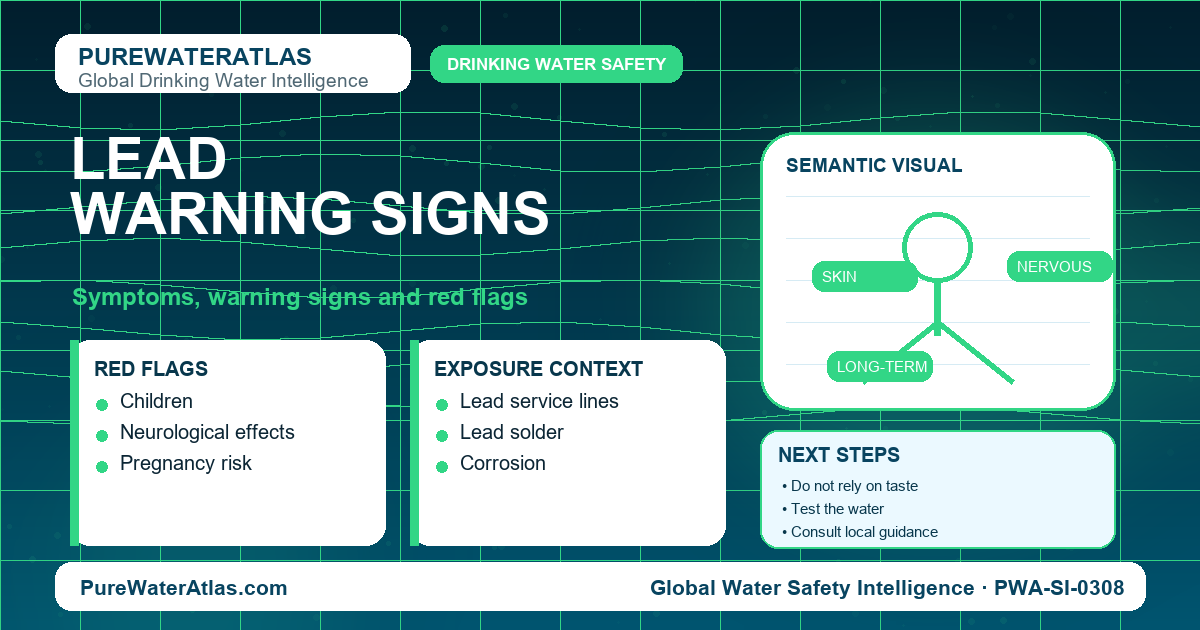
Chemical contamination may produce warning signs such as bitter, salty, metallic, medicinal, or chemical tastes. It can also cause staining, deposits, or discoloration. However, many dangerous chemicals are undetectable without laboratory analysis. Lead is a well-known example: water may look clear and taste normal while still containing harmful concentrations due to corrosion in plumbing.
Taste and odor issues
The topic of who drinking water guidelines taste and odor is important because consumers often use their senses as the first screening tool. Taste and odor changes may arise from:
- Algae or cyanobacteria in lakes and reservoirs
- Hydrogen sulfide causing a rotten egg smell
- Chlorine or chloramine treatment changes
- Organic matter decomposition
- Industrial contamination or solvent intrusion
- Corrosion in plumbing
- High mineral content, such as iron, manganese, or sulfate
While some taste and odor issues are mainly aesthetic, others may signal treatment problems, source water deterioration, or contamination events that require action.
Visible signs and physical changes
Who drinking water guidelines visible signs often include cloudiness, floating particles, sediment, rust-colored water, black specks, blue-green stains, or oily sheens. These can be caused by suspended solids, pipe corrosion, mineral scaling, microbial growth in plumbing, disturbance in mains, or source water contamination.
Important visible indicators include:
- Brown, red, or orange water: often linked to iron, rust, pipe disturbance, or corrosion.
- Black staining or particles: may be manganese, deteriorating rubber components, or pipe scale.
- Blue or green staining: may indicate copper corrosion.
- Cloudy water: can result from air bubbles, sediment, or treatment/distribution disturbances.
- Oily film: may come from contamination, plumbing materials, or natural iron bacteria effects.
Household and storage-related sources
Not all water problems begin at the source or utility level. Household storage tanks, rooftop tanks, poorly maintained filters, water heaters, dead-end plumbing lines, and cross-connections can all create risks. Water standing for long periods may promote microbial growth, corrosion, or release of metals from plumbing materials. In buildings with complex plumbing systems, water age and low flow can become significant risk factors.
For more detail on source pathways and contamination origins, readers can explore causes and sources under WHO drinking water guidelines.
Health and Safety Implications
The purpose of the WHO guidelines is health protection, so warning signs matter most when they suggest a risk to people. Some water quality issues are primarily aesthetic and unpleasant but not dangerous at typical levels. Others can cause immediate infection, chronic toxicity, or particular risks for infants, older adults, pregnant people, and immunocompromised individuals.
Acute health symptoms
The most common acute water-related illness involves the digestive system. Who drinking water guidelines health symptoms that may raise concern include:
- Diarrhea
- Vomiting
- Nausea
- Abdominal cramps
- Fever associated with gastrointestinal illness
These symptoms may result from microbial contamination, especially when several people using the same water source become ill around the same time. The risk may be higher after heavy rainfall, flooding, sewage backup, infrastructure failure, or disruption of disinfection. Such symptoms do not prove the water is the cause, but they are important red flags when combined with known exposure.
Skin, eye, and respiratory irritation
Water can also contribute to skin dryness, dermatitis, eye irritation, or respiratory discomfort in certain circumstances. High disinfectant levels, contaminants in bathing water, or volatile chemicals released during showering can sometimes play a role. In buildings, poor maintenance of hot water systems can also support organisms such as Legionella, which is primarily an inhalation concern rather than a drinking risk.
Chronic or long-term health risks
Some of the most serious drinking water problems produce no immediate symptoms. Long-term exposure to chemicals such as arsenic, lead, nitrate, or certain industrial contaminants can have lasting health consequences. For example:
- Lead can affect neurological development, especially in children.
- Arsenic is associated with skin lesions and increased cancer risk over time.
- Nitrate can be especially dangerous for infants and is linked to methemoglobinemia.
- Excess fluoride can contribute to dental or skeletal fluorosis in some settings.
Because these risks are not reliably detected by the senses, WHO guidelines strongly support periodic testing based on local hazards and vulnerability.
Psychological and behavioral impacts
Acceptability also matters because people may stop using a safe water source if the taste, smell, or appearance is unpleasant. They may switch to a less safe source or use inadequate alternatives. In this way, even aesthetic problems can create indirect health risks. Suspicion about water quality can also reduce trust in public systems, which is why timely communication and transparent testing are important during any water quality concern.
For a deeper discussion of outcomes and hazard significance, see health effects and risks related to WHO drinking water guidelines.
Testing and Detection
One of the most practical questions people ask is who drinking water guidelines when to test. The answer depends on the water source, recent events, vulnerable users, and any warning signs that are present. Testing should never be random guessing; it should be guided by the most likely hazards.
When testing is especially important
- After flooding, storm damage, or wildfire impacts
- After a boil-water advisory or distribution system break
- When taste, odor, color, or turbidity suddenly changes
- When multiple users experience unexplained gastrointestinal symptoms
- When a private well is first put into use
- At regular intervals for private wells, especially annually for basic microbiological and nitrate screening where relevant
- When infants, pregnant people, or immunocompromised individuals rely on the water
- When nearby land use changes, such as new agriculture, construction, industrial activity, or septic failures
- When a home has old plumbing that may contain lead or copper-related corrosion issues
What to test for
The right tests depend on the suspected problem. Common categories include:
- Microbial indicators: E. coli, total coliforms, and sometimes enterococci or other indicators depending on context
- Basic chemistry: pH, hardness, alkalinity, conductivity, nitrate, nitrite, sulfate, chloride
- Metals: lead, copper, arsenic, iron, manganese
- Physical characteristics: turbidity, color, total dissolved solids
- Specialized tests: pesticides, volatile organic compounds, cyanotoxins, radionuclides, or disinfection by-products
Field kits can be useful for screening, but suspected health risks should be confirmed through certified laboratory testing whenever possible.
Interpreting taste, odor, and visible signs
Consumers often wonder what sensory clues mean. The following patterns can help guide next steps, though they are not a substitute for testing:
- Rotten egg odor: often hydrogen sulfide; may come from groundwater, plumbing, or water heaters.
- Metallic taste: may suggest iron, manganese, zinc, or corrosion-related issues.
- Bleach-like smell: may reflect elevated chlorine, which can occur after treatment adjustments.
- Earthy or musty odor: may be associated with algae or organic matter.
- Sudden brown water: may indicate disturbed sediment, rust, or pipe corrosion.
These observations are useful because they narrow the list of possible causes, but they do not confirm whether a health-based limit has been exceeded.
Risk indicators beyond the tap
Who drinking water guidelines risk indicators also include environmental and infrastructure clues outside the glass itself. Households should be alert to cracked well caps, standing water near a wellhead, damaged sanitary seals, cross-connections, low water pressure, unusual sounds in pipes, sewage odors near the property, or recent excavation around water lines. In community systems, recurring complaints from several neighborhoods may signal a broader distribution issue.
People seeking practical advice on filtration and monitoring options can also review resources in water purification and water treatment systems.
Prevention and Treatment
The most effective approach to drinking water safety is prevention. WHO strongly supports water safety plans, which identify hazards from source to tap and establish control measures before contamination reaches consumers. For households, the equivalent idea is to manage risks systematically rather than waiting for obvious symptoms.
Source protection
Protecting water at its origin is the first line of defense. This includes controlling sewage discharges, managing agricultural runoff, maintaining setback distances for wells and septic systems, preventing industrial leaks, and reducing catchment contamination. Surface water sources require particularly careful monitoring because they are more exposed to runoff, animals, and seasonal biological changes.
Treatment barriers
Utilities and small systems commonly use multiple barriers such as coagulation, filtration, disinfection, corrosion control, and protected storage. No single treatment method solves every water quality problem. For example:
- Disinfection is essential for many microbial hazards but does not remove dissolved metals.
- Activated carbon can improve taste and odor and remove some organic contaminants, but it does not reliably remove all microbes unless specifically designed for that purpose.
- Reverse osmosis can reduce many dissolved contaminants, though system maintenance is crucial.
- Ion exchange can address specific minerals or nitrate under appropriate conditions.
- Oxidation and filtration are often used for iron, manganese, or hydrogen sulfide.
Household actions when warning signs appear
If consumers notice unusual changes, practical steps include:
- Stop assuming the change is harmless until evaluated.
- Check whether neighbors have the same issue.
- Contact the water supplier or local health authority if on a public system.
- For private wells, arrange testing based on the suspected hazard.
- Flush stagnant water from taps if the issue may be related to standing water in plumbing.
- Avoid using hot tap water for cooking or infant formula when metal contamination is suspected, since hot water can increase metal leaching.
- Follow boil-water or do-not-drink advisories exactly as issued.
Maintenance and long-term prevention
Prevention also requires routine maintenance. Wells should be inspected, storage tanks cleaned when appropriate, treatment units serviced on schedule, and plumbing materials evaluated in older buildings. Filters must be changed according to manufacturer specifications; otherwise, they may lose effectiveness or even become microbial growth sites. Water heaters and premise plumbing should also be maintained to reduce stagnation and biofilm problems.
Importantly, boiling is not a universal solution. It is helpful for many microbial threats, but it does not remove metals, nitrate, or many chemical contaminants. In some cases, boiling can even concentrate dissolved substances as water evaporates. That is why treatment must match the hazard.
Common Misconceptions
Mistaken beliefs about water quality can delay action or create unnecessary alarm. WHO-based risk communication benefits from correcting these common misconceptions clearly.
If water looks clear, it must be safe
This is false. Some of the most significant hazards, including bacteria, viruses, arsenic, nitrate, and lead, may be present with no visible changes at all. Clear water can still be unsafe.
Bad taste always means dangerous water
Not necessarily. Some taste and odor problems are aesthetic and not harmful at typical levels. However, unpleasant sensory changes should not be ignored, because they may indicate source changes, treatment issues, or plumbing problems that deserve investigation.
Boiling fixes every water problem
Boiling can inactivate many pathogens, but it does not remove all contaminants. It will not solve lead, arsenic, nitrate, or many chemical contamination issues. Choosing the wrong response can create a false sense of security.
Municipal water never needs concern
Public water systems are monitored and regulated, but no system is immune to pipe breaks, operational failures, source contamination, or building-level plumbing issues. Most of the time, public systems are reliable, but sudden changes should still be reported and investigated.
Private well water is natural, so it is safe
Private wells can provide excellent water, but they are not automatically protected. They are vulnerable to local geology, septic leakage, runoff, flooding, poor well construction, and lack of regular testing. Well owners carry direct responsibility for monitoring and maintenance.
A home filter guarantees protection
Only if it is certified for the specific contaminant, properly installed, and maintained correctly. A filter selected for taste improvement may do little or nothing for microbial contamination, heavy metals, or nitrate.
Regulations and Standards
The WHO guidelines are not laws by themselves. They are science-based recommendations that many countries use to develop national standards and regulations. This distinction is important. A country may adopt WHO values directly, adapt them to local conditions, or establish alternative regulatory frameworks that still reflect WHO principles.
How WHO guidelines are used
WHO recommendations are especially influential in shaping:
- Health-based target values for contaminants
- Water safety plan design
- Source protection and treatment expectations
- Surveillance and monitoring programs
- Risk communication during incidents
The guidelines emphasize that achieving safe water depends on more than meeting a test number at one moment in time. Safety comes from continuous risk management across the entire supply system.
Acceptability versus health-based limits
WHO also discusses acceptability factors such as taste, odor, and appearance. These are important because consumers may reject water that is technically compliant but unpleasant. In practice, water managers must balance both health protection and public confidence. A strong chlorine smell, for example, may not necessarily indicate a health hazard, but it can reduce acceptability and signal the need for operational review.
Local standards matter
Because legal requirements vary, consumers should check local regulatory agencies, utility notices, and public health advisories for the exact standards and response instructions that apply in their area. The WHO framework provides a trusted global reference, but local implementation determines testing schedules, reporting rules, and enforcement mechanisms.
For broader standards context and practical interpretation, readers can return to the complete WHO drinking water guidelines guide.
Conclusion
Recognizing drinking water warning signs is not about reacting to every minor change with panic. It is about understanding which clues deserve attention and knowing when professional testing is necessary. The core lesson from the who drinking water guidelines warning signs approach is that safe water management combines observation, prevention, testing, and informed response.
Changes in taste, smell, or appearance may point to aesthetic concerns, plumbing issues, or more meaningful system problems. At the same time, the absence of visible or sensory change does not guarantee safety. This is why who drinking water guidelines taste and odor, who drinking water guidelines visible signs, who drinking water guidelines health symptoms, who drinking water guidelines when to test, and who drinking water guidelines risk indicators should all be understood together rather than in isolation.
For households and communities, the best strategy is a layered one: protect the source, maintain treatment and plumbing systems, investigate changes promptly, and use appropriate testing to confirm concerns. Whether the water comes from a large municipal utility or a private well, awareness and early action can reduce both health risks and uncertainty.
Readers who want to continue learning can explore additional guidance in drinking water safety, review contamination pathways in causes and sources, examine outcomes in health effects and risks, and compare solutions in water purification and water treatment systems. In all cases, the goal remains the same: water that is not only acceptable to drink, but genuinely safe.
Read the full guide: Drinking Water Safety Guide
Explore more in this category: Drinking Water Safety Articles