Introduction
Water scarcity is no longer a problem limited to deserts, remote villages, or drought-prone regions. It affects cities, suburbs, farms, industries, and households across every continent. Population growth, aging infrastructure, pollution, climate variability, and uneven access to treatment technology all contribute to a situation in which safe water is increasingly difficult to secure. For families, institutions, and communities trying to respond, one of the most common questions is practical: among the many treatment choices available, what are the water scarcity worldwide best filters and systems for improving access to usable water?
This question matters because scarcity is not always about absolute absence. In many areas, water exists, but it may be contaminated, saline, intermittently available, or unsafe without treatment. That means water management today is closely tied to filtration, purification, storage, conservation, and source protection. Choosing the right solution requires understanding both the type of scarcity and the type of contamination involved.
In broad terms, water scarcity can be physical, economic, or quality-related. Physical scarcity occurs when natural freshwater resources are limited relative to demand. Economic scarcity occurs when water may be present, but infrastructure, governance, or affordability barriers prevent reliable access. Quality-related scarcity happens when water sources are too polluted or saline to use safely without treatment. In this last category, filtration and treatment systems become essential tools for turning marginal water into drinking water or usable household water.
As interest grows in water scarcity worldwide reverse osmosis, activated carbon systems, point-of-use filters, and larger treatment setups, consumers often encounter conflicting claims. Some products target taste, some target microbes, and others reduce salts, metals, or chemicals. No single filter solves every water problem, and the best option depends on source water, health priorities, budget, maintenance capacity, and local conditions.
This article explains the nature of global water scarcity, its major causes, associated health risks, how water problems are identified, and how to compare treatment options. It also explores water scarcity worldwide carbon filters, reverse osmosis, and related approaches in a practical, evidence-based way. For readers seeking broader context, additional resources can be found in global water quality, this complete guide, and related information on drinking water safety.
What It Is
Water scarcity refers to a condition in which available water resources are insufficient in quantity, reliability, accessibility, or quality to meet human and ecological needs. While often discussed as a supply problem, scarcity is really the result of a mismatch between water availability and water demand under specific social, environmental, and technical conditions.
There are several important forms of water scarcity:
- Physical water scarcity: Natural freshwater supplies are limited, often due to arid climates, prolonged drought, overdrawn aquifers, or highly seasonal rainfall.
- Economic water scarcity: Water sources exist, but communities lack the infrastructure, financing, governance, or treatment systems needed to deliver safe water reliably.
- Quality-driven scarcity: Water is present, but contamination from pathogens, chemicals, sediment, industrial waste, agricultural runoff, salinity, or naturally occurring minerals makes it unsafe or undesirable without treatment.
This distinction is critical when discussing filtration. In many real-world settings, the challenge is not finding any water at all, but making available water safe enough to use. A household near a polluted river, a coastal community with brackish groundwater, or an urban resident affected by pipe corrosion may all experience scarcity differently, yet each may need treatment solutions tailored to local risks.
Scarcity also operates at multiple scales. At the national level, governments may face declining reservoirs or transboundary conflicts. At the municipal level, utilities may deal with treatment plant limitations or distribution losses. At the household level, people may rely on bottled water, tanker deliveries, rainwater harvesting, private wells, or under-sink systems to fill gaps in public supply.
Because of this complexity, discussing the water scarcity worldwide treatment comparison of different filters and systems requires a use-based perspective. A system suitable for improving taste in a city water supply may be completely inadequate for removing pathogens from surface water or salts from brackish groundwater. Likewise, an advanced treatment system may perform well in theory but fail in practice if replacement parts, electricity, or technical support are not consistently available.
Water scarcity therefore should be understood not just as a hydrological issue, but as a public health, technology, infrastructure, and equity issue. Effective responses combine conservation, source protection, storage, reuse, efficient distribution, and fit-for-purpose treatment.
Main Causes or Sources
The causes of water scarcity are interconnected and often cumulative. In many regions, several pressures occur at once, compounding stress on already vulnerable water systems. Understanding these sources is essential for selecting the best filtration and treatment strategies.
Climate Variability and Climate Change
Shifts in rainfall patterns, rising temperatures, reduced snowpack, glacial retreat, and more frequent droughts can significantly reduce freshwater availability. At the same time, intense storms may increase runoff and flooding without improving long-term groundwater recharge. Climate impacts also worsen water quality by concentrating pollutants during low-flow periods and increasing sediment and microbial contamination after extreme weather events.
Population Growth and Urbanization
As cities expand and populations increase, demand for drinking water, sanitation, agriculture, and industry grows rapidly. Urban systems may struggle to keep pace, especially where infrastructure is old, underfunded, or unevenly distributed. Informal settlements and rapidly growing peri-urban areas often face the most severe access challenges.
Agricultural Demand
Agriculture is one of the largest users of freshwater globally. Inefficient irrigation, cultivation of water-intensive crops in dry regions, and groundwater over-extraction can deplete local resources. Agricultural runoff also introduces nitrates, pesticides, sediments, and pathogens into nearby water bodies, turning quantity stress into quality stress.
Industrial Pollution and Wastewater
Industrial discharges can contaminate rivers, lakes, and aquifers with heavy metals, solvents, salts, and other pollutants. Even where regulations exist, enforcement may be weak. Untreated or poorly treated wastewater from urban centers can add nutrients, microbes, pharmaceuticals, and chemical residues to water sources, making treatment more difficult and expensive.
Groundwater Depletion
Many communities rely heavily on groundwater because it is often more stable than surface water. However, aquifers can be depleted faster than they recharge. Falling groundwater tables raise pumping costs, dry up wells, and may draw in saline water in coastal areas. In some locations, naturally occurring arsenic, fluoride, iron, or manganese also affect groundwater quality.
Salinity and Seawater Intrusion
In coastal regions, over-pumping of groundwater can allow seawater to intrude into freshwater aquifers. Inland salinity may also result from irrigation return flows, geologic conditions, or evaporation in dry climates. Saline and brackish water often require membrane-based treatment such as reverse osmosis to become potable.
Infrastructure Failures and Distribution Losses
Leaking pipes, intermittent service, storage contamination, and inadequate treatment plants all contribute to effective scarcity. In some systems, large percentages of treated water are lost before reaching users. Intermittent pressure can also increase contamination risk by drawing polluted water into damaged pipes.
Readers wanting a deeper explanation of these drivers can explore water scarcity worldwide causes and sources.
Health and Safety Implications
Water scarcity creates health risks not only by reducing water for drinking, cooking, and hygiene, but also by forcing people to use lower-quality sources. When safe water is unreliable or unaffordable, households may turn to untreated wells, surface water, informal vendors, or inadequately stored water. The consequences can be immediate and severe.
Microbial Risks
Pathogens remain one of the most urgent concerns in water-insecure settings. Bacteria, viruses, and protozoa can enter water through sewage, animal waste, floodwaters, poor sanitation, or storage contamination. These organisms may cause diarrhea, cholera, dysentery, hepatitis, and other infections. Children, older adults, pregnant individuals, and immunocompromised people face especially high risks.
Chemical Risks
Chemical contamination can be acute or chronic. Long-term exposure to arsenic, nitrate, lead, mercury, fluoride, pesticides, industrial chemicals, or disinfection byproducts may cause developmental, neurological, cardiovascular, kidney, endocrine, or cancer-related effects depending on the contaminant and dose. Chemical risk is often less visible than microbial risk, but can be equally serious.
Salinity and Mineral Imbalance
Saline water is not merely unpleasant to drink. High total dissolved solids may make water unsuitable for regular consumption or cooking, and elevated sodium can be a concern for some individuals on medically restricted diets. Excessive hardness may not be a primary health hazard for most people, but it can affect plumbing, soap efficiency, and user acceptance.
Hygiene and Indirect Health Impacts
When water is scarce, people may reduce handwashing, bathing, laundry, and cleaning. This can increase skin infections, eye conditions, and transmission of infectious disease. Water scarcity also affects food preparation, healthcare facilities, schools, and sanitation systems, producing broad public health impacts beyond direct drinking exposure.
Household Storage Risks
Even treated water can become unsafe if stored improperly. Open containers, dirty tanks, and infrequent cleaning can reintroduce bacteria, sediment, and insects. This is why treatment and safe storage must be addressed together.
More on these outcomes is available in water scarcity worldwide health effects and risks.
Testing and Detection
Before selecting a filter, system, or treatment strategy, it is essential to determine what problem is actually present. Many people choose filtration based on marketing claims, but effective treatment starts with testing. Water can look clear and still contain harmful microbes, dissolved metals, nitrates, or salts. Conversely, cloudy or bad-tasting water may be aesthetically unpleasant yet not the most serious health risk compared with invisible contaminants.
What Should Be Tested
The ideal testing panel depends on the water source. Common parameters include:
- Microbiological indicators: total coliforms, E. coli, or other pathogen indicators
- Physical indicators: turbidity, color, odor, sediment, temperature
- Chemical indicators: pH, nitrate, fluoride, arsenic, lead, iron, manganese, pesticides, hardness, chlorine
- Salinity indicators: total dissolved solids, conductivity, sodium, chloride
Source-Specific Testing Priorities
- Municipal water: test if there are concerns about lead from plumbing, taste and odor issues, disinfection byproducts, or local notices about contamination.
- Private wells: test regularly for bacteria, nitrates, arsenic, iron, manganese, fluoride, hardness, and region-specific contaminants.
- Surface water: assume high microbial risk and likely sediment; additional testing may be needed for agricultural or industrial pollutants.
- Brackish or coastal groundwater: test salinity, sodium, chloride, and total dissolved solids, along with microbial and chemical indicators.
- Rainwater harvesting: assess microbial contamination, roofing-related debris, bird droppings, and storage hygiene.
Field Kits vs. Certified Laboratory Analysis
Basic field kits can provide useful screening for pH, chlorine, hardness, nitrate, and in some cases bacteria. However, laboratory testing is generally more reliable for health-critical contaminants such as arsenic, lead, pesticides, and detailed microbiological assessment. A good rule is to use field tests for quick checks and certified labs for decision-making about treatment investments.
Monitoring After Installation
Testing should not stop once a filter is installed. Treatment systems can fail, membranes can foul, carbon can become exhausted, and storage tanks can become contaminated. Follow-up testing confirms that the system is performing as expected. This is a central point in any serious discussion of water scarcity worldwide filter maintenance: maintenance is not only about replacing parts, but also about verifying results.
Prevention and Treatment
The best response to water scarcity combines prevention, conservation, source management, and treatment. Filters are important, but they are only one part of a complete solution. The most resilient strategies reduce contamination before it reaches the tap, preserve supplies, and match treatment to actual water quality needs.
Prevention and Supply-Side Strategies
- Protect watersheds, recharge zones, and wellheads from pollution.
- Repair distribution leaks and improve utility efficiency.
- Promote water-saving fixtures, irrigation efficiency, and industrial reuse.
- Expand rainwater harvesting and safe storage where appropriate.
- Increase wastewater treatment and water reuse for non-potable applications.
- Use desalination or advanced treatment where salinity or severe shortages justify the cost.
Point-of-Use and Point-of-Entry Treatment Options
For households and small facilities, treatment often falls into point-of-use systems, which treat water at a specific tap, or point-of-entry systems, which treat all water entering the building. The best option depends on intended use, contamination type, maintenance capacity, and budget.
Reverse Osmosis
Water scarcity worldwide reverse osmosis is frequently discussed because reverse osmosis, or RO, is one of the most effective technologies for reducing dissolved salts, many heavy metals, nitrates, fluoride, and a wide range of other dissolved contaminants. It works by forcing water through a semi-permeable membrane that rejects many impurities.
Best for: brackish water, salinity, high total dissolved solids, nitrate, fluoride, arsenic in some treatment trains, and situations where dissolved contaminant reduction is a priority.
Advantages:
- Broad contaminant reduction capability
- Highly effective for salinity and many dissolved chemicals
- Useful where source water is mineral-heavy or brackish
Limitations:
- Produces reject water
- Requires adequate pressure and periodic membrane replacement
- Usually benefits from prefiltration and sometimes remineralization
- Not ideal if microbial safety is the only concern and simpler disinfection would suffice
RO is often among the water scarcity worldwide best filters when the central problem is dissolved contamination or salinity, but it is not always the most cost-effective first step for all households.
Activated Carbon Filters
Water scarcity worldwide carbon filters are commonly used to improve taste, odor, and chlorine-related issues. Activated carbon can also reduce many volatile organic compounds and some synthetic chemicals depending on filter design and contact time.
Best for: chlorine, taste and odor problems, some organic chemicals, and improving acceptability of municipally treated water.
Advantages:
- Improves taste and smell significantly
- Relatively simple and widely available
- Can be used as a standalone system or as pre/post-treatment with RO
Limitations:
- Does not remove salts effectively
- Limited or no reliable protection against many microbes unless combined with other technologies
- Performance declines as media become exhausted
Carbon filtration is often best for treated municipal water or as part of a multi-stage system, rather than as a complete solution for heavily contaminated raw water.
Ultrafiltration and Microfiltration
These membrane systems are effective for particles, turbidity, and many microbes, depending on pore size. They are useful in settings with significant sediment or biological contamination, especially when dissolved salts are not the main issue.
Best for: bacteria, protozoa, suspended solids, and pre-treatment before other systems.
Ultraviolet Disinfection
UV systems inactivate many microorganisms without adding chemicals. They are effective when water is already relatively clear, because turbidity can shield microbes.
Best for: microbial disinfection in low-turbidity water.
Limitation: UV does not remove chemicals, sediment, or salts.
Ceramic, Gravity, and Basic Household Filters
Low-cost household filters can be useful in emergency, off-grid, or low-resource settings. Depending on design, they may reduce sediment and some microbes. However, performance varies widely. Some are excellent interim tools, while others are mainly taste devices with limited health protection.
Distillation and Desalination
Distillation can remove many contaminants but is energy-intensive for routine household use. Large-scale desalination has become important in some water-scarce regions, especially coastal areas, but cost, energy demand, concentrate disposal, and infrastructure requirements remain major considerations.
Water Scarcity Worldwide Treatment Comparison
A practical water scarcity worldwide treatment comparison should focus on matching technologies to contaminants:
- Salinity/high TDS: reverse osmosis or desalination
- Chlorine/taste/odor: activated carbon
- Bacteria and protozoa: ultrafiltration, ceramic filtration, UV, or properly managed disinfection
- Viruses: UV, chemical disinfection, or advanced membrane systems depending on conditions
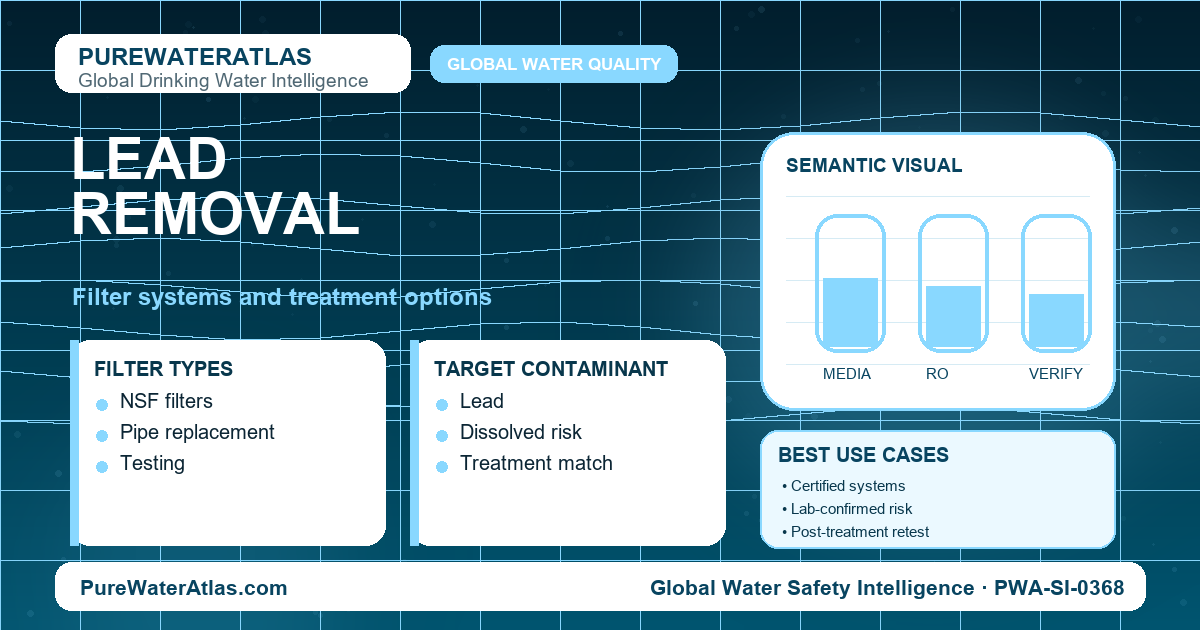
- Lead and some metals: certified specialty filters, RO, or media designed for those contaminants
- Nitrate/fluoride: reverse osmosis or specialized media
- Sediment/turbidity: prefilters, sediment filters, settling, or membrane pre-treatment
Water Scarcity Worldwide Buying Guide
A reliable water scarcity worldwide buying guide begins with five questions:
- What source water are you treating: municipal, well, rainwater, surface water, or brackish groundwater?
- What contaminants have been confirmed by testing?
- Is the primary goal drinking water safety, improved taste, reduced salinity, or whole-house treatment?
- What maintenance can you realistically perform and afford?
- Does the system have credible certification or performance data for the contaminants you need reduced?
Buyers should also consider flow rate, filter life, replacement part availability, electricity needs, wastewater production, installation space, and total long-term ownership cost.
Water Scarcity Worldwide Filter Maintenance
Even the best system will underperform without proper upkeep. Water scarcity worldwide filter maintenance is especially important where treatment is relied upon to compensate for unsafe source water.
- Replace cartridges and membranes on schedule.
- Sanitize housings and storage tanks regularly.
- Monitor pressure, flow rate, and taste changes.
- Use prefilters where sediment is high to protect downstream equipment.
- Retest water periodically to verify continued performance.
- Keep records of installation dates, filter changes, and lab results.
Readers comparing options may also find useful background in water treatment systems.
Common Misconceptions
Water scarcity and filtration are often misunderstood. Several common misconceptions can lead to poor decisions.
“Any filter makes water safe.”
Not true. Some filters are designed mainly to improve taste or remove sediment. They may not remove microbes, salts, nitrates, or toxic metals. Safety depends on matching the technology to the contaminant.
“Clear water is clean water.”
Many dangerous contaminants are invisible. Water can look perfectly clear and still contain bacteria, arsenic, nitrate, or high salinity.
“Reverse osmosis is always the best choice.”
RO is powerful, but not always necessary. If the main concern is chlorine taste in treated municipal water, activated carbon may be simpler and more affordable. If the concern is microbial contamination, disinfection or ultrafiltration may be the critical step.
“Carbon filters remove everything.”
Activated carbon is useful, but it does not solve every problem. It is especially strong for taste, odor, and certain organic chemicals, not for salt removal.
“Maintenance is optional if the system was expensive.”
Price does not eliminate upkeep. In fact, more advanced systems often require more disciplined maintenance. Neglected systems can lose effectiveness or even become contamination points.
“Water scarcity is only a problem in poor or dry countries.”
Scarcity also affects wealthy cities through drought, contamination crises, groundwater depletion, wildfire impacts, and failing infrastructure. It is a global issue with local expressions.
Regulations and Standards
Water quality regulation varies by country, but most systems are guided by risk-based drinking water standards or guidelines. These standards set maximum levels for microbiological, chemical, and radiological contaminants, as well as operational requirements for public supplies.
Public Water Standards
In many countries, public utilities must monitor and report water quality regularly. Standards often cover pathogens, disinfection residuals, turbidity, lead, arsenic, nitrate, pesticides, and other contaminants. Compliance helps protect public health, but distribution system issues and household plumbing can still affect water quality at the tap.
Private Supplies and Household Responsibility
Private wells, local storage systems, and household treatment units are often not regulated as strictly as public systems. In these cases, responsibility shifts more heavily to owners and users for testing, maintenance, and safe operation.
Certification of Filters and Treatment Devices
Consumers should look for systems tested or certified against recognized standards for specific claims. A filter certified for chlorine reduction is not the same as one certified for lead, cysts, or microbial reduction. Product literature should identify the exact contaminants reduced and under what conditions.
Why Standards Matter in Scarcity Contexts
In water-scarce settings, people may be more willing to use alternative sources, emergency systems, or low-cost devices. Standards help distinguish between products that have demonstrated performance and those that rely mainly on marketing. This is particularly important when treatment is being used as a health-protective measure rather than a convenience upgrade.
For broader educational material on standards, safe supply, and treatment, see drinking water safety.
Conclusion
Global water scarcity is a complex challenge shaped by climate pressures, growing demand, pollution, salinity, infrastructure limitations, and unequal access to treatment. In many cases, the issue is not the total absence of water, but the lack of water that is safe, affordable, and reliable for daily use. That is why filtration and treatment play such an important role in modern water security.
The water scarcity worldwide best filters are not defined by brand popularity or complexity alone. They are the systems that best match the actual problem. Reverse osmosis is often one of the strongest options for salinity and dissolved contaminants. Activated carbon is highly effective for chlorine, taste, odor, and some organic chemicals. Membranes, UV, ceramic filters, and disinfection each have their place when selected for the right source water and risk profile.
The key lessons are straightforward: test first, choose technology based on verified contaminants, consider long-term maintenance, and view filtration as part of a larger strategy that includes conservation, infrastructure improvement, source protection, and safe storage. With a careful, evidence-based approach, households and communities can make better decisions about treatment and improve resilience in an increasingly water-stressed world.
To continue learning, explore the complete guide, review related topics in global water quality, and compare practical options in water treatment systems.
Read the full guide: Global Water Quality Guide
Explore more in this category: Global Water Quality Articles