
Introduction
Understanding water quality begins with recognizing the practical clues that something may be changing in your supply. For homeowners, facility managers, teachers, and anyone responsible for drinking water, learning water chemistry basics warning signs can help identify problems early and guide better decisions about testing, treatment, and maintenance. Water may look clear and still contain dissolved minerals, metals, or contaminants that affect safety, performance, taste, or plumbing. In other cases, obvious stains, unusual odors, or sudden changes in flavor can serve as early signals that chemistry has shifted.
Water chemistry refers to the dissolved substances and measurable characteristics in water, including pH, hardness, alkalinity, dissolved oxygen, conductivity, nitrate, iron, manganese, chloride, sulfate, and many other parameters. These factors influence how water tastes, whether it corrodes pipes, how it interacts with appliances, and whether it may carry health risks. Chemistry also overlaps with microbiology and contamination pathways, which is why a broad understanding of water quality is important rather than focusing on a single issue in isolation.
People often first notice a problem through daily use. A metallic taste in drinking water, blue-green staining on fixtures, white crust on faucets, rotten egg odor, cloudy appearance, or irritated skin after bathing can all point to underlying chemical conditions. These clues are not diagnoses by themselves, but they are useful indicators. Learning to interpret them correctly is one of the most practical parts of water literacy.
This article explains the fundamentals of warning signs, likely causes, health implications, testing methods, and treatment options. It also clarifies common misconceptions and summarizes the role of standards and regulations. If you want a broader overview before diving into symptoms and red flags, see this complete guide to water chemistry basics. For readers exploring related subjects, the sections at water science, water microbiology, and water contamination provide additional context.
What It Is
At a basic level, water chemistry describes the chemical makeup and behavior of water. Pure water is rarely found in natural settings. As water moves through soil, rock, pipes, treatment systems, and storage tanks, it dissolves or carries substances from each environment. Some of these substances are harmless or even beneficial in small amounts, while others create operational problems, aesthetic issues, or health concerns.
When discussing water chemistry basics warning signs, it helps to separate concerns into a few major categories:
- Aesthetic indicators: taste, odor, color, staining, cloudiness, and sediment.
- Operational indicators: corrosion, scaling, soap performance, appliance wear, and pipe damage.
- Safety indicators: possible presence of contaminants linked to acute or long-term health effects.
- Environmental indicators: changes caused by runoff, drought, flooding, industrial discharge, or seasonal shifts.
Many of the most noticeable changes fall under water chemistry basics taste and odor concerns. Water that tastes metallic may suggest iron, copper, or corrosion. A salty taste can indicate elevated sodium or chloride. Bitter or medicinal flavors can arise from treatment byproducts or specific dissolved compounds. Musty, earthy, sulfur-like, or chemical odors may point to algae-related compounds, hydrogen sulfide, organic contamination, or industrial influence. While taste and odor issues are not always dangerous, they should never be dismissed automatically.
Another major category is water chemistry basics visible signs. These include rust-colored staining, black or brown particles, milky cloudiness, green-blue staining, mineral buildup, or unusual discoloration in sinks, toilets, and laundry. Visible signs are often the easiest for consumers to recognize because they appear in routine household tasks. They may indicate hardness, iron, manganese, sediment intrusion, corrosion, or suspended solids. In some situations, visible changes occur only after a plumbing disturbance, such as repairs, seasonal startup, or extended stagnation.
There are also water chemistry basics health symptoms that people sometimes associate with poor water quality. These may include gastrointestinal upset, nausea, skin dryness, irritation, or concern about long-term exposure to nitrate, lead, arsenic, or other contaminants. However, symptoms alone cannot confirm water chemistry problems, since many health effects have multiple possible causes. Chemistry concerns need to be evaluated with proper testing.
Finally, it is important to understand that warning signs are indicators, not conclusions. A sulfur smell does not always mean dangerous contamination. Clear water does not always mean safe water. Taste, odor, and appearance can provide important clues, but laboratory or field analysis is what confirms what is actually present.
Main Causes or Sources
Water chemistry changes for many reasons, and the source often determines both the warning sign and the best response. Groundwater and surface water have different vulnerabilities, and even neighboring wells can show very different chemistry because of local geology, land use, and well construction.
Natural geology is one of the most common influences. As groundwater moves through limestone, it can pick up calcium and magnesium, producing hard water and scale. In areas with iron-rich formations, dissolved iron can lead to metallic taste, orange staining, and discoloration. Manganese may create black stains or dark particles. Sulfur compounds in certain aquifers can generate a rotten egg smell. These are examples of natural water chemistry basics risk indicators that may not come from pollution but still affect usability and maintenance.
Corrosion inside plumbing systems is another major cause. If water is acidic or has low alkalinity, it may dissolve metals from pipes, solder, brass fixtures, and fittings. This can introduce copper, lead, or other metals into water at the tap. Warning signs may include blue-green stains, metallic taste, pinhole leaks, or water that worsens after sitting in pipes overnight. Plumbing-related contamination is especially important in older homes and buildings.
Human activity can also alter water chemistry significantly. Agricultural runoff may introduce nitrate, pesticides, and dissolved salts. Urban stormwater can carry oils, metals, and road salt. Industrial releases may contribute solvents, heavy metals, or chemical residues. Septic system failures can affect both microbiological quality and nutrient levels. Construction, mining, and land disturbance can increase sediment and change pH or metal mobility. These pathways are explored further in this overview of causes and sources.
Common sources behind warning signs include:
- Hardness minerals: calcium and magnesium from rock formations.
- Iron and manganese: naturally occurring in groundwater or mobilized by low-oxygen conditions.
- Low pH: acidic water that can corrode pipes and fixtures.
- High chloride or sodium: road salt, seawater intrusion, water softeners, or natural deposits.
- Nitrate: fertilizer use, manure, septic leakage, or agricultural runoff.
- Sulfate and hydrogen sulfide: natural mineral sources, bacterial activity, or plumbing system conditions.
- Lead and copper: corrosion of plumbing materials rather than source water itself.
- Turbidity and sediment: disturbed wells, surface water influence, erosion, or treatment problems.
- Disinfection byproducts: chemical reactions during treatment in some public systems.
Seasonal and weather-related events are also important. Heavy rain can wash contaminants into shallow groundwater or surface supplies. Floods can overwhelm wells and septic systems. Drought can concentrate dissolved minerals and salts. Wildfire impacts may alter runoff chemistry. If a water supply changes after a storm, drought period, or nearby land development, that pattern is a meaningful warning sign.
Household equipment can contribute to changes as well. Water softeners can raise sodium. Aging filters can release trapped material or reduce effectiveness. Water heaters may intensify certain odors, especially sulfur-related odors caused by reactions involving magnesium anode rods. Distinguishing between a source-water issue and an in-home plumbing issue is one of the first goals of a proper investigation.
Health and Safety Implications
Not every taste, odor, or stain signals a direct health emergency, but some chemistry-related issues do have significant health implications. This is why recognizing water chemistry basics warning signs matters. The challenge is that dangerous contaminants are often invisible, while more noticeable issues may be mostly aesthetic. A sensible approach is to treat warning signs as prompts for evaluation rather than proof of safety or danger.
Some chemistry concerns mainly affect water quality perception and household performance. Hard water can cause scale, reduce soap lather, and shorten appliance life, but it is not usually considered a direct health hazard. Iron and manganese often create unpleasant taste and staining before they raise major toxicological concerns at typical household levels, though high manganese can be a concern in some settings, particularly for infants and sensitive populations.
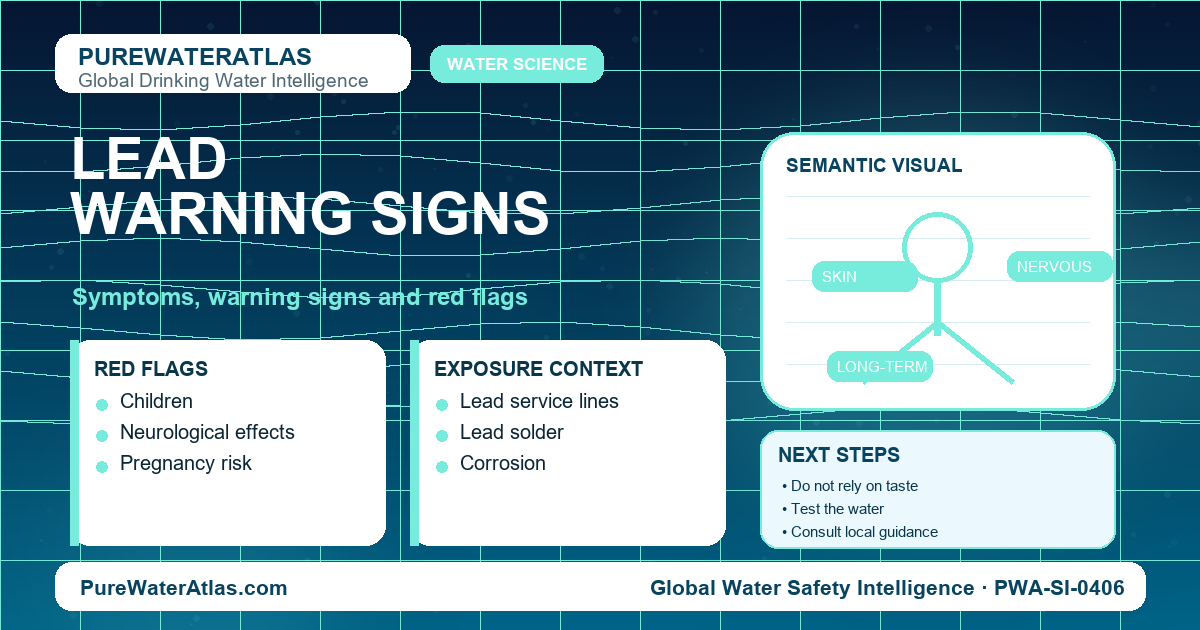
Other contaminants deserve much closer attention. Nitrate in drinking water is a serious concern for infants because high levels can reduce the blood’s ability to carry oxygen. Lead exposure is associated with developmental and neurological harm, especially in children and pregnant women. Arsenic is linked to long-term health risks including cancer and cardiovascular effects. Elevated copper can cause gastrointestinal symptoms and may indicate corrosive water. These concerns are discussed more fully in this guide to health effects and risks.
Examples of water chemistry basics health symptoms and related concerns include:
- Nausea or stomach upset: sometimes associated with high sulfate, copper, or contamination events.
- Skin dryness or irritation: often linked to hard water or high chlorine sensitivity, though not necessarily dangerous chemistry.
- Neurological and developmental risk: associated with lead exposure.
- Infant risk: especially important for nitrate contamination in private wells.
- Long-term chronic risk: possible with arsenic, some industrial contaminants, and prolonged exposure to unsafe levels of certain metals.
Safety implications are not limited to drinking. Corrosive water can damage plumbing, leading to leaks, property damage, and increased metal exposure. Highly scaled systems can reduce heater efficiency and affect temperature control. Sulfur odors may not always be toxic at low household concentrations, but they can signal reducing conditions or bacterial activity that deserve evaluation. Cloudy or discolored water after utility work may indicate disturbed sediment and should be addressed before normal use resumes.
For private well owners, the stakes can be higher because routine compliance monitoring is generally not performed by a utility. Wells are vulnerable to local conditions, and contamination can go unnoticed without active testing. Shallow wells, old wells, and wells near septic systems, farms, or industrial activity deserve particular caution.
Any of the following should be treated as red flags requiring prompt action:
- Sudden major change in taste, odor, or appearance
- Blue-green staining or metallic taste suggesting corrosion
- Known lead plumbing or very old household plumbing materials
- Private well use by households with infants or pregnant women without recent testing
- Flooding near a well or water source
- Persistent discoloration that does not clear after flushing
- Repeated gastrointestinal illness with no clear explanation
Testing and Detection
The most reliable way to investigate warning signs is through structured testing. Understanding water chemistry basics when to test helps people act before a minor issue becomes a serious one. Testing may involve simple field measurements, certified laboratory analysis, or utility reports depending on the water source and concern.
For public water users, the first step is often reviewing the local consumer confidence report and contacting the utility if a sudden change occurs. Utilities can explain whether hydrant flushing, treatment changes, pipe repairs, or seasonal shifts may be affecting water. For private well users, responsibility usually falls on the property owner, making routine testing essential.
Situations when testing is especially important include:
- When buying or selling a home with a private well
- When a new baby is expected in a home using well water
- After flooding, wildfire, or major storm events
- After noticing changes in taste, odor, color, or staining
- After plumbing replacement, well repair, or new treatment equipment installation
- If water has not been tested in the last year
- If there are nearby changes in land use such as farming, construction, or industrial activity
Routine chemistry tests often include pH, hardness, alkalinity, total dissolved solids, iron, manganese, nitrate, chloride, sulfate, and copper. Depending on location and concern, testing may also include arsenic, lead, fluoride, sodium, uranium, or specific industrial chemicals. If the concern may involve both chemistry and microbes, separate microbiological testing is also needed because chemical testing alone will not detect bacteria or viruses.
Taste and odor issues may guide what to test first. This is where water chemistry basics taste and odor understanding becomes useful:
- Metallic taste: test iron, manganese, copper, pH, and corrosion-related parameters.
- Salty taste: test sodium, chloride, and total dissolved solids.
- Rotten egg odor: test for hydrogen sulfide, sulfur bacteria indicators, and water heater contribution.
- Musty or earthy odor: investigate source water changes, algae-related compounds, or organic matter.
- Bleach or chemical smell: review disinfection practices or possible contamination concerns.
Visible clues are just as important in planning the right analysis. With water chemistry basics visible signs, common examples include:
- White crust or spots: likely hardness or high mineral content.
- Orange, red, or brown staining: often iron or corrosion products.
- Black staining: possible manganese.
- Blue-green staining: copper corrosion, often associated with low pH.
- Cloudy water: entrained air, turbidity, sediment, or chemical precipitation.
Sampling technique matters. Water that has been sitting in plumbing may show different results from freshly flushed water. First-draw samples are important for lead and copper screening because they reflect water that has contacted household plumbing. Flushed samples can better represent the source or distribution system. Laboratories usually provide specific instructions, and those instructions should be followed exactly for credible results.
Home test strips can be useful for screening pH, hardness, nitrate, chlorine, or iron, but they do not replace laboratory testing for health decisions. If a contaminant of concern is suspected, certified lab analysis is the better choice. In many cases, multiple rounds of testing are useful because water chemistry can vary seasonally or after weather events.
Prevention and Treatment
Preventing water chemistry problems starts with source protection, routine monitoring, and maintenance of plumbing and treatment systems. Once a problem is confirmed, the correct treatment depends on the specific contaminant and its concentration. There is no universal filter that solves every chemistry issue equally well.
For private wells, prevention includes protecting the wellhead, maintaining proper grading so runoff drains away, inspecting the cap and casing, and keeping contaminants such as fuel, pesticides, and fertilizers away from the well area. Septic systems should be maintained to reduce nutrient and contamination risks. Annual or scheduled testing is one of the most effective preventive steps because it identifies changes early.
Within buildings, corrosion control is critical. If low pH or low alkalinity is causing pipe corrosion, treatment may involve neutralizing filters or chemical feed systems designed to raise pH and stabilize water. Replacing lead-containing plumbing components is the most permanent way to reduce lead exposure. Flushing water after stagnation can reduce first-use metal concentrations, though it is not a substitute for correcting the underlying issue.
Common treatment approaches include:
- Water softeners: used for hardness caused by calcium and magnesium.
- Oxidation and filtration: used for iron, manganese, and hydrogen sulfide.
- Neutralizing filters: used to correct acidic water and reduce corrosion potential.
- Reverse osmosis: useful for reducing many dissolved contaminants including nitrate, sodium, and some metals.
- Activated carbon: often used for taste, odor, and some organic compounds, though not effective for every dissolved inorganic contaminant.
- Distillation: effective for certain dissolved substances but slower and more energy-intensive.
Treatment should be selected based on confirmed lab results, not just symptoms. For example, a rotten egg odor might be caused by hydrogen sulfide in the water source, sulfur bacteria in plumbing, or a water heater anode reaction. Each requires a different response. A simple under-sink carbon filter may improve taste but do little for nitrate or arsenic. Likewise, a softener may help scale but can increase sodium levels, which matters for some households.
Maintenance is just as important as installation. Filters need replacement on schedule. Softeners need proper regeneration settings. Oxidation systems require monitoring. Reverse osmosis membranes need periodic service. Poorly maintained treatment equipment can fail quietly or even worsen water quality.
Households should also keep records of test results, service dates, and observed changes in water quality. Patterns over time can reveal whether a treatment system is working and whether water conditions are stable, improving, or deteriorating. This recordkeeping is especially helpful for understanding long-term water chemistry basics risk indicators such as rising chloride, increasing hardness, or progressively lower pH.
Common Misconceptions
Misunderstandings about water quality can delay action or create false reassurance. One common misconception is that clear water is safe water. In reality, many serious chemistry concerns, including nitrate, arsenic, lead, and dissolved salts, are often invisible. The absence of staining or odor does not prove the absence of contamination.
Another misconception is that bad-tasting water is always dangerous. Taste and odor are important warning signs, but they are not direct toxicity tests. Some unpleasant water is primarily an aesthetic problem, while some dangerous water has no noticeable taste or odor at all. That is why warning signs should lead to testing rather than assumptions.
People also often assume that public water and private well water present the same type of oversight. Public systems are regulated and routinely monitored, though issues can still arise. Private wells are usually the owner’s responsibility, which means testing frequency and treatment decisions vary widely. A well can appear to work normally for years while chemistry slowly changes.
Other frequent misconceptions include:
- “Boiling fixes everything.” Boiling may kill many microbes, but it does not remove most dissolved chemicals and can even concentrate some contaminants as water evaporates.
- “A filter is a filter.” Different filters target different problems. Carbon, reverse osmosis, softening, oxidation, and sediment filtration all serve different purposes.
- “If my neighbor’s water is fine, mine is too.” Nearby wells can have very different chemistry depending on depth, geology, and construction.
- “Staining only means cosmetic trouble.” Staining may be aesthetic, but it can also indicate corrosion or metal mobilization that deserves further evaluation.
- “Taste is a reliable safety test.” Many harmful substances cannot be detected by taste at relevant concentrations.
There is also a tendency to separate chemistry completely from microbiology, but real water quality problems often overlap. Flooding, surface water influence, or distribution disturbances can change both chemical and microbial conditions. That is why chemistry concerns should sometimes be evaluated alongside the broader topics covered in water microbiology and contamination resources.
Regulations and Standards
Water regulations help define acceptable contaminant levels and treatment expectations, but they work differently for public supplies and private wells. In many countries, public drinking water systems are required to meet legally enforceable standards for specific contaminants and to monitor water quality regularly. These standards are based on health protection, treatment feasibility, and operational considerations.
Some water quality measures are regulated primarily for health reasons, such as nitrate, lead, arsenic, and certain disinfection byproducts. Others may be addressed through secondary or aesthetic guidelines related to taste, staining, odor, or appearance, such as iron, manganese, total dissolved solids, chloride, or sulfate. Even when a parameter is considered aesthetic, it may still matter significantly for plumbing integrity, consumer confidence, and long-term maintenance costs.
Lead and copper are especially important because they often come from corrosion in household plumbing rather than directly from the source. In public systems, corrosion control programs are a major part of compliance. For consumers, this means water quality at the treatment plant may differ from water quality at the tap if building plumbing contributes metals.
Private wells are commonly exempt from routine regulatory monitoring, which means homeowners should use public health guidance and accredited laboratory services to manage safety. Local or regional agencies may recommend annual testing for bacteria and nitrate, plus periodic testing for pH, hardness, metals, and region-specific contaminants such as arsenic or uranium.
Understanding standards also helps interpret red flags. A noticeable odor does not automatically mean a legal violation, and compliance with standards does not guarantee ideal taste or zero maintenance issues. Regulations provide a framework for protection, but day-to-day water quality management still depends on observation, testing, and informed response.
Conclusion
Learning the basics of water chemistry means paying attention to patterns, not just reacting to dramatic events. Changes in taste, odor, appearance, staining, corrosion, or household performance are often the first clues that water quality has shifted. These water chemistry basics warning signs do not diagnose a problem by themselves, but they are valuable prompts for testing and follow-up.
A practical approach starts with observation, continues with targeted testing, and ends with treatment or corrective action based on reliable results. Taste and odor changes may suggest dissolved minerals, corrosion, sulfur compounds, or treatment issues. Visible signs such as staining, cloudiness, or scaling can point to hardness, iron, manganese, sediment, or low-pH corrosion. Health-related concerns become more urgent when the water source is a private well, when vulnerable populations are involved, or when there are known risk factors such as flooding, old plumbing, or nearby agricultural or industrial activity.
Whether you are a homeowner, renter, educator, or water professional, the most important habit is to take unusual changes seriously without jumping to conclusions. Test when conditions change, keep records, maintain treatment systems, and understand the limits of what sight, smell, and taste can tell you. With that foundation, you can better recognize water chemistry basics when to test, understand water chemistry basics risk indicators, and respond in a way that protects both health and infrastructure.
For continued learning, explore resources on water science, the complete guide to water chemistry basics, causes and sources, health effects and risks, water microbiology, and water contamination. A stronger understanding of these subjects makes it much easier to spot red flags early and make informed decisions about water quality.
Read the full guide: Water Science Guide
Explore more in this category: Water Science Articles