
Introduction
Safe water is essential for drinking, cooking, hygiene, food preparation, and medical care. When water becomes contaminated by microbes, chemicals, heavy metals, or environmental pollutants, the consequences can range from mild stomach upset to severe long-term disease. Understanding the health risks of contaminated water health effects is important for households, schools, healthcare settings, farms, and entire communities. Contaminated water is not only a concern in areas with limited infrastructure. It can also affect private wells, aging urban plumbing, recreational water, emergency water supplies, and systems disrupted by floods, droughts, or industrial accidents.
Water contamination is a public health issue because exposure may happen in many ways. People can drink polluted water, use it to wash food, bathe in it, inhale aerosols from it, or absorb some contaminants through the skin. The health outcome depends on the type of contaminant, the amount present, how long exposure lasts, and the age and health status of the exposed person. Infants, older adults, pregnant people, and individuals with weakened immune systems often face a greater chance of illness or complications.
This article explains the major types of water contamination, common sources, health outcomes, detection methods, prevention strategies, and the standards designed to reduce risk. Readers looking for broader background may also find useful information in this complete guide and related resources in drinking water safety and water science. The goal is to provide a clear, practical, and evidence-based overview of how contaminated water affects health and what can be done to reduce exposure.
What It Is
Contaminated water is water that contains biological, chemical, physical, or radiological substances at levels that may harm health or make the water unfit for its intended use. Clean-looking water is not always safe. Many dangerous contaminants are invisible, odorless, and tasteless. In other cases, contamination may cause discoloration, cloudiness, unusual smells, sediment, staining, or a metallic taste.
Water contamination is commonly grouped into several categories:
- Microbiological contamination: bacteria, viruses, parasites, and other disease-causing organisms.
- Chemical contamination: pesticides, solvents, fuel compounds, industrial chemicals, nitrates, and disinfection byproducts.
- Heavy metals and minerals: lead, arsenic, mercury, cadmium, manganese, and excessive fluoride.
- Physical contamination: sediment, microplastics, debris, and suspended solids that may carry other pollutants.
- Radiological contamination: radon, uranium, or other radioactive substances from natural geology or industrial activity.
The term health risks of contaminated water symptoms usually refers to the immediate or early signs that may appear after exposure. These often include nausea, vomiting, diarrhea, abdominal cramps, fever, skin irritation, or headaches. However, some contaminants produce no obvious early symptoms. Lead, arsenic, and certain industrial chemicals may damage organs slowly over time, making the problem harder to recognize without testing.
Another important concept is dose. The health risks of contaminated water exposure levels depend on how much of a contaminant is present and how much water a person consumes or contacts. For example, a brief low-level exposure may pose limited risk, while repeated exposure to even modest concentrations can become medically significant. Drinking contaminated water every day, preparing infant formula with it, or relying on it for cooking may increase total exposure substantially.
Water contamination may be acute or chronic. Acute contamination occurs suddenly, such as after a sewage overflow, flood event, or boil-water notice. Chronic contamination is persistent and may result from ongoing leaching from pipes, agricultural runoff, naturally occurring arsenic in groundwater, or long-term industrial pollution. Both forms matter, but chronic exposure is often more difficult to detect because people may adapt to bad taste or never realize a contaminant is present.
For more detail on waterborne organisms and pathogen behavior, readers may explore water microbiology.
Main Causes or Sources
Contamination can enter water at the source, during treatment, in distribution systems, or inside homes and buildings. Identifying the source is one of the most important steps in reducing risk. A more focused discussion is available in this overview of causes and sources, but the most common ones are summarized below.
Microbial Sources
Bacteria, viruses, and parasites often enter water through fecal contamination. This may occur when sewage systems fail, septic tanks leak, livestock waste runs off into streams, or floodwater overwhelms treatment systems. Common pathogens include E. coli, Salmonella, Campylobacter, norovirus, hepatitis A virus, Giardia, and Cryptosporidium. These organisms can cause intestinal illness and, in severe cases, dehydration, bloodstream infection, liver inflammation, kidney injury, or prolonged digestive problems.
Agricultural Runoff
Farming activities can introduce fertilizers, manure, pesticides, and sediment into rivers, lakes, and groundwater. Nitrates are a major concern, especially for infants, because high nitrate levels can reduce the blood’s ability to carry oxygen. Pesticides may be associated with neurological, hormonal, reproductive, or cancer-related effects depending on the specific compound and duration of exposure.
Industrial and Commercial Pollution
Factories, mining operations, refineries, landfills, and chemical storage sites may release solvents, petroleum products, heavy metals, and other toxic substances into surrounding soil and water. Some contaminants persist in the environment for years and may accumulate in groundwater or sediments. Industrial contamination may affect entire communities and can be especially difficult to remediate once aquifers are polluted.
Corroding Plumbing and Distribution Systems
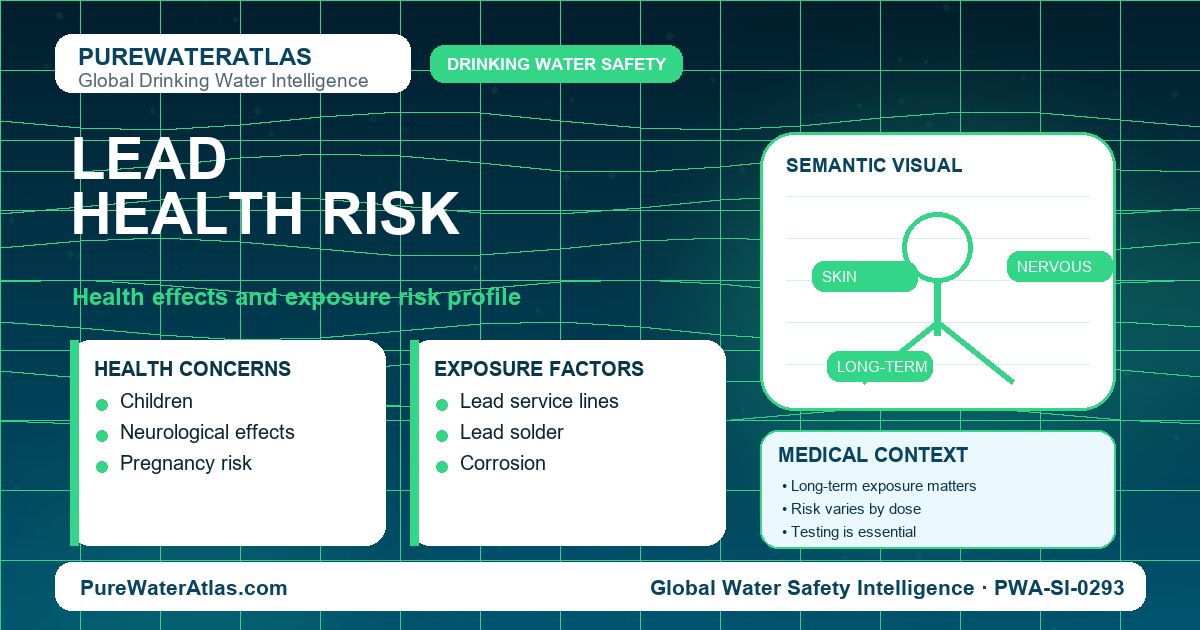
Even if water leaves a treatment plant in good condition, it can become contaminated while traveling through old pipes or household plumbing. Lead service lines, brass fixtures, solder, and corroded pipes may release lead, copper, or iron into water. Stagnant water sitting in plumbing overnight can increase metal concentrations. Building plumbing can also harbor bacteria such as Legionella if water temperatures and disinfectant levels are not properly managed.
Naturally Occurring Contaminants
Some contaminants are present because of local geology rather than human pollution. Arsenic, fluoride, manganese, uranium, and radon can naturally occur in groundwater. “Natural” does not mean harmless. In some regions, these substances reach concentrations that create significant health risks of contaminated water medical concerns, particularly with long-term use.
Storms, Floods, and Climate-Related Events
Extreme weather can increase contamination by washing pathogens, chemicals, and debris into drinking water sources. Flooding may submerge wells, damage treatment plants, and overwhelm sewer infrastructure. Drought can also worsen water quality by concentrating pollutants and changing water chemistry. Climate pressures are making water safety planning increasingly important.
Household and Local Sources
Private wells, poorly maintained storage tanks, backflow incidents, and improper disposal of chemicals or medications can all contaminate local water. Unlike public systems, many private wells are not routinely monitored unless the owner arranges testing. This creates a greater chance that unsafe water may be consumed without warning.
Health and Safety Implications
The health risks of contaminated water health effects vary widely because contaminants affect the body in different ways. Some cause rapid gastrointestinal illness, while others damage the nervous system, kidneys, liver, skin, endocrine system, or developing fetus. Health effects are shaped by dose, route of exposure, duration, and personal vulnerability.
Short-Term Symptoms and Acute Illness
The most recognized health risks of contaminated water symptoms are related to infectious disease. Common short-term effects include:
- Diarrhea
- Vomiting
- Nausea
- Abdominal pain or cramping
- Fever
- Fatigue
- Loss of appetite
- Headache
- Dehydration
For healthy adults, many waterborne infections are self-limited, but they can still be severe. Dehydration is especially dangerous for infants, young children, frail older adults, and those with chronic illness. Some pathogens also lead to complications beyond the gut. For example, certain strains of E. coli may contribute to hemolytic uremic syndrome, which can damage the kidneys. Hepatitis A can cause liver inflammation, and Legionella can cause severe pneumonia when contaminated water droplets are inhaled.
Chemical and Toxic Effects
Chemical contamination may produce immediate symptoms such as burning in the mouth, dizziness, confusion, or vomiting, but often the effects are less obvious at first. Lead exposure in water is especially concerning for children because it can interfere with brain development, behavior, learning, and attention. Arsenic has been linked to skin changes, cardiovascular effects, and several cancers with long-term exposure. Nitrate contamination can be dangerous for infants, potentially causing methemoglobinemia, sometimes called “blue baby syndrome.”
Other chemicals may affect hormones, reproduction, the immune system, or organs involved in detoxification and metabolism. The severity depends on the substance and concentration. Because these effects may unfold slowly, they often become part of the broader discussion of health risks of contaminated water long term risks.
Long-Term Risks
The health risks of contaminated water long term risks are often the most serious because chronic exposure may continue for years before detection. Potential long-term consequences include:
- Developmental delays and reduced cognitive performance in children exposed to lead
- Kidney damage from heavy metals and chronic dehydration caused by repeated gastrointestinal illness
- Liver effects from chemical pollutants
- Increased cancer risk from arsenic, some industrial chemicals, and certain disinfection byproducts
- Bone and dental problems from excessive fluoride exposure
- Reproductive and pregnancy-related complications associated with some contaminants
- Chronic gastrointestinal issues following severe or repeated infections
Long-term exposure does not always mean high exposure. Repeated intake of low to moderate contaminant levels can still matter, particularly over years of daily use. This is why risk assessment considers both concentration and duration rather than relying on a single measurement alone.
Vulnerable Groups
The health risks of contaminated water vulnerable groups deserve special attention because not everyone faces the same level of danger. Groups at higher risk include:
- Infants and young children: They consume more water relative to body weight, and their organs and nervous systems are still developing.
- Pregnant people and fetuses: Certain contaminants can affect fetal growth and development.
- Older adults: They may have reduced immune defenses or chronic medical conditions that worsen outcomes.
- Immunocompromised individuals: People receiving chemotherapy, transplant recipients, and those with immune disorders may develop more severe infections.
- People with kidney or liver disease: Their bodies may be less able to process and eliminate toxins.
- Residents using private wells: They may have fewer safeguards and less frequent testing.
These populations may require additional protective measures, including more frequent testing, use of certified treatment devices, or consultation with medical professionals when contamination is suspected.
Exposure Pathways Beyond Drinking
Contaminated water does not only cause harm when swallowed. Health effects can also arise through:
- Cooking: Pollutants can remain in food prepared with contaminated water.
- Bathing and showering: Skin exposure may cause irritation, and aerosolized droplets may be inhaled.
- Recreational contact: Lakes, pools, and splash areas can expose users to microbes and chemicals.
- Workplace exposure: Farms, laboratories, industrial sites, and healthcare facilities may involve repeated contact with unsafe water.
The health risks of contaminated water exposure levels therefore depend not only on what is in the water but also on how the water is used.
Testing and Detection
Because contaminated water often cannot be recognized by taste or appearance alone, testing is essential. Testing can identify both immediate hazards and chronic risks, guide treatment choices, and confirm whether corrective steps are working. Readers seeking deeper technical detail can refer to this guide to testing and detection methods.
When Testing Is Especially Important
- After flooding, storms, or nearby sewage spills
- When using a private well
- After moving into an older home
- If water changes in taste, smell, or color
- When there is a boil-water advisory
- If infants, pregnant people, or medically vulnerable individuals use the water
- When nearby agriculture, mining, or industrial activity may affect groundwater
Common Testing Methods
Microbial testing often looks for indicator organisms such as total coliforms and E. coli. Their presence suggests fecal contamination or pathway failures. Chemical analysis may assess lead, arsenic, nitrates, pesticides, volatile organic compounds, fluoride, and other pollutants depending on local concerns. Laboratories may also measure pH, hardness, turbidity, conductivity, and other water quality indicators that help interpret broader system conditions.
Sampling must be done carefully. For example, first-draw water samples are often used to evaluate lead from household plumbing, while flushed samples may help distinguish plumbing-related contamination from source contamination. Incorrect collection methods can produce misleading results.
Interpreting Results
A laboratory report should be compared with health-based standards or advisory levels. Not every detected substance creates a serious hazard, but any exceedance of a regulated limit or health guideline deserves attention. It is also important to consider timing. A single clean test does not guarantee ongoing safety if the contamination source is intermittent, such as runoff after heavy rain.
Medical interpretation may be needed when exposure has already occurred, symptoms are present, or vulnerable groups have been affected. In those cases, public health departments, poison control resources, environmental health specialists, or clinicians may help determine whether additional testing of blood, urine, or other samples is appropriate.
Prevention and Treatment
Preventing exposure is the most effective way to reduce illness. The best strategy depends on whether contamination comes from microbes, metals, chemicals, or infrastructure problems. Some interventions are temporary emergency measures, while others require permanent source control or plumbing replacement.
Household Prevention Steps
- Test private well water regularly and after major weather events.
- Flush taps if lead contamination is possible, especially after water has been standing in pipes.
- Use cold water for drinking and cooking because hot water may contain higher metal levels from plumbing.
- Maintain wells, septic systems, and storage tanks properly.
- Store hazardous chemicals away from water sources and dispose of them correctly.
- Pay attention to public health notices, including boil-water advisories and do-not-drink alerts.
Water Treatment Options
Different contaminants require different treatment methods:
- Boiling: Effective against many microbes, but it does not remove lead, nitrates, or most chemicals.
- Activated carbon filters: Can reduce some chemicals, tastes, and odors, but performance varies by product and contaminant.
- Reverse osmosis: Useful for reducing many dissolved contaminants, including some metals and nitrates.
- Ultraviolet disinfection: Helps inactivate microorganisms if the water is sufficiently clear.
- Distillation: Can remove many contaminants but may be slower and more energy-intensive.
- Ion exchange or specialized media: Used for certain minerals and metals.
Treatment devices should be certified for the specific contaminant of concern. A filter that improves taste may not protect against pathogens or toxic metals. Poorly maintained devices can also fail or become contamination sites themselves.
Community and Infrastructure Measures
At the public level, prevention includes source water protection, reliable treatment, pipe maintenance, corrosion control, cross-connection prevention, and routine monitoring. Replacing lead service lines and improving wastewater infrastructure are especially important interventions. Emergency planning for disasters and climate-related disruptions also helps protect communities from sudden contamination events.
Medical Care After Exposure
The health risks of contaminated water medical concerns may require professional evaluation when symptoms are severe, persistent, or involve high-risk individuals. Medical attention is particularly important for:
- Signs of dehydration such as confusion, reduced urination, or dizziness
- Bloody diarrhea
- Persistent vomiting
- High fever
- Neurological symptoms such as weakness, confusion, or tremors
- Suspected exposure to chemicals, fuels, or heavy metals
- Illness in infants, pregnant people, older adults, or immunocompromised individuals
Treatment may include oral or intravenous fluids, targeted medications, laboratory monitoring, or toxicology consultation. In cases of heavy metal exposure, additional testing and long-term follow-up may be needed.
Common Misconceptions
Misunderstandings about water safety can increase risk by delaying testing or encouraging ineffective responses. Several misconceptions are especially common.
If Water Looks Clear, It Is Safe
Many harmful contaminants are invisible. Clear water can still contain bacteria, viruses, lead, nitrates, or arsenic. Visual inspection alone is not enough.
Boiling Fixes Every Water Problem
Boiling is useful for microbial contamination, but it does not remove most chemicals or metals. In some cases, boiling can slightly concentrate certain dissolved contaminants as water evaporates.
Only Poorly Resourced Areas Have Contaminated Water
Contamination can occur anywhere, including high-income communities with aging infrastructure, lead pipes, industrial legacies, or private well dependence. Public systems lower risk but do not eliminate it entirely.
Bad Taste Always Means Dangerous Water
Unpleasant taste may reflect minerals or nuisance issues rather than serious health hazards, but it should not be ignored. At the same time, dangerous contaminants may have no taste at all. Testing remains the most reliable tool.
Filters Are Interchangeable
No single filter removes every contaminant. A device must be matched to the specific problem, installed correctly, and maintained on schedule. Otherwise, users may have a false sense of security.
Regulations and Standards
Water regulations exist to reduce exposure and create consistent expectations for monitoring, treatment, and public notification. Standards vary by country, but they generally establish maximum contaminant levels, treatment techniques, sampling requirements, and reporting rules for public water systems.
These regulations often address microbiological contaminants, disinfectants, heavy metals, nitrates, volatile organic compounds, and radiological substances. Some limits are based on direct health evidence, while others also consider treatment feasibility and analytical capability. Public systems are typically required to notify consumers when standards are exceeded or when system failures could affect safety.
Private wells are often regulated differently or not monitored routinely by public agencies, leaving owners responsible for testing and maintenance. This gap is one reason well users should be proactive, especially if they live near farms, industrial sites, or regions with naturally occurring arsenic or uranium.
Standards are important, but they are not a guarantee of zero risk. Emerging contaminants, changing environmental conditions, and intermittent pollution events can challenge existing oversight systems. Effective water safety depends on regulation, infrastructure investment, laboratory capacity, informed consumers, and prompt public health communication.
For readers interested in broader educational topics, additional resources can be found under drinking water safety, water science, and water microbiology.
Conclusion
Contaminated water can affect health in immediate and lasting ways. The health risks of contaminated water health effects include acute gastrointestinal illness, dehydration, respiratory infection from inhaled droplets, neurological injury from toxic metals, developmental harm in children, and increased long-term risk of organ damage or cancer from chronic chemical exposure. These outcomes depend on the contaminant, dose, duration, and the person exposed.
Understanding the health risks of contaminated water symptoms, the health risks of contaminated water long term risks, and the needs of health risks of contaminated water vulnerable groups helps households and communities respond more effectively. Because many hazards cannot be seen or tasted, testing is central to prevention. Matching treatment methods to the specific contaminant, maintaining infrastructure, and following public health guidance are all critical steps.
Water safety is both a personal and public responsibility. Individuals can test wells, use certified treatment devices, and seek care when illness occurs. Communities can strengthen source protection, replace aging pipes, improve treatment systems, and communicate clearly during emergencies. With informed action, the health risks of contaminated water exposure levels can be reduced, and the most serious health risks of contaminated water medical concerns can often be prevented before they lead to lasting harm.
Read the full guide: Drinking Water Safety Guide
Explore more in this category: Drinking Water Safety Articles