Introduction
Water scarcity is one of the defining environmental and public health challenges of the modern era. It affects arid and humid regions alike, large cities and rural communities, low-income countries and highly industrialized nations. In practical terms, scarcity means that safe, reliable water is not available in sufficient quantity or quality to meet human, agricultural, industrial, and ecological needs. This problem is no longer limited to areas with naturally low rainfall. Population growth, climate variability, aging infrastructure, contamination, over-extraction of groundwater, and inefficient water management have expanded the crisis across continents.
Understanding water scarcity worldwide removal requires more than looking at supply alone. In many places, water exists physically but cannot be used safely because it contains pathogens, excessive salts, toxic metals, industrial chemicals, or sediment. In other words, scarcity is often a combined problem of quantity and quality. This makes treatment, filtration, reuse, conservation, and source protection essential parts of the solution.
As communities search for resilient responses, discussions increasingly focus on water scarcity worldwide filtration methods, large-scale and decentralized water scarcity worldwide treatment systems, and practical guidance on selecting the water scarcity worldwide best filters for local conditions. Long-term success also depends on water scarcity worldwide maintenance and realistic expectations about water scarcity worldwide effectiveness across different technologies and environments.
This article explains what global water scarcity is, where it comes from, how it affects health and safety, how it is measured, and what removal and treatment options are available. For readers seeking broader context, additional background can be found in this complete guide and in resources covering global water quality.
What It Is
Water scarcity refers to a condition in which water demand exceeds available supply, or when available water is too contaminated, too saline, too distant, too seasonal, or too expensive to use safely. Experts often distinguish between two broad categories:
- Physical water scarcity: There is not enough accessible freshwater to meet demand. This often occurs in dry climates, drought-prone basins, and heavily irrigated regions.
- Economic water scarcity: Water may exist locally, but infrastructure, governance, finance, or technology are insufficient to collect, treat, store, and distribute it effectively.
These categories frequently overlap. A river basin may face declining rainfall and shrinking reservoirs while also suffering from inadequate treatment plants, leaking pipes, and weak regulation. Likewise, a groundwater source may appear abundant but become functionally scarce if contamination makes it unsafe without advanced purification.
At the household level, scarcity can mean intermittent taps, long collection times, high water prices, or reliance on unsafe sources such as shallow wells or polluted surface water. At the city level, it can mean rationing, declining reservoir storage, saltwater intrusion into coastal aquifers, and emergency dependence on trucking or bottled water. At the regional level, scarcity can affect food production, energy generation, sanitation, and ecosystem health.
It is also important to understand that not all water is equally usable. Freshwater suitable for drinking requires much stricter quality control than water used for irrigation or industrial cooling. For this reason, the concept of water scarcity worldwide removal includes not only securing more water but removing the contaminants that prevent existing supplies from being used safely. Depending on local conditions, this may involve sediment removal, pathogen disinfection, desalination, heavy metal removal, nutrient reduction, membrane separation, or advanced oxidation.
From a scientific perspective, water scarcity should be seen as a systems problem. Hydrology, climate, engineering, microbiology, economics, agriculture, and public policy all shape the outcome. Readers interested in the scientific foundations may also explore materials in water science and water microbiology.
Main Causes or Sources
The causes of water scarcity are diverse and often interconnected. In many regions, multiple pressures occur at the same time, making simple solutions ineffective. A closer review of the main drivers helps clarify why treatment and removal technologies must be matched to local conditions.
Climate Change and Hydrologic Variability
Rising temperatures increase evaporation from soils, lakes, and reservoirs. Changing precipitation patterns can produce longer dry seasons, more intense droughts, reduced snowpack, and shifts in river flow timing. Even regions with unchanged annual rainfall may face scarcity if precipitation becomes less predictable or concentrated into shorter, more intense events that are difficult to capture and store.
Population Growth and Urbanization
Expanding populations place greater stress on freshwater supplies for drinking, sanitation, energy production, manufacturing, and food cultivation. Rapid urbanization often outpaces infrastructure development, leading to overloaded treatment plants, unmanaged wastewater discharges, and losses through leaking distribution systems.
Agricultural Demand
Agriculture is the largest freshwater user in many countries. Irrigation can deplete rivers and aquifers, especially when low-efficiency methods are used. Fertilizer and pesticide runoff can also degrade nearby water bodies, reducing the amount of water suitable for human consumption without further treatment.
Groundwater Overuse
Groundwater provides essential resilience during drought, but over-pumping can lower water tables, dry up wells, reduce river baseflow, and cause land subsidence. In coastal areas, excessive pumping can trigger saltwater intrusion, turning freshwater aquifers brackish and increasing the need for desalination or blending.
Pollution and Contamination
Pollution is a major hidden driver of water scarcity. Water that is physically present may be unusable due to contamination from:
- Untreated sewage and fecal pollution
- Industrial effluents
- Mining activities
- Agricultural nutrients and pesticides
- Natural arsenic, fluoride, or salinity
- Emerging contaminants such as PFAS, pharmaceuticals, and microplastics
When source water quality declines, communities need stronger water scarcity worldwide treatment systems to restore usability. In low-resource settings, even simple filtration and chlorination may dramatically improve access. In highly contaminated settings, treatment may require multi-stage systems with membranes, adsorbents, oxidation, and continuous monitoring.
Infrastructure Failures and Water Loss
Leaking pipes, unlined canals, poor storage, and insufficient maintenance can waste significant portions of treated water before it reaches users. In some cities, non-revenue water losses exceed 30% to 40%. This means that improving infrastructure may create a water supply benefit comparable to developing new sources.
Governance and Inequity
Weak institutions, poor pricing structures, fragmented management, and unequal access often worsen scarcity. Wealthier areas may secure reliable treatment and delivery while lower-income communities depend on unsafe or expensive alternatives. In this sense, water scarcity is as much a management issue as a hydrologic one. A deeper breakdown of these drivers is available in this overview of causes and sources.
Health and Safety Implications
Water scarcity is not merely an inconvenience. It has direct and indirect impacts on health, safety, nutrition, education, livelihoods, and social stability. The most immediate risk arises when people are forced to use microbiologically or chemically unsafe water because safer supplies are unavailable, unreliable, or unaffordable.
Microbial Risks
Insufficient water for drinking, handwashing, and sanitation increases the spread of infectious disease. Pathogens commonly associated with contaminated water include bacteria, viruses, and protozoa. Illnesses linked to unsafe water may include acute diarrhea, cholera, typhoid, hepatitis A, dysentery, and various parasitic infections. Children, older adults, pregnant people, and immunocompromised individuals are especially vulnerable.
Chemical Exposure
Scarcity can push communities toward poor-quality groundwater or polluted surface water. This may increase exposure to:
- Arsenic: Long-term exposure is linked to cancer, skin lesions, and cardiovascular effects.
- Fluoride: Excessive levels may cause dental and skeletal fluorosis.
- Nitrate: Elevated nitrate in drinking water can be dangerous for infants and may indicate broader agricultural contamination.
- Lead and other metals: These can affect neurological development and organ health.
- Salinity: High salt content reduces palatability and may contribute to certain health burdens in susceptible populations.
Hygiene and Sanitation Impacts
When households lack enough water, handwashing, bathing, food preparation, and cleaning all become more difficult. Health impacts then extend beyond direct drinking water contamination. Reduced hygiene raises the risk of skin infections, eye infections, foodborne disease, and outbreaks in schools, clinics, and crowded settlements.
Indirect Social and Safety Effects
Water scarcity can force people, especially women and children in many regions, to spend hours collecting water from distant sources. This reduces time for education and income generation and may expose individuals to injury, violence, and heat stress. In healthcare settings, inadequate water compromises infection prevention and quality of care. In agriculture-dependent communities, failed water access can reduce crop yields and worsen malnutrition.
The health dimension is one reason why water scarcity worldwide effectiveness must be evaluated not only by liters produced but by whether treatment systems consistently deliver safe water under real operating conditions. More detailed discussion is available in this guide to health effects and risks.
Testing and Detection
Effective response begins with measurement. Communities cannot choose appropriate filtration or treatment technologies unless they know whether the primary issue is microbial contamination, salinity, turbidity, chemical pollution, seasonal variability, infrastructure loss, or simple lack of supply. Testing and detection therefore play a central role in both emergency response and long-term planning.
Key Water Quantity Indicators
- Reservoir storage levels
- River and stream flow measurements
- Groundwater levels in monitoring wells
- Seasonal rainfall and drought indices
- Household supply reliability and hours of service
Key Water Quality Indicators
- Turbidity: Indicates suspended particles that can shield microbes and interfere with disinfection.
- Total dissolved solids and conductivity: Useful for estimating salinity.
- pH and alkalinity: Important for corrosion control and treatment performance.
- Microbial indicators: E. coli and coliforms are commonly used to assess fecal contamination.
- Nitrate, fluoride, arsenic, iron, manganese, and lead: Common chemical concerns in groundwater and distribution systems.
- Organic contaminants: Pesticides, solvents, industrial chemicals, and emerging pollutants where relevant.
Field Testing and Laboratory Analysis
Field kits can rapidly assess turbidity, chlorine residual, pH, conductivity, and certain microbial indicators. They are useful for emergency settings and routine operations. However, laboratory analysis is often required for accurate detection of trace metals, PFAS, complex industrial contaminants, and regulatory compliance parameters.
Source Assessment
Testing should not stop at the tap. Investigators should examine source type, nearby pollution activities, upstream wastewater discharges, land use patterns, well construction, flood risk, and potential saline intrusion. A contaminated source may require a very different intervention than a clean source suffering from intermittent delivery.
Monitoring Treatment Performance
Once a system is installed, ongoing monitoring is essential. The strongest water scarcity worldwide treatment systems can still fail if membranes foul, disinfectant dosing drifts, filters clog, or operators lack spare parts. Performance tracking should include influent and effluent quality, flow rates, pressure loss, energy use, residual disinfectant where relevant, and periodic verification testing.
Prevention and Treatment
Addressing scarcity requires a layered strategy: reduce demand, protect sources, repair infrastructure, reuse water where safe, and treat impaired supplies using technologies matched to the contamination profile and local capacity. No single technology solves all forms of scarcity. The most successful approaches combine watershed management, engineering, public health practice, and long-term operations planning.
Prevention Through Conservation and Source Protection
Before investing in advanced treatment, communities should examine ways to preserve existing supplies:
- Leak detection and pipe rehabilitation
- Efficient irrigation such as drip systems and scheduling improvements
- Rainwater harvesting and managed aquifer recharge
- Watershed protection, erosion control, and wetland conservation
- Pollution prevention at industrial, agricultural, and municipal sources
- Water reuse for non-potable applications to reduce pressure on freshwater sources
These measures often provide the highest long-term return because they reduce both water demand and treatment burden.
Basic Filtration and Disinfection
For many communities, especially those dealing primarily with turbidity and microbial contamination, relatively simple solutions can be highly effective. Common water scarcity worldwide filtration methods include:
- Screening and sedimentation: Removes larger debris and allows heavier solids to settle.
- Slow sand filtration: Effective for turbidity reduction and microbial improvement when properly maintained.
- Rapid sand filtration: Used in larger treatment plants, often after coagulation and flocculation.
- Ceramic filters: Useful at household scale for particle and some microbial reduction.
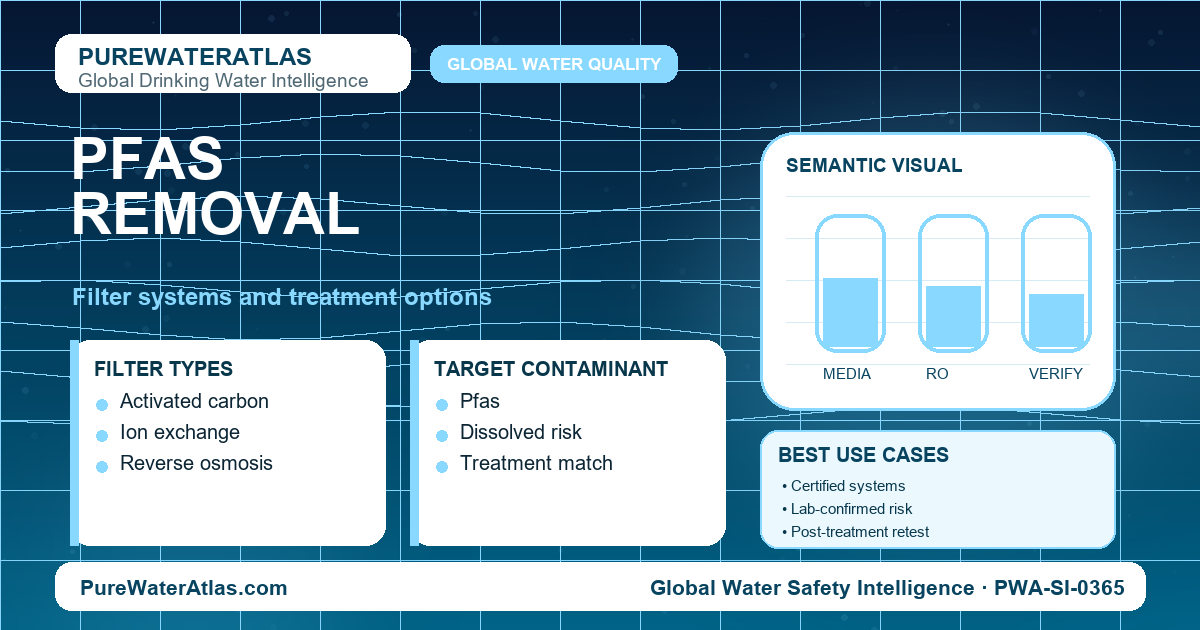
- Activated carbon: Helps reduce tastes, odors, and certain organic chemicals, though it is not a universal solution for pathogens or salts.
Filtration is usually paired with disinfection. Chlorination remains widely used because it is cost-effective and provides residual protection in distribution systems. Ultraviolet disinfection can be very effective against many microbes but generally requires low turbidity and does not provide a lasting residual. Boiling is useful at household scale during emergencies but can be fuel-intensive and impractical as a permanent solution.
Membrane Technologies
Membranes are increasingly important where water sources are brackish, saline, or heavily contaminated. Major options include:
- Microfiltration and ultrafiltration: Good for suspended solids, bacteria, and some protozoa.
- Nanofiltration: Useful for removing certain hardness ions, larger organic molecules, and some dissolved contaminants.
- Reverse osmosis: One of the most powerful options for desalination and broad dissolved contaminant removal.
Reverse osmosis is often considered among the water scarcity worldwide best filters when source water contains high salinity, arsenic, nitrate, fluoride, or multiple dissolved contaminants. However, it also has trade-offs: energy demand, concentrate disposal, pretreatment needs, and membrane fouling risk. Its effectiveness depends heavily on system design and ongoing maintenance.
Desalination
Desalination converts seawater or brackish water into freshwater, typically using reverse osmosis or thermal methods. It can provide a drought-resistant supply for coastal cities and islands, but it is not a universal answer. Challenges include high capital cost, energy use, environmental management of brine discharge, and the need for strong operational capacity. Still, in water-stressed coastal regions, desalination is a critical part of the water scarcity worldwide removal toolbox.
Adsorption and Specialized Media
Certain contaminants require tailored treatment media. Activated alumina, iron-based media, ion exchange resins, and specialty adsorbents may be used for fluoride, arsenic, nitrate, and specific industrial chemicals. These systems can be effective at household, community, or municipal scale when the contaminant profile is well understood and replacement schedules are followed.
Advanced Oxidation and Chemical Treatment
Advanced oxidation processes use combinations such as ozone, hydrogen peroxide, or UV light to break down difficult organic contaminants. Coagulation and flocculation help remove fine particles and associated pollutants. These methods are typically used in centralized plants and require skilled operators, but they can significantly improve water quality when conventional treatment is insufficient.
Wastewater Reuse
Treated wastewater can offset freshwater demand for irrigation, industrial uses, groundwater recharge, and in some cases indirect or direct potable reuse under strict controls. Reuse expands supply without relying entirely on new freshwater withdrawals. Its success depends on rigorous treatment, monitoring, public communication, and regulatory oversight.
Household and Community-Scale Options
In areas without centralized systems, point-of-use and point-of-entry technologies may be appropriate. The choice depends on local contamination. The water scarcity worldwide best filters are not the same everywhere:
- For microbial contamination: ceramic filters, ultrafiltration, chlorination, UV, or combined systems
- For salinity: reverse osmosis or distillation
- For arsenic or fluoride: validated adsorptive media or reverse osmosis
- For sediment-heavy surface water: pre-settling, cloth filtration, coagulation, and sand filtration before disinfection
Technology selection should always be evidence-based. A filter marketed as universal may perform poorly against the specific contaminants causing local scarcity.
Maintenance and Long-Term Reliability
Water scarcity worldwide maintenance is one of the most overlooked factors in treatment success. Systems fail when replacement cartridges are unavailable, membranes are not cleaned, chlorine dosing is inconsistent, operators are not trained, or monitoring is ignored. Sustainable treatment requires:
- Routine inspection and preventive maintenance schedules
- Operator training and technical support
- Reliable supply chains for chemicals and spare parts
- Waste handling plans for spent media and brine
- Clear accountability for performance monitoring
In many real-world cases, simpler systems with strong upkeep outperform advanced systems that communities cannot afford to maintain. This is central to evaluating water scarcity worldwide effectiveness.
Common Misconceptions
Public understanding of water scarcity is often shaped by oversimplified narratives. Correcting these misconceptions helps communities make better decisions.
“Water scarcity only affects deserts.”
Not true. Humid regions can experience scarcity due to pollution, infrastructure failure, seasonal drought, groundwater depletion, or rapid urban growth. A place can receive substantial rainfall and still lack safe, reliable water service.
“If water looks clear, it is safe.”
Clear water may still contain bacteria, viruses, arsenic, nitrate, or dissolved salts. Visual appearance alone cannot confirm safety.
“One filter solves every water problem.”
Different contaminants require different treatment approaches. No single household unit or municipal process removes all hazards equally well. Claims about the water scarcity worldwide best filters should always be tied to specific water quality conditions.
“Desalination is the complete answer.”
Desalination is valuable in some places, especially coastal areas, but it is energy-intensive and not always affordable or environmentally straightforward. Conservation, reuse, leakage control, and source protection remain essential.
“Installing technology is enough.”
Without financing, operations, and water scarcity worldwide maintenance, even excellent systems deteriorate quickly. Long-term effectiveness depends on governance and routine management, not just initial installation.
Regulations and Standards
Regulation provides the framework that turns treatment technology into reliable public protection. While standards differ by country, most water quality frameworks address microbial safety, chemical limits, operational monitoring, treatment validation, and infrastructure requirements.
International Guidance
The World Health Organization publishes drinking-water guidelines widely used as a reference for national standard-setting. These guidelines promote a risk-based approach, including source protection, treatment barriers, distribution integrity, and verification monitoring.
National and Regional Standards
Countries typically establish maximum contaminant levels or equivalent health-based values for pathogens, disinfectant byproducts, metals, nitrate, fluoride, and other contaminants. Regulatory agencies may also require operator certification, reporting, sampling frequency, and emergency response planning.
Water Safety Plans
A modern best practice is the water safety plan approach. Instead of relying only on end-point testing, operators identify hazards from source to consumer and manage them systematically. This is especially important in scarcity settings where source conditions can change rapidly with drought, flooding, or overuse.
Reuse and Desalination Oversight
As more regions adopt wastewater reuse and desalination, regulations increasingly cover advanced treatment validation, pathogen log reduction targets, concentrate management, energy performance, and public communication. These areas require especially careful oversight because technical failure can have wide public consequences.
Strong regulation also supports fair evaluation of water scarcity worldwide effectiveness by requiring data rather than relying on product claims alone.
Conclusion
Water scarcity is a global challenge driven by climate stress, overuse, contamination, infrastructure gaps, and unequal access. It is not simply a matter of having too little water. In many places, water becomes scarce because it is unsafe, unreliable, or too poorly managed to serve communities consistently. For that reason, effective response must include both supply protection and contaminant removal.
The most practical path forward combines conservation, source protection, leakage reduction, better governance, and treatment strategies tailored to local needs. Proven water scarcity worldwide filtration methods range from sand filtration and disinfection to membrane systems, adsorption media, desalination, and water reuse. The most suitable water scarcity worldwide treatment systems depend on whether the primary challenge is microbes, salts, metals, chemicals, sediment, or intermittent delivery. Choosing the water scarcity worldwide best filters therefore requires testing, context, and realistic planning.
Just as important, long-term success depends on water scarcity worldwide maintenance. A system that is technically impressive but poorly maintained will not protect public health. True water scarcity worldwide effectiveness comes from sustained operation, monitoring, training, and community trust.
As water pressures continue to grow, education and evidence-based action will be essential. With careful assessment, appropriate technology, and strong management, many forms of water scarcity can be reduced, and existing water resources can be made safer, more resilient, and more equitable for the populations that depend on them.
Read the full guide: Global Water Quality Guide
Explore more in this category: Global Water Quality Articles