Introduction
Understanding epa drinking water rules testing is essential for anyone responsible for water quality, from municipal utilities and facility operators to landlords, private well owners, and homeowners who want to better understand what comes out of the tap. The U.S. Environmental Protection Agency sets and enforces standards for many contaminants in public drinking water systems, and those standards depend heavily on testing, detection, recordkeeping, and ongoing monitoring. Without reliable testing, it would be impossible to determine whether water meets federal requirements, whether contamination is increasing over time, or whether treatment systems are working as intended.
Testing under EPA drinking water rules is not just about taking a single sample and reading a number. It involves carefully designed sampling plans, approved analytical methods, quality control procedures, reporting timelines, and follow-up actions when results exceed a standard or trigger level. In practice, this means that both sampling technique and laboratory performance matter. A poorly collected sample can produce misleading results, just as an unqualified lab can undermine confidence in the data.
For readers seeking broader context, it can help to start with foundational resources on drinking water safety and a comprehensive overview at this complete guide to EPA drinking water rules. This article focuses specifically on how testing and detection work, why they matter, what methods are commonly used, and how to interpret findings in a practical and informed way.
Whether the concern is lead, copper, arsenic, nitrates, volatile organic compounds, disinfection byproducts, PFAS, bacteria, or other regulated and emerging contaminants, the central lesson is the same: water quality decisions should be based on accurate data, collected at the right place, at the right time, with the right method. That is the foundation of compliance and public health protection.
What It Is
At its core, EPA drinking water testing is the process of measuring contaminants, water quality indicators, and treatment performance parameters to determine whether public water systems comply with federal standards. These standards are primarily established under the Safe Drinking Water Act and implemented through rules that define maximum contaminant levels, treatment techniques, action levels, monitoring frequencies, and approved test procedures.
In practical terms, epa drinking water rules testing includes several related activities:
- Collecting water samples from specified locations such as source water, treatment plant effluent, distribution system points, customer taps, and storage facilities
- Using approved analytical methods to detect contaminants at concentrations relevant to health-based standards
- Evaluating results against EPA limits, action levels, treatment technique requirements, or reporting thresholds
- Documenting and reporting data to state regulators and, in many cases, to the public
- Taking corrective action when results indicate a problem or potential trend
EPA testing requirements vary by contaminant. Some contaminants, such as total coliform bacteria, disinfectant residuals, turbidity, and pH, may be monitored frequently or even continuously in parts of the system. Others, such as radionuclides, synthetic organic chemicals, or certain metals, may be monitored quarterly, annually, or on a reduced schedule depending on prior results and the system’s vulnerability.
It is also important to distinguish between compliance monitoring and informational testing. Compliance monitoring is legally required and must follow strict rules. Informational testing may be performed voluntarily by water systems, homeowners, consultants, or researchers to investigate concerns, verify treatment performance, or assess contaminants that are not yet fully regulated.
The phrase epa drinking water rules home testing usually refers to consumer-level testing kits or homeowner-requested analyses for drinking water concerns. While these tools can be helpful for screening, they are not always equivalent to formal compliance sampling. Similarly, epa drinking water rules lab analysis refers to the laboratory procedures and quality standards used to generate legally and scientifically credible results.
Testing also depends on where the water comes from. Surface water systems face different contamination risks than groundwater systems. Water chemistry can change as it moves through treatment and distribution. A sample taken at the wellhead may not reveal the same issues found at a household tap, especially when corrosion, plumbing materials, or stagnation affect water quality inside a building.
Main Causes or Sources
Testing requirements exist because drinking water can be affected by many contamination sources, both natural and human-made. Identifying these sources helps explain why EPA rules specify different sampling locations, frequencies, and methods for different contaminants.
Some of the most common sources include:
- Natural geology: Arsenic, uranium, radium, manganese, fluoride, and other minerals can enter groundwater through contact with rock and soil formations.
- Agricultural runoff: Fertilizers can contribute nitrates and nitrites, while pesticides and herbicides may introduce synthetic chemicals into source water.
- Industrial activity: Manufacturing, chemical storage, waste disposal, and solvent use can release volatile organic compounds, metals, PFAS, and other contaminants.
- Wastewater and septic systems: Microbial contamination, nutrients, and pharmaceuticals may affect water sources when treatment is inadequate or systems fail.
- Distribution system issues: Biofilm, pipe corrosion, pressure loss, cross-connections, and storage tank problems can degrade water quality after treatment.
- Building plumbing: Lead, copper, brass components, solder, and aging fixtures can contribute metals at the tap even when water leaving the treatment plant meets standards.
- Disinfection byproducts: Chemicals used to disinfect water can react with natural organic matter to form trihalomethanes and haloacetic acids.
- Storms and environmental changes: Flooding, wildfire runoff, drought, and seasonal shifts can alter source water quality and treatment needs.
These contamination pathways are explored in greater detail in this guide to causes and sources under EPA drinking water rules. What matters for testing is that the source often determines both the monitoring target and the best detection strategy. For example, nitrate concerns may call for routine monitoring in agricultural regions, while lead and copper testing must focus on high-risk household taps where plumbing materials contribute contamination.
This is why epa drinking water rules sampling methods are highly structured. A contaminant that enters through source water may require raw water sampling or entry-point monitoring. A contaminant associated with household plumbing may require first-draw samples after stagnation. Microbial risks in the distribution system may require representative sampling throughout the network. There is no single testing method that fits every contaminant or every water system.
Health and Safety Implications
The purpose of EPA drinking water testing is to protect health. Even when contaminants cannot be seen, smelled, or tasted, they may still pose serious risks. Some are linked to short-term effects, while others are associated with chronic disease after months or years of exposure.
Examples of major health concerns include:
- Lead: Can harm brain development, especially in infants and children, and may also affect blood pressure and kidney function in adults.
- Nitrate: Can interfere with oxygen transport in the blood, posing particular danger to infants.
- Arsenic: Long-term exposure is associated with cancer, skin changes, and cardiovascular effects.
- Microbial pathogens: Bacteria, viruses, and protozoa can cause gastrointestinal illness and, in some cases, severe or life-threatening infection.
- Disinfection byproducts: Long-term exposure to elevated levels has been associated with certain cancers and reproductive concerns.
- PFAS and emerging contaminants: Some have been linked to immune, developmental, hormonal, liver, and cancer-related effects.
Health significance also depends on dose, duration, age, pregnancy status, immune function, and other vulnerabilities. That is why EPA standards often include large safety margins and why testing is repeated over time rather than treated as a one-time event.
When people search for epa drinking water rules test results, they are often trying to answer a simple question: “Is my water safe?” The real answer may require interpretation. A result below a regulatory limit does not mean zero contaminant is present. A single elevated result may trigger confirmation testing rather than immediate conclusions. Some contaminants require averaging over time, while others demand immediate action if found even once.
Readers who want more detail on exposure risks can review this resource on health effects and risks. The key principle is that timely, accurate detection allows systems to identify hazards before they become widespread public health problems.
Testing and Detection
This is the operational heart of EPA drinking water compliance. Testing and detection involve selecting the right contaminant targets, collecting representative samples, using approved methods, and ensuring quality from field collection through final reporting.
How sampling plans are designed
Water systems do not typically sample at random. They follow monitoring schedules and sample siting plans that account for system size, water source, treatment configuration, population served, previous contaminant history, and regulatory requirements. For instance:
- Lead and copper sampling targets homes most likely to have lead service lines, lead solder, or copper pipes with leaded components.
- Microbial monitoring is distributed across the system to reflect water quality in different pressure zones or service areas.
- Disinfection byproduct monitoring often focuses on locations expected to have the highest water age.
- Source-water contaminants may be sampled at wells, intakes, or treatment entry points.
These structured epa drinking water rules sampling methods are meant to capture worst-case or representative conditions rather than convenient ones. Sampling in the wrong location can hide a real problem.
Field sampling procedures
Proper sampling technique is essential to data quality. Field personnel must use the right containers, preservatives, holding times, and chain-of-custody procedures. Errors at this stage can invalidate results.
Important field considerations include:
- Using sterile bottles for bacteriological samples
- Avoiding contamination from hands, tools, or surrounding surfaces
- Following first-draw or flushed-sample rules where required
- Maintaining sample temperature during transport
- Delivering samples to the lab within method-specific holding times
- Recording date, time, location, sampler identity, and field observations
Lead sampling provides a good example of why procedure matters. If a home is sampled after the faucet has been flushed when the rule requires first-draw water after stagnation, the result may underestimate lead exposure. Similarly, for microbial testing, improper bottle handling can produce false positives or false negatives.
Home testing versus certified laboratory analysis
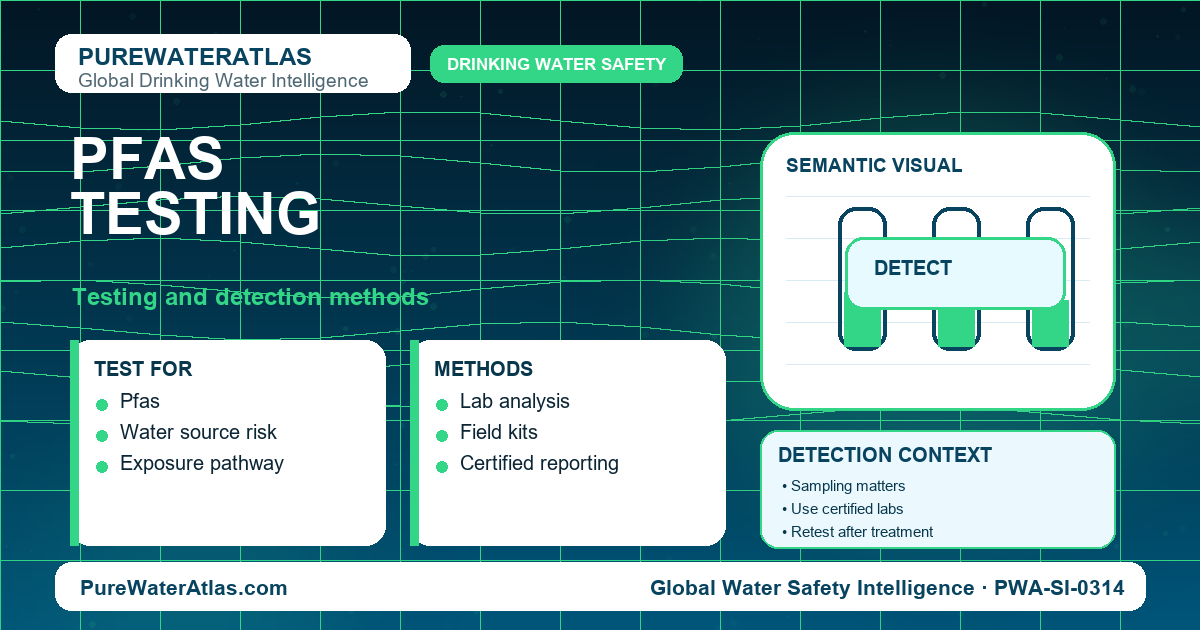
Many consumers begin with epa drinking water rules home testing because it is accessible and relatively inexpensive. Home kits can be useful for preliminary screening of parameters such as hardness, chlorine, pH, nitrate, or sometimes lead. However, their value depends on the specific kit, the contaminant, and how carefully the instructions are followed.
Home tests have several limitations:
- They may provide only broad ranges rather than precise concentrations
- They may not detect contaminants at the low levels relevant to EPA standards
- They can be affected by user error, lighting, timing, and color interpretation
- They may not be recognized for compliance purposes
By contrast, epa drinking water rules lab analysis relies on certified laboratories using validated methods, calibrated instruments, internal quality controls, blanks, spikes, duplicates, and documentation procedures. These labs are generally required for regulatory compliance testing because they can produce results with known reliability and traceability.
Common analytical methods
EPA-approved analytical methods vary by contaminant class. Although the chemistry can be complex, the basic categories are straightforward:
- Microbiological methods: Used for total coliform, E. coli, and other microbial indicators through culture-based or enzyme-substrate techniques.
- Spectrometry and spectroscopy: Used for metals such as lead, arsenic, and copper through methods like ICP-MS or atomic absorption.
- Chromatography: Used for volatile organic compounds, pesticides, herbicides, and disinfection byproducts.
- Ion analysis: Used for nitrate, nitrite, fluoride, bromate, and similar inorganic contaminants.
- Radiochemical methods: Used for gross alpha, radium, uranium, and related radionuclides.
- Continuous online instrumentation: Used for treatment process monitoring such as turbidity, chlorine residual, and pH.
The selected method must be sensitive enough to detect contaminants at or below the regulatory threshold of concern. This is one of the most important aspects of epa drinking water rules accuracy. A test that cannot detect low but meaningful concentrations is not useful for compliance decisions.
Detection limits, precision, and accuracy
People often assume that a lab result is exact, but every analytical method has performance limits. Accuracy refers to how close a result is to the true value. Precision refers to how consistently the method reproduces similar results. Detection limits define the lowest concentration that can be reliably distinguished from zero or background noise.
When discussing epa drinking water rules accuracy, several terms matter:
- Method detection limit: The smallest concentration the method can reliably detect under ideal conditions
- Reporting limit: The level above which the lab reports a quantitative result with confidence
- False positive: A test indicates contamination that is not really present
- False negative: A test fails to detect contamination that is present
- Quality assurance: Systems used to maintain and verify data reliability
Laboratories use blanks, duplicates, calibration standards, matrix spikes, and control samples to evaluate whether results are trustworthy. Regulators rely on these systems because public health decisions, compliance status, and treatment investments may depend on very small concentration differences.
Interpreting test results correctly
Understanding epa drinking water rules test results requires more than comparing one number to one standard. Interpretation depends on the contaminant and rule structure.
For example:
- Some contaminants have a maximum contaminant level that should not be exceeded in the reported compliance calculation.
- Lead and copper use action levels based on the 90th percentile of a series of samples rather than a simple average.
- Microbial rules may trigger repeat sampling and investigations after a positive result.
- Treatment technique rules may require operational responses even before a health-based limit is exceeded.
- Running annual averages may determine compliance for some contaminants rather than a single sample.
This means consumers should read water quality reports carefully and understand whether the result reflects a single event, a compliance average, a percentile calculation, or an operational measurement. If there is uncertainty, the best next step is to ask the utility, local health department, or a qualified water professional for clarification.
When additional testing is appropriate
Even when a public water system meets EPA requirements, additional testing may still be useful in certain situations:
- If a home has older plumbing materials that may contribute lead or copper
- If water has unusual taste, odor, staining, or color changes
- If there has been nearby flooding, construction, or industrial activity
- If a household relies on a private well, which is generally not regulated like a public system
- If an immunocompromised person, infant, or pregnant individual needs extra precaution
In these cases, both home screening and certified lab confirmation may play a role. Broader information on water quality improvement options is available in resources about water purification and water treatment systems.
Prevention and Treatment
Testing is only one part of safe drinking water management. The ultimate goal is prevention of contamination and effective treatment when contaminants are present.
Prevention starts at the source. Utilities and communities can reduce risk by protecting watersheds, controlling runoff, monitoring industrial discharges, maintaining well integrity, and managing land use near water supplies. Source water protection is often less costly and more sustainable than removing contamination after it occurs.
Within the treatment plant, prevention includes optimized coagulation, filtration, disinfection, corrosion control, and process monitoring. The right treatment depends on the contaminant:
- Filtration and disinfection: For microbial contaminants and turbidity control
- Corrosion control: To reduce lead and copper leaching from plumbing
- Ion exchange, reverse osmosis, or adsorption: For nitrates, arsenic, PFAS, and various dissolved contaminants
- Activated carbon: For taste, odor, and many organic chemicals
- Aeration or air stripping: For certain volatile compounds
At the distribution level, prevention means maintaining disinfectant residuals, repairing leaks, controlling storage conditions, preventing backflow, and managing water age. In homes and buildings, prevention may involve replacing lead service lines, updating fixtures, flushing stagnant water, and installing point-of-use treatment where appropriate.
However, treatment choices should be based on data, not assumptions. Installing a filter without knowing the contaminant can waste money or create a false sense of security. A device that removes chlorine, for example, may not remove nitrate. A sediment filter may not affect dissolved metals. That is why testing and treatment should be linked as part of a clear decision-making process.
Common Misconceptions
There are many misunderstandings about drinking water testing, and these misconceptions can lead to poor decisions or misplaced confidence.
- If water looks clear, it must be safe. Many dangerous contaminants are invisible and have no obvious taste or odor.
- One good result means water is always safe. Water quality can change over time due to source conditions, seasons, treatment changes, or plumbing issues.
- Home test kits are always as good as lab testing. Some are useful screening tools, but they are not a substitute for certified laboratory analysis in many situations.
- If the utility meets EPA standards, every tap in every building has identical water quality. Plumbing materials and building conditions can alter water quality at the point of use.
- Any detectable amount of a contaminant means immediate emergency. Detection does not automatically mean the water violates a health standard; interpretation matters.
- No detection means zero risk. Every test has limits, and some contaminants may not have been included in the panel.
- Bottled water is always safer than tap water. Safety depends on the source, treatment, storage, and oversight, not simply the package.
These misconceptions are one reason public education is so important. EPA rules are technical, but their purpose is practical: to help people make informed decisions based on sound evidence.
Regulations and Standards
EPA drinking water rules are built around enforceable standards and rule-specific monitoring requirements. The legal framework comes mainly from the Safe Drinking Water Act, under which EPA establishes national primary drinking water regulations for many contaminants in public water systems.
Key regulatory concepts include:
- Maximum Contaminant Level (MCL): The highest level of a contaminant allowed in drinking water
- Maximum Contaminant Level Goal (MCLG): A non-enforceable health goal
- Treatment Technique (TT): A required treatment process when direct measurement or control through an MCL is not sufficient
- Action Level: A trigger requiring treatment steps, public education, or other actions, as used in the Lead and Copper Rule
- Monitoring and Reporting Requirements: Rules that define when, where, and how testing must occur
Although EPA establishes national rules, states often have primacy for implementation and enforcement, meaning they oversee water systems, review data, issue approvals, and conduct compliance actions. States may also adopt requirements that are more stringent than federal minimums.
Regulations also define approved methods. A water system cannot simply choose any test it prefers. It must use methods approved for the contaminant and rule in question, often through certified laboratories. This is central to epa drinking water rules lab analysis and overall compliance integrity.
Another important point is that public water systems and private wells are treated differently. EPA drinking water rules generally apply to public water systems, not most private household wells. Private well owners are therefore responsible for arranging their own testing and treatment, often using EPA guidance and state health recommendations as a benchmark.
Transparency is also part of the regulatory system. Community water systems are generally required to provide annual Consumer Confidence Reports that summarize detected contaminants, compliance status, likely sources, and health information. These reports can help the public understand local water quality, but they should be read carefully because not every contaminant is tested every year, and results may reflect system-wide compliance rather than conditions at a specific household tap.
Conclusion
EPA drinking water testing rules are designed to do much more than produce lab reports. They create a structured system for detecting contamination, verifying treatment performance, guiding corrective action, and protecting public health over time. To understand epa drinking water rules testing, it is necessary to look at the full chain: source risk, sample design, field procedures, laboratory methods, data quality, interpretation, and response.
For consumers, the most important takeaway is that water safety depends on both reliable monitoring and informed interpretation. EPA drinking water rules home testing can be useful as a starting point, but certified analysis is often needed for dependable answers. EPA drinking water rules sampling methods matter because poor collection can distort results. EPA drinking water rules accuracy matters because health decisions rely on precise and defensible data. And EPA drinking water rules test results matter most when they are understood in the context of the underlying standard and the real-world conditions at the source, in the distribution system, and at the tap.
Ultimately, safe drinking water is not maintained by assumptions. It is maintained by evidence, oversight, and continuous improvement. Good testing does not guarantee perfect water, but without good testing, there is no trustworthy basis for protection at all.
Read the full guide: Drinking Water Safety Guide
Explore more in this category: Drinking Water Safety Articles