
Introduction
Safe tap water is one of the most important foundations of a healthy home. Families rely on it every day for drinking, cooking, brushing teeth, washing produce, preparing infant formula, making coffee and tea, and supporting overall hygiene. Yet many homeowners and renters are unsure how to evaluate water quality, how to choose the right filter, and how to maintain a treatment system over time. Questions often arise about taste and odor, lead, chlorine, sediment, bacteria, hard water, pesticides, and newer concerns such as PFAS.
This guide explains drinking water safety for households best filters in a practical, evidence-based way. It covers the most common contamination sources, the health issues linked to unsafe water, the most useful testing methods, and the main treatment technologies available for homes. It also compares popular systems so households can make informed choices based on local water conditions, budget, and maintenance needs.
For readers who want broader background, it may help to review additional resources on drinking water safety and a more general household guide. If your main concern is understanding where contaminants come from, see common causes and sources. If you are focused on illness prevention, the material on health effects and risks is also useful. Households comparing filtration technologies can also explore related articles on water treatment systems and broader trends in global water quality.
The key point is simple: no single filter is best for every home. The right solution depends on what is in your water, how much water your household uses, whether the goal is taste improvement or contaminant reduction, and how willing you are to handle regular upkeep. A system that works well for chlorine taste may not remove dissolved metals. A unit designed for sediment may not address microbial contamination. Understanding those differences is central to effective household water protection.
What It Is
Household drinking water safety refers to the effort to ensure that water used for human consumption is free from harmful contaminants, acceptable in taste and odor, and consistent with recognized health standards. In practical terms, this means identifying potential water quality issues and using the right combination of source protection, testing, plumbing maintenance, and treatment devices to reduce risk.
Water safety at home involves several dimensions:
- Microbiological safety: protection from bacteria, viruses, and parasites that can cause gastrointestinal illness and other infections.
- Chemical safety: reduction of metals, disinfectant byproducts, industrial chemicals, agricultural runoff, and naturally occurring contaminants such as arsenic.
- Physical quality: control of sediment, turbidity, corrosion particles, and visible discoloration.
- Aesthetic quality: improvement of taste, smell, and appearance, which can influence whether people trust and consume enough water.
When people search for drinking water safety for households best filters, they are usually looking for systems that match one or more of these goals. The term “best” can mean different things depending on the situation:
- Best for lead removal
- Best for chlorine taste and odor
- Best for private well water
- Best for renters or small apartments
- Best for whole-house treatment
- Best value over time
Household treatment systems generally fall into two broad categories: point-of-use and point-of-entry. Point-of-use systems treat water at a single tap or appliance, such as an under-sink filter or countertop reverse osmosis unit. Point-of-entry systems treat water as it enters the home, such as whole-house sediment filters, water softeners, or UV disinfection systems.
There is also a distinction between systems that mainly improve taste and systems designed to reduce health-related contaminants. For example, many simple pitcher filters use activated carbon to improve flavor and reduce chlorine, but not all are certified for lead, nitrates, or microbial contaminants. By contrast, more advanced systems such as reverse osmosis can remove a wider range of dissolved substances, though they come with higher cost, wastewater, and maintenance needs.
Understanding this difference helps with drinking water safety for households treatment comparison. An attractive product with strong marketing claims is not automatically appropriate for your water. What matters is whether the device is independently tested and certified for the exact contaminant you need to address.
Main Causes or Sources
Household water can become unsafe or undesirable from a variety of sources. Some begin at the source water level, such as rivers, lakes, or groundwater aquifers. Others arise during treatment, distribution, or within the plumbing of the building itself.
Municipal source and distribution issues
Public water systems are treated and monitored, but that does not mean problems never occur. Potential issues include:
- Disinfection residuals: chlorine or chloramine are commonly used to control microbes, but they can affect taste and odor.
- Disinfection byproducts: chemicals formed when disinfectants react with organic matter in water.
- Aging infrastructure: old mains, pipe breaks, and disturbances in the system can increase sediment or contamination risk.
- Corrosion: plumbing materials may release lead, copper, or iron if water chemistry promotes corrosion.
Household plumbing and fixtures
Even if water leaving the treatment plant meets standards, contamination can occur inside homes and buildings. Common examples include:
- Lead service lines or plumbing components
- Brass fixtures that may contribute trace metals
- Copper pipes in corrosive water conditions
- Biofilm growth in stagnant plumbing
- Water heaters or storage tanks that accumulate sediment
This is one reason why household testing is so important. Source water compliance does not fully predict water quality at the tap.
Private well contamination
Homes with private wells carry additional responsibilities because owners are usually responsible for testing and treatment. Wells can be affected by:
- Natural minerals such as arsenic, manganese, iron, or fluoride
- Agricultural runoff containing nitrates or pesticides
- Septic system leakage
- Surface water intrusion after floods or heavy rainfall
- Microbial contamination from poor well construction or damaged caps
Environmental and industrial contaminants
Contaminants may also come from nearby land use or broader environmental factors:
- PFAS: persistent industrial chemicals associated with firefighting foam, manufacturing, and consumer products
- Volatile organic compounds: solvents and fuels that may contaminate groundwater
- Pesticides and herbicides: often linked to agricultural areas
- Heavy metals: from mining, industrial waste, or natural geology
Sediment and particulate matter
Cloudy water, rust-colored water, or grit may be caused by sediment from old pipes, disturbed mains, private well issues, or failing plumbing. While sediment is often viewed as an aesthetic problem, it can also interfere with disinfection, damage appliances, and reduce the effectiveness of other filters.
For many households, the contamination profile includes more than one issue. A family might have chlorine taste, hard water scale, and lead risk from old plumbing. Another home may have iron staining, sulfur odor, and bacterial concerns from a well. That is why drinking water safety for households buying guide decisions should always begin with a clear understanding of the specific sources affecting the property.
Health and Safety Implications
Unsafe drinking water can affect health in both immediate and long-term ways. Some contaminants cause acute symptoms such as nausea, diarrhea, or vomiting. Others contribute to health risks over months or years, especially with repeated exposure.
Microbial risks
Bacteria, viruses, and protozoa are among the most urgent threats because they can cause illness quickly. Symptoms may include stomach cramps, diarrhea, fever, dehydration, and in severe cases hospitalization. Infants, older adults, pregnant people, and those with weakened immune systems are particularly vulnerable.
Lead and other metals
Lead is a major household concern because there is no known safe exposure level for children. Lead in drinking water can affect brain development, behavior, learning, and growth. In adults, long-term exposure may contribute to high blood pressure, kidney problems, and reproductive issues. Copper, while essential in small amounts, can cause gastrointestinal upset at elevated levels and may pose additional risk with chronic overexposure.
Nitrates
Nitrates are especially dangerous for infants because they can interfere with oxygen transport in the blood, leading to a condition often called blue baby syndrome. Homes using well water in agricultural areas should pay particular attention to nitrate testing.
Arsenic and chronic exposure concerns
Arsenic is naturally present in some groundwater sources and may not affect taste, color, or smell. Long-term exposure has been associated with increased risks of cancer and cardiovascular and neurological effects. This highlights an important principle of water safety: dangerous water does not always look or taste bad.
Disinfection byproducts and chemical contaminants
Some regulated chemicals and byproducts are associated with elevated chronic health risks when present above recommended levels over long periods. Although municipal systems work to control these substances, household exposure may still vary depending on local conditions and plumbing factors.
Indirect safety effects
Water quality problems can also create indirect risks:
- Unpleasant taste may cause people to drink less water
- Contaminated water used for cooking may affect food safety
- Scale buildup can reduce appliance efficiency and raise energy costs
- Corrosion may damage plumbing and increase metal release
Because health effects differ by contaminant, the best treatment choice also differs. For example, a carbon filter may greatly improve odor and chlorine taste but may not be enough for arsenic or nitrates. That distinction is central to evaluating drinking water safety for households carbon filters versus more advanced systems.
Testing and Detection
Testing is the foundation of good household water protection. Without it, families may spend money on the wrong filter or overlook a serious issue that has no obvious taste or odor.
Start with available water quality information
If you use municipal water, review your utility’s annual consumer confidence report. This provides useful background on regulated contaminants, treatment methods, and compliance status. However, it does not replace tap-specific testing inside your home, especially if your building has older plumbing.
If you have a private well, routine testing is essential because there is usually no utility monitoring your water for you.
Common household tests
Testing can range from simple home kits to comprehensive laboratory analysis. Common targets include:
- Lead
- Copper
- Nitrates and nitrites
- Arsenic
- Iron and manganese
- Hardness
- pH
- Total coliform and E. coli
- PFAS
- Volatile organic compounds
When to test
- When moving into a new home
- When using a private well
- After flooding, plumbing repairs, or water main work
- If water changes in taste, smell, color, or clarity
- If a household member is pregnant, immunocompromised, or preparing infant formula
- Before buying a major treatment system
Certified laboratories and meaningful results
For health-related decisions, laboratory testing is usually more reliable than basic strips alone. A certified lab can provide concentration data, detection limits, and in some cases recommendations for follow-up action. Once you know which contaminants are present and at what levels, you can match them to an appropriate treatment technology.
This is where drinking water safety for households treatment comparison becomes practical rather than theoretical. Instead of asking whether one filter is “good,” you can ask whether it is certified for lead at your concentration range, whether it reduces nitrates, or whether it can handle the microbial issues found in your well.
Prevention and Treatment
Prevention starts with source awareness, plumbing care, and timely testing. Treatment adds another protective layer by using the right technology for the contaminants of concern. Below is a clear overview of the main household options and where they fit best.
Activated carbon filters
Drinking water safety for households carbon filters is a common topic because carbon systems are among the most widely used and accessible. Activated carbon works by adsorbing certain contaminants onto a porous surface. It is especially useful for:
- Chlorine
- Some taste and odor compounds
- Some volatile organic compounds
- Certain pesticides and industrial chemicals, depending on design
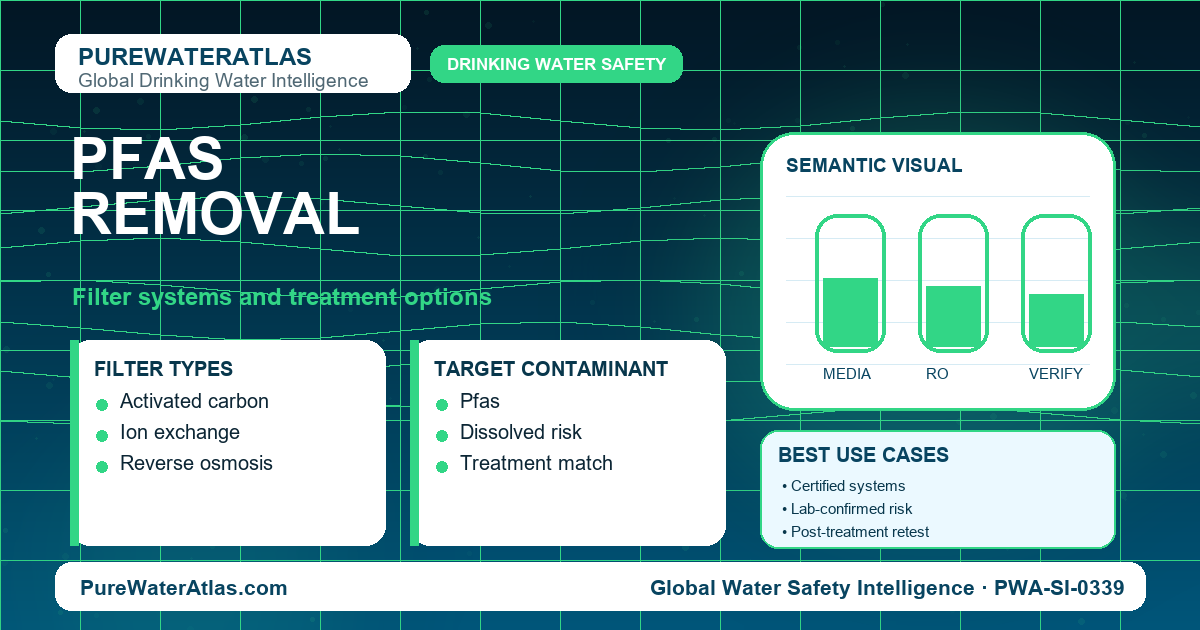
Carbon filters are available in pitchers, faucet-mounted units, under-sink cartridges, refrigerators, and whole-house formats. Their strengths include affordability, convenience, and improved taste. Their limitations are equally important: not all carbon filters remove lead, PFAS, nitrates, arsenic, or microbes. Performance depends on media quality, contact time, and certification.
Best fit: households mainly concerned with taste, odor, chlorine, and selected chemicals, especially when a certified model is chosen for specific contaminants.
Reverse osmosis systems
Drinking water safety for households reverse osmosis is often discussed because reverse osmosis, or RO, can remove a broad range of dissolved contaminants. RO systems force water through a semipermeable membrane, often combined with prefilters and postfilters. They can reduce:
- Lead
- Arsenic
- Nitrates
- Fluoride
- Many dissolved salts
- Some PFAS
- Many other dissolved contaminants, depending on system design
RO is one of the strongest point-of-use options for comprehensive contaminant reduction, especially under the sink. However, it also has tradeoffs:
- Higher upfront cost than basic carbon filters
- Periodic membrane and cartridge replacement
- Wastewater production during treatment
- Slower output compared with direct-flow tap water
Best fit: households needing broad dissolved contaminant reduction, especially for lead, arsenic, nitrates, or multi-contaminant situations.
Sediment filters
These filters remove sand, rust, silt, and suspended particles. They are often used as prefilters in whole-house systems or on private wells. Sediment filters improve clarity and protect downstream equipment such as softeners, UV systems, and RO units. They do not remove dissolved chemicals or pathogens by themselves.
Best fit: homes with visible particles, cloudy water, or a need to protect other treatment devices.
Ultraviolet disinfection
UV systems use ultraviolet light to inactivate bacteria, viruses, and some protozoa. They are particularly useful for private wells with microbial concerns. UV does not remove chemicals, metals, or sediment, so prefiltration is often needed to keep water clear enough for effective disinfection.
Best fit: well water with confirmed or potential microbial contamination.
Water softeners
Softeners remove calcium and magnesium that cause hard water. They help reduce scale, improve soap performance, and protect plumbing and appliances. They are not designed to make unsafe water safe from microbes or toxic contaminants.
Best fit: homes with hard water and scale problems.
Distillation
Distillers boil water and condense the steam, leaving many contaminants behind. They can be effective for some dissolved solids and metals, but they are often slower and less practical for larger households. Some volatile contaminants require additional carbon treatment.
Best fit: specialized situations where small-volume, high-purity water is needed.
Treatment comparison for households
Here is a practical drinking water safety for households treatment comparison summary:
- Pitcher carbon filter: low cost, easy to use, best for chlorine taste and odor; limited contaminant range unless specifically certified.
- Faucet-mounted carbon filter: convenient and affordable; good for taste and some lead-certified options; moderate flow limitations.
- Under-sink carbon system: stronger capacity and performance; good for routine drinking and cooking water improvement.
- Under-sink reverse osmosis: broad contaminant reduction; higher cost and maintenance; very effective for many dissolved substances.
- Whole-house sediment plus carbon: helps with particulates, odor, and chlorine throughout the home; may not address dissolved toxins fully.
- Whole-house UV: important for microbial control in well water; requires clean prefiltered water and annual lamp care.
- Whole-house softener: excellent for hardness, not a stand-alone drinking water safety device.
Buying guide: how to choose the right system
A realistic drinking water safety for households buying guide should focus on six questions:
- What contaminants are present? Use testing data, not assumptions.
- Do you need point-of-use or whole-house treatment? Drinking water contaminants may only require kitchen tap treatment, while hardness and sediment often call for whole-house systems.
- Is the product certified? Look for independent certification to recognized standards for the specific contaminants you need reduced.
- What is the ongoing maintenance cost? A cheap unit with frequent cartridge replacement may cost more over time.
- How much water do you use? Larger households need enough capacity and flow rate.
- How much maintenance can you realistically handle? The best system is one that will actually be maintained properly.
Filter maintenance and long-term performance
Drinking water safety for households filter maintenance is often overlooked, yet it is essential. A good filter that is not maintained can perform poorly or even become a problem. Spent carbon may lose effectiveness. Sediment cartridges can clog and reduce flow. RO membranes eventually foul. UV lamps weaken with age. In neglected systems, stagnant water and biofilm growth may become concerns.
Good maintenance practices include:
- Following manufacturer replacement schedules
- Replacing cartridges sooner if water quality worsens or flow drops
- Sanitizing systems when recommended
- Keeping a written service log
- Retesting water periodically to confirm performance
- Using genuine or equivalent certified replacement parts
Households should also understand that “filter life” estimates usually assume certain water conditions and usage volumes. Heavier sediment loads, high chlorine, or elevated contaminant concentrations can shorten service life.
Common Misconceptions
If water looks clear, it must be safe
Many harmful contaminants are invisible and odorless. Lead, arsenic, nitrates, and PFAS may not produce obvious warning signs.
Any filter removes everything
No single household filter removes all contaminants equally well. Treatment technologies are selective. Carbon, RO, UV, softening, and sediment filtration each serve different purposes.
Bottled water is always safer
Bottled water is not automatically superior. Quality varies by source, storage, and oversight. In many situations, well-tested tap water treated with an appropriate certified filter is an effective and more economical option.
Boiling solves all water problems
Boiling can kill many microbes, but it does not remove metals, nitrates, or many chemicals. In some cases, boiling may even increase the concentration of certain dissolved contaminants as water evaporates.
Filter replacement dates are just marketing
Replacement intervals are important for performance and hygiene. Ignoring them can reduce contaminant removal and water flow, and may allow deterioration in water quality.
Reverse osmosis is always the best choice
RO is highly capable, but not automatically ideal for every home. If the only issue is chlorine taste, a certified carbon filter may be simpler and more cost-effective. If the concern is bacterial contamination in well water, UV may be essential. The right answer depends on the test results.
Regulations and Standards
Household water safety operates within a framework of public health regulations, utility responsibilities, product testing standards, and consumer action.
Public water standards
In many countries, including the United States, public drinking water systems must meet regulatory limits for a range of contaminants. Utilities are required to monitor water quality, treat source water, and notify consumers about certain violations or risks. These protections are important, but they do not eliminate household-level concerns such as old plumbing or localized contamination after water enters a building.
Private well responsibility
Private wells are usually not regulated in the same way as public systems. That means homeowners are responsible for testing, maintenance, and treatment decisions. This is one of the most important distinctions in household water safety.
Product certification
When buying filters, independent certification matters. Reputable products are often tested to recognized standards for claims such as lead reduction, cyst reduction, chlorine reduction, or reverse osmosis performance. Households should verify that a system is certified specifically for the contaminant they care about, rather than relying on broad advertising language like “pure” or “advanced.”
Plumbing and lead reduction initiatives
Many communities are working to replace lead service lines, improve corrosion control, and reduce exposure from legacy infrastructure. Even so, households in older homes should remain alert and consider lead testing, especially if there are children or pregnant occupants.
Why standards still require household judgment
Regulatory compliance is essential, but it is not the final step in personal protection. Standards address population-level safety, while households often need tap-specific decisions. A family with hard, heavily chlorinated water in a new home will have different needs than a family in an older house with potential lead plumbing or a rural home using well water with nitrates and bacteria risk.
Conclusion
Choosing the right approach to household water protection starts with a simple rule: test first, then treat based on evidence. The phrase drinking water safety for households best filters does not point to one universal product. Instead, it points to a process of matching a certified treatment system to your water source, contaminant profile, household size, and maintenance capacity.
For many homes, activated carbon is an excellent choice for improving chlorine taste, odor, and selected chemicals. For broader dissolved contaminant reduction, drinking water safety for households reverse osmosis systems are often among the strongest point-of-use options. For well water, a combination of sediment filtration, UV disinfection, and contaminant-specific treatment may be necessary. In all cases, drinking water safety for households filter maintenance is critical to preserving performance over time.
The most effective strategy combines reliable testing, informed product selection, certified performance claims, and regular upkeep. When households follow that approach, they are far more likely to achieve water that is not only pleasant to drink, but genuinely safer for everyday use.
Read the full guide: Drinking Water Safety Guide
Explore more in this category: Drinking Water Safety Articles