Introduction
Water quality varies widely from one country to another, and even from one city, region, or neighborhood to the next. Climate, geology, industrial activity, agricultural practices, public infrastructure, and local regulations all influence what comes out of a tap. For homeowners, renters, travelers, facility managers, and public health professionals, understanding water quality by country best filters is essential for making informed decisions about treatment systems, maintenance, and long-term safety.
In some countries, the main concern may be microbial contamination caused by weak sanitation systems or intermittent water supply. In others, the issue may be chemical contaminants such as arsenic, nitrates, lead, PFAS, pesticide residues, hardness minerals, or high total dissolved solids. Even where municipal water meets official standards, taste, odor, sediment, chlorine byproducts, and aging plumbing can still create practical reasons to use household filtration. That is why there is no single universal water filter that works best everywhere.
An effective approach starts with matching the treatment method to the local water profile. In one location, a simple activated carbon filter may be enough to improve chlorine taste and odor. In another, water quality by country reverse osmosis systems may be more appropriate for reducing dissolved salts, arsenic, fluoride, or nitrates. In still other cases, ultraviolet disinfection, ultrafiltration, water softening, iron removal, or multi-stage systems provide the best results.
This article explains how water quality differs by country, how contamination sources influence treatment choices, and how to compare filtration technologies intelligently. It also covers testing, health implications, regulations, and practical selection advice, with a focus on educational guidance rather than one-size-fits-all claims. Readers looking for broader regional context can also explore /category/global-water-quality/ and the overview at /water-quality-by-country-complete-guide/.
What It Is
Water quality refers to the physical, chemical, and biological characteristics of water and how suitable that water is for a specific use, especially drinking, cooking, bathing, and food preparation. When discussing water quality by country, the topic includes both source-water conditions and treatment performance. A country may have excellent natural water resources but poor delivery infrastructure, or highly engineered treatment plants but local distribution issues that alter the final water consumers receive.
The idea behind water quality by country treatment comparison is not merely ranking nations as “good” or “bad.” Instead, it means identifying the dominant challenges in each setting and understanding which treatment technologies best address them. For example:
- Countries with highly chlorinated municipal water may benefit from carbon filtration for taste and odor.
- Regions with saline groundwater or elevated dissolved solids may require reverse osmosis.
- Areas with frequent microbial contamination may need disinfection-focused systems such as UV, chlorination, or ultrafiltration.
- Places with old plumbing may need filters certified for lead reduction.
- Hard-water regions may benefit from scale control or ion exchange softening.
Water quality also includes aesthetic characteristics such as cloudiness, sulfur smell, metallic taste, staining, or sediment. These may not always create immediate health hazards, but they affect household satisfaction, appliance lifespan, and confidence in local water supplies. As a result, the “best” filter depends not just on safety, but on local user goals.
Household treatment options generally fall into several categories:
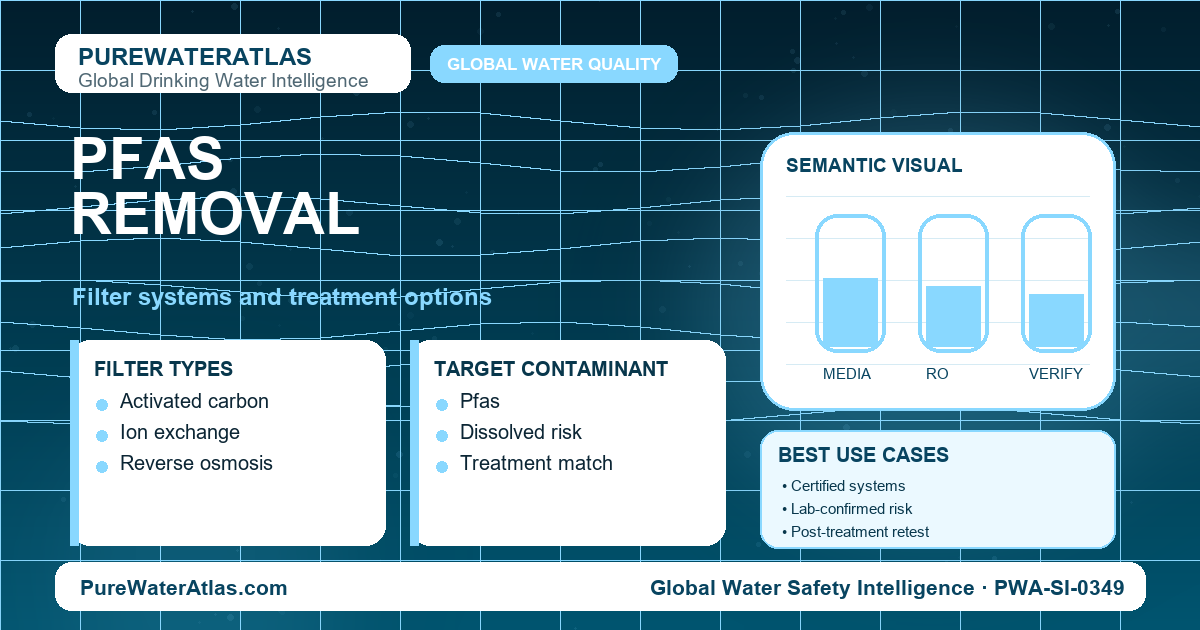
- Activated carbon filters for chlorine, taste, odor, some volatile organic compounds, and selected contaminants depending on certification.
- Reverse osmosis systems for many dissolved contaminants, including salts, arsenic, fluoride, nitrates, and certain heavy metals.
- Ultraviolet systems for microbial disinfection when water is otherwise relatively clear.
- Ultrafiltration or microfiltration for particulates, cysts, and some microorganisms.
- Ion exchange softeners for calcium and magnesium hardness.
- Specialty media for iron, manganese, sulfur, arsenic, or pH adjustment.
For readers exploring broader contamination patterns, the source-focused discussion at /water-quality-by-country-causes-and-sources/ provides helpful background.
Main Causes or Sources
The quality of drinking water is shaped by a combination of natural and human-made factors. Understanding these sources helps determine which filter or system is actually appropriate.
Natural Geology and Mineral Content
Groundwater picks up minerals from surrounding rock formations. In some countries, this leads to hard water with high calcium and magnesium levels. In others, natural arsenic, fluoride, iron, manganese, sulfur, or salinity may be present. These are not problems that carbon filtration alone can reliably solve. In many such cases, reverse osmosis, ion exchange, oxidation-filtration, or targeted specialty media are more suitable.
Aging Infrastructure
Even where treatment plants perform well, distribution systems may introduce new problems. Old pipes, corroded plumbing, storage tanks, and intermittent pressure events can lead to lead, copper, rust, sediment, and microbial intrusion. This is common in both lower-income and wealthier countries where infrastructure renewal has not kept pace with system age.
Industrial Pollution
Factories, mining, manufacturing zones, refineries, and waste disposal sites can affect rivers, reservoirs, and aquifers. Depending on the local industry, contaminants may include heavy metals, solvents, petroleum compounds, PFAS, nitrates, sulfates, and other persistent pollutants. Treatment must be selected based on the actual contaminant profile rather than broad assumptions.
Agricultural Runoff
Fertilizers, pesticides, animal waste, and soil erosion commonly affect rural water sources. Nitrates are a major concern in agricultural regions and may be especially significant for infants. Surface water and shallow wells are often most vulnerable. Reverse osmosis is often used for nitrate reduction, while sediment prefiltration and disinfection may also be necessary depending on the source.
Microbial Contamination
In some countries, the greatest concern is not chemicals but pathogens. Bacteria, viruses, and protozoa can enter water through inadequate sewage treatment, flood events, damaged infrastructure, shallow wells, or poor household storage practices. In these circumstances, disinfection is essential. Carbon filters alone do not disinfect water and can even become a microbial growth site if neglected.
Disinfection Byproducts and Treatment Residuals
Municipal systems often use chlorine or chloramine to maintain residual disinfection. While this is important for public health, it can create taste and odor issues and may lead to regulated disinfection byproducts under certain conditions. This is one reason water quality by country carbon filters are so popular in urban settings where the main complaint is aesthetic rather than severe contamination.
Household Storage and Point-of-Use Risks
In areas with intermittent supply, water may be stored in rooftop tanks, cisterns, buckets, or bottles. Even if originally treated, water quality can deteriorate during storage due to biofilm formation, poor cleaning, insect access, or cross-contamination. In such settings, a household treatment system must be paired with better hygiene and storage practices.
More background on contamination categories can be found at /category/water-contamination/.
Health and Safety Implications
The health effects of poor water quality depend on the contaminants involved, the level of exposure, and how long exposure continues. Some risks are immediate, while others develop over months or years.
Microbial Risks
Contaminated water can transmit diarrhea, cholera, typhoid, hepatitis, giardiasis, and other gastrointestinal illnesses. These risks are especially serious for infants, older adults, pregnant people, and individuals with weakened immune systems. In countries or regions where outbreaks are linked to unsafe drinking water, disinfection and proper storage are often more urgent than aesthetic filtration.
Heavy Metals
Lead is one of the most concerning plumbing-related contaminants because it can affect neurological development in children and contribute to cardiovascular and kidney problems in adults. Arsenic, often found in groundwater, is associated with long-term health risks including skin, vascular, and cancer-related effects. Other metals such as cadmium, chromium, or mercury may be relevant in specific industrial or geological contexts.
Nitrates and Agricultural Contaminants
High nitrate levels in drinking water are particularly dangerous for infants, where they can interfere with oxygen transport in the blood. Pesticides and herbicide residues may also pose chronic health concerns depending on the compounds present and exposure duration.
Excess Salinity and Total Dissolved Solids
Water with very high dissolved mineral content can affect taste, cooking quality, and acceptance. While not all high-TDS water is unsafe, elevated salinity may be a concern for people on sodium-restricted diets when sodium is specifically increased by treatment or source conditions. High mineral content can also increase scale buildup, reducing efficiency in kettles, heaters, and appliances.
Hardness, Iron, and Manganese
These are often more operational than toxicological concerns at typical household levels, but they still matter. Hardness shortens appliance life, creates soap inefficiency, and leaves deposits. Iron and manganese can stain fixtures, discolor laundry, and alter taste. Consumers sometimes mistake these visible issues for the only water quality problems, when unseen contaminants may be more important.
Aesthetic Issues and Public Behavior
Bad taste, odor, or discoloration can indirectly affect health if people avoid tap water and switch to sugary beverages, unsafe alternative sources, or poorly maintained refill stations. Trust in water matters. Sometimes a well-chosen filter improves not only water quality but also consistent hydration and safe household use.
For a deeper discussion of risks, see /water-quality-by-country-health-effects-and-risks/.
Testing and Detection
Before selecting a filter, testing is essential. The same filter cannot address every issue, and marketing language is often broader than actual performance certification. Good treatment decisions start with evidence.
Review Local Water Reports
If water comes from a municipal supply, look for consumer confidence reports, utility data, or local authority reports. These may list disinfectants, metals, microbial compliance, hardness, nitrate, and other parameters. However, utility reports do not always reflect building-specific plumbing issues, seasonal changes, or contamination introduced after treatment.
Use Laboratory Testing
Certified laboratory testing is the most reliable way to assess household water. Testing should be tailored to the region and source type. Common parameters include:
- pH
- Total dissolved solids
- Hardness
- Iron and manganese
- Lead and copper
- Arsenic
- Nitrate and nitrite
- Fluoride
- Coliform bacteria and E. coli
- Chlorine or chloramine
- PFAS, pesticides, or VOCs where relevant
Field Test Kits and Screening Tools
At-home strips and meters can be useful for screening hardness, chlorine, pH, TDS, or nitrate, but they are not a substitute for full laboratory analysis when health-risk contaminants are suspected. They are best used for routine monitoring, troubleshooting, or maintenance checks.
Inspect the Entire Water Path
Testing should consider not only the source but the complete delivery chain. A home using a private well requires source testing plus inspection of the pressure tank, treatment equipment, and plumbing. A home on city water should consider whether lead-bearing fixtures, stagnant pipes, or in-building storage influence final tap quality.
Match Test Results to Certified Performance Claims
The best buying decision comes from comparing actual contaminants with system certifications. For example:
- Use certified carbon filters for chlorine, taste, odor, and selected contaminants the unit is specifically rated to reduce.
- Use reverse osmosis when dissolved contaminant reduction is needed.
- Use UV only after confirming low turbidity and appropriate pretreatment.
- Use softeners for hardness, not for microbial safety.
This is a key part of any water quality by country buying guide: test first, then choose technology based on real needs, not assumptions.
Prevention and Treatment
The best prevention strategy combines source protection, infrastructure maintenance, proper storage, and point-of-use or point-of-entry treatment where needed. No filter should be treated as a substitute for fixing a contaminated well, replacing unsafe plumbing, or maintaining sanitation systems. Still, household systems are often the most practical final barrier.
Activated Carbon Filters
Water quality by country carbon filters are often the best option where the main issues are chlorine taste, odor, some organic compounds, and improved palatability. They are widely available as pitchers, faucet filters, undersink units, refrigerator filters, and whole-house cartridges.
Best use cases include:
- Municipal water with chlorine or chloramine-related taste concerns
- Urban households seeking better flavor and odor
- Situations where dissolved salts are not the main issue
Limitations include reduced effectiveness for many dissolved inorganic contaminants unless the unit is specifically designed and certified for them. Carbon alone should not be relied upon for universal pathogen removal.
Reverse Osmosis Systems
Water quality by country reverse osmosis becomes especially relevant where groundwater or municipal water contains elevated TDS, arsenic, fluoride, nitrates, sodium, or other dissolved contaminants. RO systems force water through a semi-permeable membrane and usually include sediment and carbon pretreatment stages.
Best use cases include:
- Countries or regions with saline or mineral-heavy groundwater
- Areas with arsenic or nitrate concerns
- Households needing broad dissolved contaminant reduction
Limitations include wastewater generation, slower production, the need for regular membrane maintenance, and possible need for remineralization depending on user preference and system design.
Ultraviolet and Microbial Barriers
For biologically unsafe water, UV can be highly effective when properly sized and maintained. It is most suitable when the water is already clear and prefiltered. In higher-risk settings, UV may be paired with sediment filtration, carbon filtration, or ultrafiltration.
Water Softeners and Scale Control
Where hardness is the main issue, softeners are often the most efficient solution. They protect heaters, dishwashers, and plumbing while improving soap performance. However, they do not address pathogens or many toxic contaminants.
Iron, Sulfur, and Manganese Treatment
Oxidation systems, catalytic media, air injection, and specialty filters are often used where well water causes staining, rotten-egg odor, or dark sediment. These are highly location-specific and should be selected after testing.
Multi-Stage Treatment
Many countries and households benefit most from combining technologies. A typical sequence may include sediment prefiltration, carbon treatment, reverse osmosis for drinking water, and UV for microbial safety. A whole-house plus point-of-use approach is common when both appliance protection and safe drinking water are priorities.
Maintenance Matters
Water quality by country filter maintenance is one of the most overlooked factors in performance. Even the best system can fail if cartridges are not replaced, membranes are not serviced, tanks are not sanitized, or UV lamps are not changed on schedule.
- Replace sediment and carbon cartridges according to manufacturer guidance or sooner if pressure drops.
- Sanitize storage tanks and housings when required.
- Monitor RO membrane performance with periodic TDS checks and scheduled replacement.
- Replace UV lamps annually or as specified, even if the lamp still appears to glow.
- Inspect seals, valves, and bypass settings regularly.
- Retest water periodically, especially after seasonal changes or source disturbances.
Readers interested in treatment technologies more broadly may also find /category/water-purification/ useful.
How to Compare Systems by Country or Region
A practical water quality by country treatment comparison should consider the following questions:
- Is the main risk microbial, chemical, mineral, or aesthetic?
- Is the source municipal, bottled, tanker-supplied, rainwater, or private well?
- Are contaminants dissolved or particulate?
- Does the area have reliable electricity and water pressure?
- How easy is it to obtain replacement filters and service locally?
- What certifications back the product’s claims?
- What maintenance can the user realistically perform?
These practical questions often matter more than brand reputation alone.
Common Misconceptions
Many consumers misunderstand how filtration works, especially when trying to compare solutions across countries.
“Clear Water Is Safe Water”
Water can look perfectly clean while still containing lead, arsenic, nitrates, or microbes. Visual appearance is not enough to judge safety.
“Any Filter Removes Everything”
No single household filter removes every possible contaminant under all conditions. Carbon, reverse osmosis, UV, softening, and specialty media each address different problems.
“Bottled Water Is Always Better”
Bottled water quality varies widely by brand, country, storage condition, and source. In some areas it may be safer than untreated local tap water, but it is not automatically superior to properly treated household water.
“Reverse Osmosis Is Always the Best Choice”
RO is excellent for many dissolved contaminants, but it may be unnecessary if the real problem is only chlorine taste. It also requires maintenance, wastewater handling, and adequate pressure. Choosing RO without a clear need can add cost and complexity.
“Carbon Filters Provide Disinfection”
Standard carbon systems improve taste and remove selected chemicals, but they do not reliably disinfect unsafe water. In fact, neglected filters can become less sanitary over time.
“Maintenance Is Optional”
A neglected filter can clog, lose effectiveness, harbor microbial growth, or allow contaminants to break through. Long-term safety depends on maintenance as much as on initial purchase quality.
Regulations and Standards
Water regulations differ by country, but most national systems are influenced by public health frameworks such as those from the World Health Organization or regional regulatory bodies. Standards typically define maximum levels for microbes, metals, disinfectants, nitrates, and other contaminants. However, standards are not identical worldwide, and enforcement quality can vary substantially.
Municipal Standards vs Household Reality
A country may have strong national drinking water standards, yet individual households can still face problems due to local distribution pipes, building plumbing, or intermittent supply. Conversely, some regions with less comprehensive centralized treatment may depend more heavily on point-of-use purification.
Product Certification
When buying a household filter, certification is crucial. Reputable systems are independently tested against specific reduction claims. Buyers should look for evidence that a unit is certified for the contaminants actually present in their water, rather than relying on broad advertising statements such as “purifies” or “removes toxins.”
Country-Specific Considerations
In wealthier countries, the focus may be on aging infrastructure, emerging contaminants, and compliance gaps within old buildings. In developing or rapidly urbanizing countries, larger concerns may include microbial contamination, intermittent supply, tanker water variability, and inconsistent rural treatment. This is why the concept of water quality by country best filters must remain context-specific rather than generic.
Consumer Responsibility
Regulatory compliance does not remove the need for consumer awareness. Households should still:
- Review water reports where available
- Test private wells regularly
- Replace outdated plumbing if lead or corrosion is a concern
- Maintain filters according to schedule
- Verify certifications before purchase
Conclusion
Choosing the right water treatment system begins with understanding that water quality is local, not universal. Country-level patterns can point to likely issues, but the best solution depends on actual source conditions, delivery infrastructure, and household goals. In some places, activated carbon is the ideal answer for chlorine taste and odor. In others, reverse osmosis is the more effective choice for dissolved contaminants such as arsenic, nitrate, fluoride, or high mineral content. Where microbial risks dominate, disinfection and safe storage become the priority.
The most reliable path is straightforward: identify the source, test the water, compare the results to certified treatment capabilities, and commit to proper maintenance. That approach leads to better performance, safer drinking water, and smarter spending than buying a filter based on assumptions about a whole country or region.
Ultimately, the topic of water quality by country best filters is really about matching technology to evidence. By understanding local contamination patterns, treatment strengths, and maintenance needs, consumers can choose systems that are effective, practical, and sustainable over time.
Read the full guide: Global Water Quality Guide
Explore more in this category: Global Water Quality Articles