Introduction
Concerns about drinking water are no longer limited to one region, one climate, or one type of infrastructure. People moving between countries, traveling internationally, buying property abroad, or comparing public health systems often want to understand how to recognize problems before they become serious. That is where water quality by country warning signs becomes especially important. Water can look clear and still contain harmful microorganisms, metals, chemicals, or other contaminants. In other cases, it may send obvious signals through taste, odor, staining, cloudiness, or recurring household plumbing issues.
Water quality varies by country for many reasons: source water conditions, treatment capacity, aging pipes, industrial activity, agricultural runoff, climate pressures, monitoring systems, and regulatory enforcement. A country with strong standards may still have local failures. A country with limited infrastructure may have areas with safe water and areas with persistent risk. Because of this, it is more useful to understand warning signs and risk indicators than to rely on broad assumptions.
This article explains how to identify symptoms, visible clues, and red flags associated with water safety across different regions. It also covers how water quality by country taste and odor issues can signal treatment byproducts, organic contamination, sulfur compounds, or pipe corrosion. In addition, it explores water quality by country visible signs, common water quality by country health symptoms, and practical guidance on water quality by country when to test. For readers seeking broader background, related resources include this complete guide and the overview section at global water quality.
Although warning signs are useful, they are not a substitute for proper laboratory testing. Some of the most dangerous contaminants have no smell, no taste, and no visible appearance. That is why understanding both sensory clues and hidden risks is essential for households, travelers, landlords, public health professionals, and anyone evaluating water conditions across borders.
What It Is
Water quality refers to the physical, chemical, and microbiological characteristics of water and whether it is suitable for a given use, especially drinking, cooking, bathing, and food preparation. When people discuss water quality by country, they are usually comparing the safety, reliability, and consistency of municipal supplies, private wells, rural systems, bottled water dependence, and local treatment practices.
The phrase water quality by country warning signs describes the clues that suggest water may not be safe or may require further investigation. These warning signs can be grouped into several categories:
- Sensory signs: unusual taste, odor, color, or texture
- Visible signs: cloudiness, sediment, staining, scale, oily films, or particles
- Household signs: pipe corrosion, damaged fixtures, laundry discoloration, appliance buildup
- Health-related signs: gastrointestinal illness, skin irritation, recurring unexplained symptoms linked to water use
- Environmental and infrastructure signs: flooding, nearby industry, sewage leaks, agricultural runoff, poor storage, service interruptions
Country-level differences matter because the source and type of contamination often differ by region. For example, one country may struggle more with microbial contamination from inadequate sanitation, while another may face a greater challenge from old lead service lines, mining runoff, arsenic in groundwater, or agricultural nitrates. In coastal zones, saltwater intrusion may affect wells. In rapidly urbanizing areas, intermittent water pressure may allow contaminated water to enter pipes.
It is also important to distinguish between aesthetic issues and safety issues. Water that tastes metallic may result from iron or copper, which can be unpleasant but not always highly dangerous at low levels. By contrast, water containing pathogens, nitrates, arsenic, lead, or certain industrial chemicals may show few obvious clues. Educational awareness helps people use visible and sensory signs as screening tools while still recognizing their limits.
Readers interested in source-specific factors can explore causes and sources of country-level water quality differences. For contamination categories, the collections at water contamination and water microbiology provide additional context.
Main Causes or Sources
Water problems rarely arise from a single factor. Most quality concerns result from the interaction between natural conditions and human systems. Understanding these causes helps explain why water quality by country risk indicators vary so much from place to place.
Source Water Conditions
Rivers, lakes, reservoirs, springs, and aquifers each carry different vulnerabilities. Surface water is often more exposed to sewage discharges, stormwater, industrial releases, and agricultural runoff. Groundwater is usually better protected from short-term pollution but can accumulate naturally occurring arsenic, fluoride, manganese, iron, uranium, or salinity depending on local geology. In some countries, groundwater contamination is a major national issue even when the water appears clean.
Inadequate Treatment and Disinfection
Water treatment systems may be absent, outdated, overloaded, or inconsistently operated. Where filtration and chlorination are weak, microbiological contamination becomes more likely. This is particularly important in areas with intermittent electricity, limited chemical supply chains, insufficient operator training, or incomplete rural infrastructure. Even where treatment plants exist, poor maintenance can reduce performance.
Aging Distribution Systems
A country may have good source water and a functioning treatment plant but still face problems once water enters old pipes. Corroded plumbing can introduce lead, copper, iron, rust particles, and scale. Leaks and pressure losses can allow outside contamination to enter the system. Intermittent water service is a significant risk indicator because pressure drops create opportunities for intrusion through cracks and joints.
Sanitation Failures
Broken sewer lines, failing septic systems, open defecation, and untreated wastewater discharges can all contaminate nearby water sources. In densely populated areas, the overlap between water supply networks and sanitation problems is a major public health concern. Heavy rainfall can worsen this by washing waste into rivers and shallow wells.
Agricultural Runoff
Fertilizers, pesticides, animal waste, and sediment from farming areas can alter water chemistry and safety. Nitrate contamination is especially concerning for infants, and manure runoff can carry bacteria, viruses, and parasites. In countries with intensive agriculture and limited source-water protection, these issues may be recurring seasonal problems.
Industrial and Mining Pollution
Industrial facilities may release solvents, petroleum compounds, heavy metals, acids, and persistent chemicals into local water resources. Mining operations can mobilize arsenic, mercury, cadmium, lead, and other harmful substances. In some countries, rapid industrial growth has outpaced environmental enforcement, creating localized high-risk areas that may not be obvious from national statistics alone.
Household Storage and Point-of-Use Risks
In regions where piped water is unreliable, people often store water in tanks, rooftop cisterns, drums, or containers. Poor cleaning, open lids, heat, and contact with hands or utensils can recontaminate water after collection. This means water that leaves a treatment system safely may become unsafe at the household level.
Climate and Extreme Weather
Drought can concentrate pollutants and increase reliance on marginal water sources. Floods can spread sewage, chemicals, and sediment into wells and pipes. Wildfires may alter watershed conditions and increase ash, nutrients, and runoff. Warmer temperatures can also affect microbial growth and the formation of taste and odor compounds.
Governance and Monitoring Gaps
Another key part of water quality by country risk indicators is whether testing is frequent, transparent, standardized, and enforced. Some countries have strong legal standards but weak local monitoring. Others may publish very limited data, making it harder for households to judge risk accurately. Lack of reporting, delayed maintenance, or repeated boil-water advisories are themselves warning signs.
Health and Safety Implications
The health effects of poor water quality depend on the contaminant, the amount present, the length of exposure, and the age and health status of the person exposed. Some effects are immediate and obvious. Others develop slowly and may not be linked to water until testing confirms the cause.
Microbiological Hazards
Bacteria, viruses, and parasites are among the most urgent risks because they can cause rapid illness. Common symptoms include:
- Diarrhea
- Vomiting
- Stomach cramps
- Nausea
- Fever
- Dehydration
These water quality by country health symptoms are especially important in areas with recent flooding, low chlorination, poor sanitation, or known infrastructure damage. Children, older adults, pregnant women, and immunocompromised individuals are at higher risk of severe outcomes.
Chemical Hazards
Chemical contaminants often create long-term rather than immediate health concerns. Lead exposure can affect brain development in children and contribute to cardiovascular and neurological problems in adults. Arsenic exposure has been linked to skin changes, cardiovascular disease, and increased cancer risk with long-term ingestion. Nitrates can interfere with oxygen transport in infants. Fluoride can be beneficial at appropriate levels but harmful when naturally elevated far above recommended concentrations.
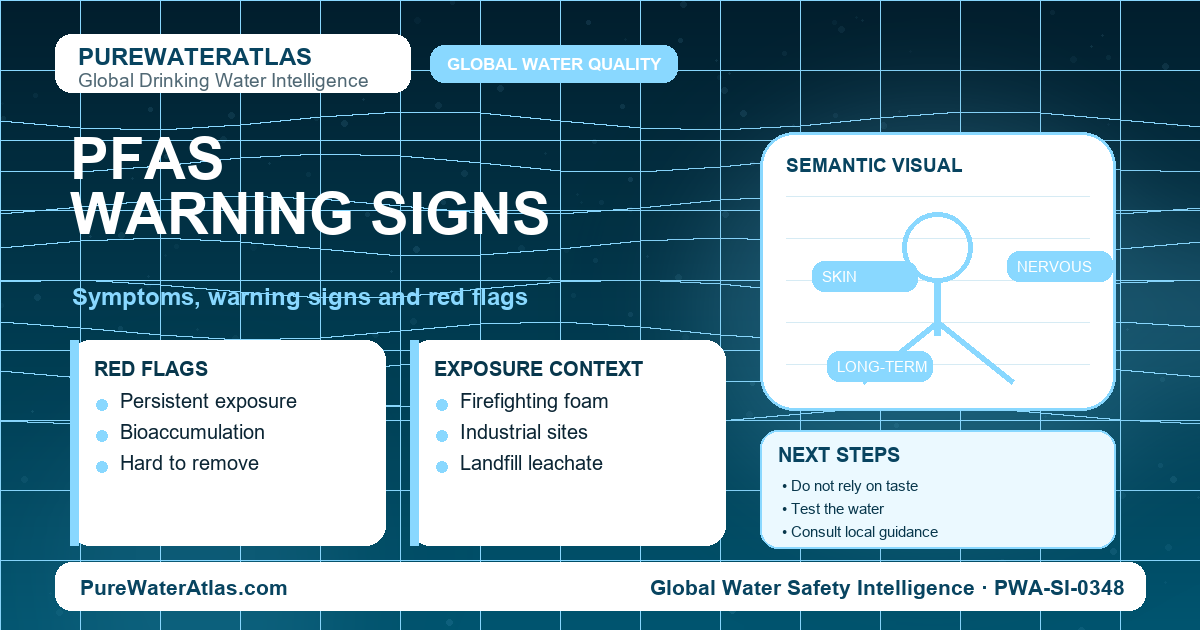
Pesticides, industrial solvents, PFAS, and other synthetic chemicals may also create chronic risks. Because these compounds are often invisible and tasteless, households should not assume water is safe based solely on appearance.
Skin, Eye, and Respiratory Effects
Not all exposure happens through drinking. Bathing and showering in poor-quality water may contribute to skin irritation, rashes, dry skin, or eye discomfort. Strong chlorine odors can be irritating in enclosed spaces, although odor alone does not always indicate dangerous levels. Hydrogen sulfide can produce a rotten egg smell, while moldy or earthy odors may reflect algal compounds or organic activity.
Interpreting Symptoms Carefully
It is important not to overdiagnose water as the cause of every symptom. Many illnesses have multiple possible causes. However, patterns matter. If several people in one home or neighborhood develop stomach illness after a pressure loss, flood event, or source change, that is a serious red flag. If symptoms improve when using bottled or filtered water, testing becomes even more important. For a fuller discussion of impacts, see health effects and risks by country.
Who Is Most Vulnerable
- Infants and young children
- Pregnant women
- Older adults
- People with weakened immune systems
- People with kidney disease or liver disease
- Travelers with no prior exposure to local microorganisms
For these groups, even mild warning signs should be taken seriously, especially where local water quality information is incomplete or inconsistent.
Testing and Detection
Recognizing warning signs is only the first step. The next step is knowing water quality by country when to test and what to test for. Because contamination profiles differ by region, testing should be guided by both universal indicators and location-specific risks.
Visible and Sensory Clues
Water quality by country visible signs often provide practical early clues. These include:
- Cloudiness or turbidity
- Floating particles or sediment
- Brown, red, orange, blue-green, or black discoloration
- Oily sheen or unusual surface films
- Staining on sinks, tubs, toilets, or laundry
- Scale buildup or corrosion on fixtures
Taste and smell can also be useful. Water quality by country taste and odor concerns may include:
- Metallic taste: iron, manganese, copper, or corrosion
- Rotten egg odor: hydrogen sulfide or sulfur bacteria
- Earthy or musty odor: algae, organic material, or biofilm
- Chlorine taste or smell: disinfection residual or treatment changes
- Salty taste: salinity, seawater intrusion, or mineral content
- Bitter or chemical taste: industrial contamination, treatment issues, or high mineral levels
These signs do not identify the contaminant with certainty, but they can guide whether immediate precautions and follow-up testing are needed.
When to Test
Knowing water quality by country when to test is essential for prevention. Testing is strongly recommended in the following situations:
- After moving into a new home, especially in another country
- When using a private well, spring, or rainwater system
- After flooding, storms, earthquakes, or major repairs
- After long periods of water interruption or low pressure
- When water changes color, taste, or odor suddenly
- When household members experience recurring gastrointestinal illness
- When an infant is using formula mixed with tap water
- When local authorities issue boil-water notices or contamination alerts
- When living near farms, factories, landfills, mines, or fuel storage areas
- When plumbing contains old metal pipes, solder, or fixtures
What to Test For
Basic testing often includes:
- Total coliforms and E. coli
- pH
- Turbidity
- Total dissolved solids
- Nitrate and nitrite
- Lead and copper
- Iron and manganese
- Arsenic, depending on region
- Fluoride, depending on geology
- Hardness and alkalinity
Additional testing may be warranted for pesticides, PFAS, volatile organic compounds, industrial chemicals, or radionuclides where local water quality by country risk indicators suggest those hazards.
Field Kits vs. Laboratory Testing
Home kits can be useful for screening, but certified laboratory analysis is more reliable, especially for health-related decisions. Microbial contamination, lead, arsenic, and trace organics require careful sampling and professional interpretation. In some countries, public health agencies or accredited private laboratories provide region-specific packages based on local contamination patterns.
Interpreting Results in Context
A test result should be interpreted alongside local standards, exposure duration, household plumbing conditions, and intended water use. A contaminant may be absent at the municipal entry point yet present at the tap due to building plumbing. Conversely, a one-time result may miss intermittent contamination, so repeated sampling may be needed where supply conditions are unstable.
Prevention and Treatment
Prevention starts with identifying the source of risk, because the best treatment for bacteria is not the same as the best treatment for lead, arsenic, or salinity. No single filter solves every problem.
Source Protection and Infrastructure
At the community level, the most effective long-term solutions include watershed protection, wastewater treatment, pipe replacement, pressure management, leak reduction, and reliable disinfection. Countries that invest in source-water protection and distribution system maintenance usually achieve more consistent public health outcomes than those that rely mainly on household-level coping measures.
Household Precautions
At home, practical prevention steps include:
- Using only safe water for drinking, brushing teeth, and infant formula
- Cleaning storage tanks and containers regularly
- Keeping water containers covered
- Flushing taps after long stagnation periods
- Following local advisories after storms or repairs
- Testing regularly if using private sources
Boiling
Boiling can be effective against many microorganisms, making it useful during outbreaks or boil-water advisories. However, boiling does not remove heavy metals, salts, nitrates, or many chemical pollutants. In fact, boiling can concentrate some dissolved contaminants as water evaporates. It should therefore be used only when the main concern is microbiological contamination and when authorities or test results indicate it is appropriate.
Filtration and Treatment Technologies
- Activated carbon: improves taste and odor and may reduce some chemicals, but not all metals or microbes
- Reverse osmosis: can reduce many dissolved salts, metals, nitrates, and some chemicals
- UV disinfection: inactivates microorganisms when water is clear enough and the system is maintained properly
- Ion exchange or water softening: helps with hardness and some minerals, but not general microbial safety
- Distillation: removes many dissolved contaminants but is energy-intensive and slow
- Certified lead-reduction filters: useful in buildings with old plumbing
Treatment selection should be based on testing, certification, and maintenance capability. An excellent device can still fail if cartridges are not replaced, membranes foul, or stored water becomes recontaminated.
Travel and Relocation Strategies
People traveling or relocating internationally should avoid assumptions based on a country’s overall reputation alone. One city may have safe treated water while nearby rural areas do not. Short-term strategies may include using sealed bottled water from trusted sources, point-of-use filtration, or boiled water where appropriate. Long-term residents should move quickly from guesswork to testing and local data review.
Common Misconceptions
Several persistent myths make water safety decisions less reliable.
If Water Looks Clear, It Must Be Safe
This is false. Many dangerous contaminants are colorless and invisible, including microbes, nitrates, arsenic, and lead. Clear water can still be unsafe.
Bad Taste Always Means Dangerous Water
Not always. Some aesthetic problems are unpleasant but not highly hazardous at the levels detected. However, a sudden change in taste or odor should never be ignored because it can indicate treatment changes, contamination, or plumbing deterioration.
Chlorine Smell Means the Water Is Contaminated
Not necessarily. A chlorine smell may simply reflect disinfection residuals. In some cases it indicates effective treatment, though excessive odor can still justify checking local utility notices or testing for byproducts if concerns persist.
Bottled Water Is Always Safer
Not always. Bottled water quality depends on source, storage conditions, and regulation. In some places it is a practical risk-reduction option; in others, it may be inconsistently controlled or subject to counterfeit packaging.
Boiling Fixes Everything
Boiling does not remove metals, salts, or many chemicals. It is mainly a microbiological safety measure.
National Averages Tell the Full Story
Country rankings and broad summaries can be useful, but local variation is often huge. Urban-rural differences, seasonal changes, and building-specific plumbing issues mean that real-world safety is highly local.
Regulations and Standards
Most countries use some combination of national laws, health ministry guidance, local utility rules, and reference frameworks from international bodies such as the World Health Organization. These standards typically set maximum allowable concentrations for microbes, metals, inorganic chemicals, organic pollutants, and treatment byproducts, along with operational requirements for disinfection and monitoring.
Still, regulations on paper do not guarantee equal protection in practice. Important questions include:
- How often is water tested?
- Are results publicly available and understandable?
- Are rural systems monitored as closely as urban systems?
- Are violations corrected quickly?
- Are old service lines and household plumbing included in oversight?
- Do standards apply equally to public systems, private wells, and bottled water?
When comparing countries, the strongest systems tend to combine clear standards, transparent reporting, trained operators, modern infrastructure, and consistent enforcement. Weakness in any one of these areas can reduce safety even if legal thresholds appear strict.
For consumers and researchers, regulations should be treated as a baseline rather than a final answer. A utility may meet standards most of the time yet still experience local contamination events. Conversely, an area with limited reporting may require more proactive private testing. This is why water quality by country warning signs remain valuable even where formal regulation exists.
Conclusion
Understanding water quality across countries requires more than checking whether a place is considered “safe” or “unsafe.” Real protection comes from recognizing patterns: unusual taste, odor, or color; recurring illness; floods and pressure losses; nearby contamination sources; aging plumbing; and inconsistent public reporting. Together, these clues form the practical framework behind water quality by country warning signs.
At the same time, visible clues have limits. Some of the most serious hazards are hidden, which is why water quality by country when to test matters just as much as what people can smell or see. Sensory observations, water quality by country visible signs, and water quality by country health symptoms should be used as prompts for action, not as substitutes for evidence.
The safest approach is simple: stay alert to changes, learn the local contamination profile, review public data where available, and test when conditions justify it. Whether you are a homeowner, tenant, traveler, health educator, or policymaker, understanding water quality by country risk indicators helps you respond early and reduce harm. In a world where water systems face pressure from aging infrastructure, population growth, climate extremes, and pollution, informed vigilance is one of the most valuable tools available.
Read the full guide: Global Water Quality Guide
Explore more in this category: Global Water Quality Articles