Introduction
The global water crisis is one of the defining public health, environmental, and infrastructure challenges of the modern era. Around the world, communities face a difficult combination of water scarcity, declining water quality, aging treatment systems, population growth, industrial pollution, agricultural runoff, and climate-related disruption. A practical global water crisis overview removal discussion must therefore go beyond simple access to water and address a more complex question: how can contaminated water be identified, managed, and treated effectively enough to protect human health and sustain ecosystems?
Water problems do not look the same everywhere. In some regions, the issue is absolute shortage caused by drought, depleted aquifers, or inadequate storage. In others, water may be physically available but unsafe because it contains pathogens, heavy metals, salts, industrial chemicals, pesticides, or excessive sediment. Urban areas may struggle with failing pipes, sewage overflows, and treatment bottlenecks, while rural communities may depend on wells or surface water vulnerable to contamination. This broad reality is why any useful educational review must connect water scarcity with water purification, monitoring, maintenance, and policy.
Removal and treatment options are central to the response. From basic disinfection to advanced membrane separation, modern water management relies on multiple barriers that target different contaminants. Some methods are best for microorganisms, some for dissolved chemicals, some for turbidity, and some for salts or trace pollutants. Understanding these differences is essential when comparing global water crisis overview filtration methods, evaluating global water crisis overview treatment systems, and selecting global water crisis overview best filters for households, communities, and institutions.
This article provides a structured overview of the global water crisis with a focus on contamination removal and treatment. It explains what the crisis includes, where contamination comes from, why it matters for health and safety, how water quality is tested, and which prevention and treatment strategies are most effective. Readers looking for broader background can also explore this complete guide, browse related topics in global water quality, or review additional resources on water contamination and water purification.
What It Is
The global water crisis refers to the widespread inability of people, ecosystems, and economies to reliably access safe, sufficient, and affordable water. It includes both quantity and quality problems. In other words, the crisis is not only about running out of water; it is also about having water that is present but unsafe to drink, cook with, bathe in, or use for agriculture and industry.
From a water quality perspective, the crisis involves contamination by biological, chemical, and physical pollutants. Biological contamination includes bacteria, viruses, protozoa, and parasites that can cause acute disease. Chemical contamination includes arsenic, lead, nitrate, fluoride at harmful levels, pesticides, industrial solvents, pharmaceuticals, and emerging contaminants such as PFAS. Physical water quality problems include sediment, turbidity, corrosion byproducts, and debris that interfere with treatment and distribution.
A true global water crisis overview removal framework must also recognize scale. Water treatment occurs at many levels:
- Household level: countertop filters, pitcher filters, faucet units, UV devices, boiling, and point-of-use reverse osmosis systems.
- Building or institutional level: point-of-entry systems, softeners, activated carbon units, disinfection systems, and specialty contaminant removal equipment.
- Municipal level: coagulation, flocculation, sedimentation, filtration, chlorination, ozonation, membrane systems, and advanced oxidation processes.
- Emergency or humanitarian level: mobile treatment systems, chlorination kits, compact membrane units, and temporary distribution solutions.
The crisis is therefore best understood as a mismatch between water needs and water safety capacity. In many places, natural systems can no longer supply clean water without significant treatment. In others, treatment exists but is limited by cost, governance, maintenance gaps, or insufficient monitoring. A community may have a source, but not the tools to make it potable on a consistent basis.
For more focused background on the origins of these problems, readers may also review causes and sources in greater detail.
Main Causes or Sources
The global water crisis is driven by multiple interacting causes rather than a single failure. Understanding these causes helps explain why treatment and removal strategies must be tailored to local conditions.
Population Growth and Urbanization
As populations increase, demand for water rises for drinking, sanitation, agriculture, manufacturing, and energy production. Rapid urbanization often places pressure on old treatment plants and pipe networks that were not designed for current demand. Informal settlements may lack sewer connections or protected water delivery, increasing exposure to contamination.
Climate Change and Hydrologic Disruption
Climate change intensifies droughts, floods, heat waves, and seasonal variability. Drought can concentrate contaminants in shrinking water sources, while flooding can wash pathogens, chemicals, and sediment into rivers, lakes, and wells. More extreme weather also damages treatment infrastructure and increases the likelihood of combined sewer overflows and runoff pollution.
Agricultural Runoff
Agriculture is a major source of water contamination worldwide. Fertilizers contribute nitrate and phosphate, while pesticides and herbicides can enter groundwater and surface water. Livestock operations add manure-borne pathogens, ammonia, and nutrient loads. These pollutants can trigger algal blooms, reduce oxygen levels in water bodies, and increase treatment complexity.
Industrial Pollution
Factories, mining operations, refineries, power plants, and chemical manufacturers may release heavy metals, acids, solvents, petroleum compounds, and persistent organic pollutants. In some regions, weak regulation or poor enforcement allows untreated or inadequately treated discharge into waterways. Legacy contamination from past industrial activity can continue affecting groundwater for decades.
Inadequate Sanitation and Wastewater Management
Where sewage collection and treatment are insufficient, human waste enters water supplies directly or indirectly. This is a major source of diarrheal disease and other infections. In low-resource settings, open defecation, leaking pit latrines, and poorly designed septic systems can contaminate wells and nearby surface water.
Aging Infrastructure
Even in high-income countries, old pipes, lead service lines, corroded plumbing, and deteriorating treatment plants can compromise water quality. Water may leave a treatment plant meeting standards but become contaminated during distribution. Infrastructure failure is therefore not only a water access issue but also a contaminant introduction pathway.
Groundwater Depletion and Salinization
Over-pumping aquifers can lower water tables and draw in saline water, especially in coastal zones. Salinity affects taste and agricultural productivity and can require advanced treatment such as reverse osmosis. Groundwater depletion can also mobilize naturally occurring contaminants such as arsenic and fluoride in certain geologic settings.
Natural Geological Sources
Not all contamination is caused by human activity. Arsenic, fluoride, iron, manganese, sulfur compounds, and radionuclides can occur naturally in groundwater. These are especially important because the water may appear clean while still posing long-term health risks.
Together, these drivers create a complex treatment challenge. A source water problem involving pathogens and sediment requires a different response from one dominated by salts or dissolved metals. That is why global water crisis overview filtration methods and source-specific treatment planning matter so much in real-world water management.
Health and Safety Implications
The health effects of unsafe water can be immediate, chronic, or cumulative. Some contaminants cause rapid illness after short exposure, while others create health risks only after months or years of consumption. This distinction is critical when evaluating global water crisis overview effectiveness across treatment methods, because no single system addresses every hazard equally well.
Microbial Risks
Pathogens are among the most urgent water threats. Bacteria such as E. coli, Salmonella, and Vibrio cholerae, viruses such as norovirus and hepatitis A, and protozoa such as Giardia and Cryptosporidium can spread through contaminated water. These organisms may cause diarrhea, vomiting, dehydration, fever, intestinal infection, and in severe cases death, especially among infants, older adults, and immunocompromised individuals.
Chemical Exposure
Chemical contaminants often create long-term health burdens. Lead exposure can impair neurological development in children and contribute to cardiovascular and kidney problems in adults. Arsenic is associated with cancers and skin, cardiovascular, and neurological effects. Nitrate in drinking water can be especially dangerous for infants because it can interfere with oxygen transport in the blood. Excess fluoride may damage bones and teeth over time, while industrial compounds can affect endocrine, liver, immune, or reproductive function.
Indirect Health Consequences
Water insecurity also produces indirect harms. When safe water is unavailable, people may store water unsafely, rely on contaminated alternatives, reduce hygiene, or spend excessive time collecting water. Healthcare facilities without reliable clean water struggle to maintain sanitation and infection control. Schools lacking safe water and toilets face attendance and educational barriers, especially for girls.
Safety Beyond Drinking
Unsafe water affects more than what people drink. It influences food preparation, crop irrigation, handwashing, sanitation, medical procedures, and industrial uses. Water contaminated with pathogens or toxic compounds can also affect fisheries, livestock, and ecosystem services that communities rely on for nutrition and income.
Because the health stakes are high, water treatment decisions should be evidence-based. More detailed discussion of these risks is available in health effects and risks.
Testing and Detection
Effective removal begins with accurate detection. Water should never be treated as a single, uniform problem because contaminant profiles differ by location, season, source, and infrastructure condition. Testing identifies the hazards present and helps determine which technologies are necessary.
Basic Water Quality Indicators
Routine water analysis often starts with broad indicators such as:
- pH: affects corrosion, treatment chemistry, and disinfectant performance.
- Turbidity: indicates suspended particles that can shield microorganisms and reduce disinfection efficiency.
- Total dissolved solids (TDS): reflects dissolved minerals and salts.
- Conductivity: related to ionic content, often useful in salinity assessment.
- Hardness: relevant to scaling and treatment system operation.
- Color and odor: may signal organic matter, iron, sulfur, or contamination events.
Microbiological Testing
Microbial testing commonly includes total coliforms, fecal coliforms, or E. coli as indicator organisms. Their presence suggests possible fecal contamination and elevated risk from pathogens. More advanced testing may identify specific bacteria, viruses, or protozoa, especially during outbreaks or source investigations.
Chemical Testing
Chemical analysis may target heavy metals, nitrate, fluoride, pesticides, volatile organic compounds, disinfection byproducts, PFAS, and other substances. Groundwater users often need well-specific testing because private wells may not be monitored routinely by a utility. Chemical contamination is especially important because water can taste normal and still exceed safe limits.
Source and System Assessment
Testing should not be limited to a single tap sample. A complete assessment may include source water, storage tanks, distribution lines, household plumbing, and seasonal comparisons. For example, contamination may enter at the source, develop in storage, or arise from pipe corrosion inside a building.
Field Tests vs. Laboratory Analysis
Field kits are useful for rapid screening of parameters such as chlorine residual, pH, turbidity, and some microbial indicators. However, laboratory analysis is generally needed for regulatory compliance and for accurate detection of trace contaminants. In emergency settings, field testing helps prioritize immediate interventions, while lab confirmation refines longer-term treatment plans.
Testing is also central to global water crisis overview maintenance. A filter or treatment system cannot be assumed to perform indefinitely without monitoring. Flow rate changes, pressure drops, breakthrough of contaminants, or declining disinfectant residuals may indicate that a system needs servicing or replacement.
Prevention and Treatment
Prevention is always preferable to remediation. Protecting source water, controlling pollution, and maintaining infrastructure reduce treatment burdens and improve reliability. Still, because contamination cannot always be avoided, robust treatment systems remain essential.
Source Protection and Pollution Prevention
Prevention strategies include watershed management, industrial discharge control, improved sanitation, agricultural best practices, and protection of recharge zones around wells. Reducing contaminants before they enter the water supply lowers treatment costs and improves resilience. Practical examples include buffer strips to reduce runoff, secure chemical storage, septic system management, and better stormwater control.
Conventional Municipal Treatment
Many public water systems rely on a sequence of conventional processes:
- Coagulation and flocculation: chemicals cause small particles to clump together.
- Sedimentation: heavier flocs settle out.
- Filtration: sand, multimedia, or membrane filters remove remaining suspended matter.
- Disinfection: chlorine, chloramine, ozone, or UV inactivates pathogens.
These systems are highly effective for many common contaminants, especially turbidity and microorganisms, when operated properly. However, conventional treatment may not fully remove all dissolved chemicals, salts, or emerging contaminants.
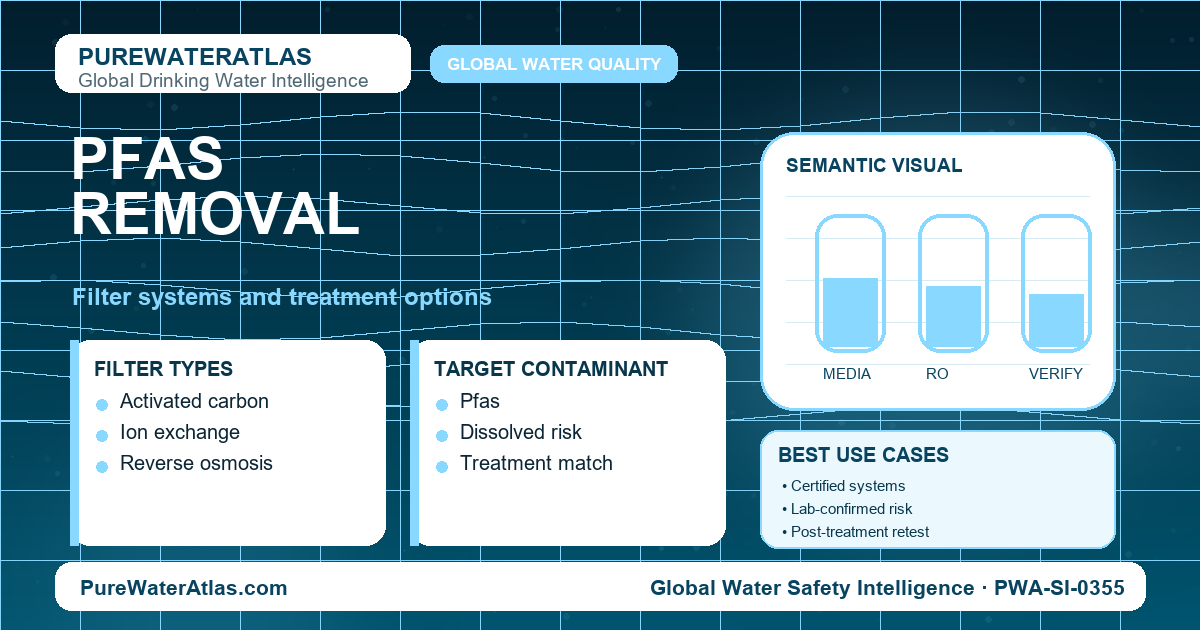
Activated Carbon
Activated carbon is widely used for taste, odor, chlorine, and many organic compounds. It can be deployed in granular form in larger systems or as carbon blocks in household devices. In a discussion of global water crisis overview best filters, carbon is often one of the most practical options because it is accessible and useful in many settings. However, it does not reliably remove all metals, salts, or pathogens unless paired with additional treatment stages.
Reverse Osmosis
Reverse osmosis, or RO, uses a semipermeable membrane to remove many dissolved contaminants, including salts, arsenic, nitrate, fluoride, and some heavy metals. It is one of the most powerful household and institutional treatment options and is especially valuable where salinity or dissolved chemicals are a concern. Its limitations include slower production, wastewater generation, membrane fouling, and the need for ongoing maintenance.
Ultrafiltration and Microfiltration
These membrane systems are effective at removing suspended solids, bacteria, and in some cases protozoa, depending on pore size. They are commonly used in decentralized and municipal systems. They are less effective for dissolved salts and many small chemical contaminants unless combined with other technologies.
Ultraviolet Disinfection
UV systems inactivate many microorganisms without adding chemicals to the water. They are useful for point-of-use and point-of-entry applications when water is already relatively clear. UV does not remove sediment, chemicals, or dissolved metals, and it provides no residual disinfectant in the distribution system, so recontamination remains possible after treatment.
Chlorination and Other Chemical Disinfection
Chlorine remains one of the most important water safety tools globally because it is affordable, scalable, and leaves a residual that helps control microbial growth after treatment. It is highly effective against many pathogens but less effective against some protozoa and does not remove most chemical contaminants. Proper dosing and contact time are essential.
Distillation
Distillation boils water and condenses the steam, separating many impurities from the purified water. It can remove salts, many metals, and certain contaminants, though some volatile compounds may require additional controls. Distillation is effective but usually energy-intensive and slower than other methods, making it less practical for large-scale routine use.
Ion Exchange and Specialty Media
Ion exchange resins can remove hardness, nitrate, and some metals. Specialty media are available for arsenic, iron, manganese, and other target contaminants. These options can be highly effective when matched correctly to water chemistry, but performance depends heavily on pretreatment and regeneration or media replacement schedules.
Boiling and Emergency Methods
Boiling is a reliable emergency method for microbiological safety, but it does not remove most chemicals or salts. Household disinfectant tablets and portable filters can also be useful in emergencies, especially after disasters. Their role is critical in humanitarian response, but they should not be mistaken for comprehensive long-term treatment systems.
Choosing the Right System
The best treatment option depends on the contaminant profile, flow needs, available power, user skill, cost, and maintenance capacity. This is where comparisons of global water crisis overview treatment systems become especially important:
- For pathogens: chlorination, UV, boiling, ultrafiltration, and well-designed ceramic or membrane filters can be effective.
- For sediment and turbidity: sediment filtration, coagulation, settling, and multimedia filtration are useful.
- For chlorine, taste, and many organics: activated carbon performs well.
- For dissolved salts and many chemicals: reverse osmosis and distillation are stronger options.
- For lead and specific metals: certified specialty filters, RO, and adsorption media may be appropriate.
Maintenance and Long-Term Performance
No treatment technology remains effective without maintenance. Filters clog, carbon becomes exhausted, UV lamps age, membranes foul, and disinfection systems can drift out of calibration. A key aspect of global water crisis overview maintenance is understanding that failure is often gradual and not always obvious to users. Water may continue flowing even after treatment capacity has dropped.
Good maintenance practices include:
- Replacing cartridges and media on schedule
- Cleaning housings and storage tanks
- Monitoring pressure, flow, and residual disinfectant
- Sanitizing systems after service
- Retesting water periodically
- Following manufacturer specifications and certification guidance
Ultimately, global water crisis overview effectiveness depends not just on technology design but on proper installation, source matching, monitoring, and upkeep.
Common Misconceptions
Misunderstandings about water treatment can lead to unsafe decisions. Several misconceptions are especially common.
“Clear water is clean water.”
Water can look perfectly clear and still contain bacteria, lead, arsenic, nitrate, or other invisible hazards. Visual appearance is not a reliable indicator of safety.
“One filter removes everything.”
No single consumer filter addresses all contaminants. Some are designed mainly for taste and odor, while others target lead, cysts, or dissolved solids. Treatment claims should always be matched to certified performance data.
“Boiling makes all water safe.”
Boiling is useful against pathogens but does not remove heavy metals, nitrate, pesticides, or salts. In some cases, boiling can even concentrate dissolved contaminants as water evaporates.
“Municipal water never needs additional attention.”
Public water systems often provide safe water, but local conditions still matter. Building plumbing, old lead pipes, storage issues, and temporary contamination events can affect water quality at the tap.
“Maintenance is optional if water still flows.”
Continued flow does not mean continued protection. Filters and membranes can lose effectiveness gradually, making regular service and testing essential.
“Advanced systems are always better.”
More advanced does not automatically mean more appropriate. In some settings, a simple chlorination system with strong maintenance support may outperform a complex membrane system that cannot be serviced consistently.
Regulations and Standards
Regulations and standards provide the framework for determining what “safe water” means and how treatment performance should be measured. They vary by country, but most systems draw on risk assessment, toxicology, microbiology, engineering standards, and public health surveillance.
Drinking Water Quality Standards
Many national governments establish maximum contaminant levels or health-based guideline values for microbial and chemical hazards. These may include limits for lead, arsenic, nitrate, fluoride, and microbial indicators, among others. International organizations also publish guidance values that support water safety planning and risk management.
Treatment Performance Standards
Standards do not only apply to water utilities. Household and commercial treatment devices are often evaluated against performance protocols that verify whether they reduce specific contaminants under test conditions. Certification can help consumers compare products more reliably when considering global water crisis overview best filters for a known problem.
Operational Monitoring and Compliance
Regulated systems are typically required to conduct routine monitoring, maintain disinfectant residuals where applicable, document treatment performance, and notify the public of exceedances or violations. Strong compliance programs improve transparency and trust, though enforcement quality varies widely across regions.
Water Safety Plans and Risk-Based Management
Modern regulation increasingly emphasizes preventive risk management rather than relying only on end-point testing. Water safety plans assess hazards from source to consumer, identify control measures, and establish corrective actions. This approach aligns well with a comprehensive global water crisis overview removal perspective because it integrates prevention, treatment, distribution, and maintenance.
Equity and Access Considerations
Regulatory success should not be measured only by technical standards but also by equitable access. Communities with fewer resources may face higher contamination risks and lower treatment capacity. Effective governance must therefore address affordability, infrastructure investment, rural monitoring, emergency preparedness, and public education in addition to contaminant limits.
Conclusion
The global water crisis is both a quantity crisis and a quality crisis. Safe water depends not only on the presence of a source but on the ability to protect that source, detect contamination, treat water appropriately, maintain infrastructure, and ensure equitable access over time. A clear global water crisis overview removal perspective shows that no single technology solves every problem. Instead, effective solutions combine source protection, accurate testing, appropriate filtration or disinfection, regular maintenance, and strong regulatory oversight.
When comparing global water crisis overview filtration methods and global water crisis overview treatment systems, the most important question is not which technology is most advanced, but which one matches the actual contaminants and operating conditions. Activated carbon, reverse osmosis, UV, chlorination, membrane filtration, and specialty media all have important roles, but their value depends on context. The same is true for global water crisis overview maintenance and global water crisis overview effectiveness: performance is only meaningful when systems are monitored, serviced, and verified.
Addressing the global water crisis requires local action and global coordination. Communities need protected watersheds, better sanitation, resilient infrastructure, and treatment systems that are technically sound and operationally realistic. Policymakers need strong standards and enforcement. Households need reliable information about testing and certified treatment options. Educators and public health professionals need to continue translating complex water science into practical decisions.
For readers who want to continue exploring this topic, useful next steps include reviewing the complete guide, learning more about causes and sources, understanding health effects and risks, and browsing related resources in global water quality, water contamination, and water purification. Informed decisions about testing, prevention, and treatment are essential if safe water is to become a consistent reality rather than a limited privilege.
Read the full guide: Global Water Quality Guide
Explore more in this category: Global Water Quality Articles