Introduction
Water is essential to life, public health, food production, industry, and ecological stability. Yet access to safe, reliable, and affordable water remains uneven across the world. A useful global water crisis overview regulations discussion must go beyond scarcity alone. The global water crisis involves interconnected problems: contaminated drinking water, aging infrastructure, groundwater depletion, drought, flooding, poor sanitation, weak governance, and unequal access to treatment technologies. Regulations and standards matter because they translate scientific evidence into practical requirements that protect communities from preventable harm.
In many regions, the challenge is not only whether water exists, but whether it is safe to drink, sufficient for households and agriculture, and managed in a way that is sustainable over time. Contaminants such as lead, arsenic, nitrate, pathogens, industrial chemicals, and disinfection byproducts can make water dangerous even when it looks clean. At the same time, climate change, population growth, urbanization, and industrial expansion are placing additional stress on freshwater systems. Governments, international organizations, utilities, researchers, and communities all play a role in addressing these pressures.
This article provides an educational overview of the global water crisis with a focus on how regulations and standards shape prevention, monitoring, treatment, and accountability. It explains what the crisis includes, its main causes, the health implications of unsafe water, the role of testing, and the importance of compliance. It also clarifies how frameworks such as global water crisis overview epa standards and global water crisis overview who guidelines are used to define targets, action levels, and risk-management strategies. For broader context, readers may also explore this complete guide and additional resources in global water quality.
What It Is
The global water crisis is a broad term describing the worldwide mismatch between water needs and the availability of safe, accessible, and sustainable water resources. It includes both quantity and quality problems. In some areas, there is not enough water because of drought, overuse, or inadequate infrastructure. In others, water is physically present but unsafe due to biological, chemical, or radiological contamination. The crisis also includes sanitation failures, weak wastewater management, and the inability of systems to deliver water consistently to homes, schools, hospitals, and workplaces.
A proper understanding of the issue requires recognizing that water security has several dimensions:
- Availability: Whether enough water exists for domestic, agricultural, industrial, and ecological needs.
- Accessibility: Whether people can physically reach or receive water through safe distribution systems.
- Affordability: Whether water service is economically accessible without causing severe hardship.
- Quality: Whether water is free from contaminants at levels that threaten health.
- Reliability: Whether supply is stable across seasons, emergencies, and infrastructure failures.
- Sustainability: Whether present use protects future water resources and ecosystems.
The crisis affects both low-income and high-income countries, though the specific patterns differ. In some developing regions, the most urgent concerns are untreated sewage, microbial contamination, and lack of basic services. In wealthier regions, common issues may include legacy pollution, lead service lines, industrial contaminants, nutrient runoff, and deteriorating treatment or distribution systems. A modern global water crisis overview compliance perspective therefore includes both basic service provision and advanced risk management.
Water problems are also deeply linked to governance. Laws, inspection systems, utility capacity, funding structures, emergency response plans, and public reporting standards all influence whether water systems can prevent contamination and respond quickly when hazards appear. For further background on the origins of these issues, readers can review causes and sources.
Main Causes or Sources
The global water crisis does not arise from a single source. Instead, it is driven by multiple environmental, technological, demographic, and institutional factors that often interact. Understanding these causes is essential for designing effective regulations and treatment strategies.
Population Growth and Urbanization
Growing populations increase demand for drinking water, sanitation, food, and industrial production. Rapid urbanization can overwhelm infrastructure, especially when cities expand faster than treatment plants, sewer systems, and distribution networks. Informal settlements may lack piped water and safe sanitation, increasing the risk of contamination from human waste and illegal or unsafe water sources.
Climate Change and Hydrological Extremes
Climate change alters rainfall patterns, increases the frequency and severity of droughts and floods, accelerates glacier loss, and raises temperatures that can affect water quality. Drought reduces surface water and groundwater recharge, while flooding can wash sewage, agricultural waste, and industrial pollutants into rivers and reservoirs. Warmer water can also encourage algal blooms, some of which produce toxins that complicate treatment.
Pollution from Agriculture
Agriculture is a major source of water contamination in many regions. Fertilizers contribute nitrate and phosphate runoff, which can affect drinking water and stimulate eutrophication. Pesticides and herbicides may persist in groundwater or surface water. Animal feeding operations can release pathogens, nutrients, and pharmaceuticals into nearby water bodies if manure is not properly managed.
Industrial Discharges and Mining
Industrial activities can release heavy metals, solvents, petroleum compounds, persistent organic pollutants, and emerging contaminants into water sources. Mining operations may generate acid mine drainage and mobilize metals such as arsenic, cadmium, and mercury. Even where discharge permits exist, weak enforcement or accidental spills can create severe contamination events.
Aging Infrastructure
Older pipes, corroded plumbing, leaking mains, failing treatment facilities, and poorly maintained storage systems can degrade water quality long after water leaves the source. Lead service lines and corrosive water conditions are especially important public health concerns. Infrastructure failure can also allow pathogens to enter distribution systems during pressure loss events.
Groundwater Depletion and Saltwater Intrusion
Excessive pumping of groundwater can lower aquifer levels faster than they recharge. In coastal regions, overpumping may draw saltwater into freshwater aquifers, reducing potability and increasing treatment costs. Depleted aquifers may also concentrate certain naturally occurring contaminants, including arsenic and fluoride in some geological settings.
Weak Governance and Insufficient Investment
Many water crises persist because institutions lack technical capacity, funding, legal authority, or transparency. Without regular monitoring, trained operators, maintenance budgets, and clear enforcement systems, even well-designed standards may not be implemented effectively. This is why global water crisis overview water rules must be paired with realistic compliance mechanisms, public communication, and sustained investment.
Natural Geological Sources
Not all contamination comes from human activity. Some pollutants occur naturally in soils and rock formations. Arsenic, fluoride, iron, manganese, uranium, and other substances may enter groundwater through natural geochemical processes. Safe management requires testing and location-specific standards, because water that appears clear may still exceed health-based thresholds.
Health and Safety Implications
Unsafe water can cause both immediate illness and long-term chronic disease. Health risks vary depending on the contaminant, the level of exposure, the duration of exposure, and the vulnerability of the population. Infants, children, pregnant people, older adults, and immunocompromised individuals often face the greatest risk.
Microbial Hazards
Pathogens remain one of the most urgent global water safety concerns. Bacteria, viruses, and protozoa can enter water through sewage contamination, animal waste, or treatment failures. Exposure may cause diarrhea, cholera, typhoid, hepatitis, dysentery, and other infections. Inadequate sanitation and poor hygiene amplify the burden. In many parts of the world, microbial contamination is still the leading cause of water-related illness and death.
Chemical Contaminants
Chemical exposures may be acute or chronic. Nitrate in drinking water can cause methemoglobinemia in infants. Arsenic exposure is associated with cancers, skin lesions, cardiovascular effects, and developmental impacts. Lead can impair neurological development in children and contribute to cardiovascular and kidney problems in adults. Excess fluoride may affect teeth and bones, while industrial chemicals such as PFAS have raised concerns related to immune, developmental, hormonal, and metabolic effects.
Disinfection Byproducts and Treatment Tradeoffs
Disinfection is essential for controlling pathogens, but the process can produce byproducts when disinfectants react with organic matter in the water. Regulations aim to balance microbial safety with chemical risk by setting treatment goals, operational standards, and contaminant limits. This balance is central to a practical understanding of global water crisis overview safe limits.
Indirect Social and Safety Consequences
The water crisis also produces harms that are not limited to direct toxic exposure. When safe water is unavailable, households may spend hours collecting it, reducing time available for school and work. Healthcare systems become strained by preventable illness. Food security suffers when irrigation water is scarce or contaminated. In schools and healthcare facilities, poor water and sanitation can undermine dignity, infection control, and educational outcomes.
Water insecurity can also increase conflict, displacement, and economic instability. Communities facing chronic contamination often lose trust in institutions, especially when reporting is delayed or inconsistent. More detail on health outcomes can be found at health effects and risks.
Testing and Detection
Testing is the foundation of water safety. Because many harmful contaminants are invisible, odorless, and tasteless, reliable monitoring is necessary to identify risks before they cause widespread harm. Effective testing programs combine source-water assessment, treatment monitoring, distribution-system surveillance, and consumer-level investigations when needed.
What Is Commonly Tested
Water quality programs typically measure a range of indicators and contaminants, including:
- Microbial indicators such as total coliforms and E. coli
- Disinfectant residuals and treatment performance markers
- Metals such as lead, copper, arsenic, and mercury
- Nutrients such as nitrate and nitrite
- Physical parameters such as turbidity, pH, conductivity, and temperature
- Organic chemicals including pesticides, solvents, and industrial compounds
- Emerging contaminants such as PFAS, pharmaceuticals, and algal toxins where relevant
- Radiological parameters in areas with geological or industrial concerns
Sampling Locations and Frequency
Testing must be done at the right places and intervals. Source water may be sampled at wells, reservoirs, rivers, or intakes. Treated water is checked as it leaves the plant. Additional samples may be taken within the distribution system to identify problems caused by pipe corrosion, stagnation, biofilm formation, or pressure loss. High-risk contaminants may require seasonal or event-based monitoring, especially after storms, floods, fires, or infrastructure damage.
Laboratory Methods and Field Tools
Certified laboratories use validated analytical methods to measure contaminants at low concentrations. Field instruments can support rapid operational decisions, such as checking chlorine residual or turbidity. Household test kits may be useful for screening, but they should not replace formal laboratory analysis when health decisions depend on accuracy.
Risk-Based Monitoring
Modern water safety practice increasingly emphasizes risk-based monitoring rather than relying only on fixed lists of contaminants. This approach considers local land use, geology, industry, climate threats, and treatment vulnerabilities. For example, areas near agricultural runoff may prioritize nitrate and pesticide surveillance, while older urban systems may focus on lead and copper corrosion control.
Public Reporting and Transparency
Testing has the greatest value when results are communicated clearly. Public confidence depends on understandable reports that explain what was tested, what was found, how results compare with standards, and what actions are being taken. Transparency is therefore an important part of global water crisis overview compliance, not an optional extra.
Prevention and Treatment
The most effective response to the water crisis combines prevention, infrastructure improvement, source protection, and treatment. No single technology or policy can solve all water problems, because contaminants and local conditions vary widely.
Source Water Protection
Preventing contamination before it enters a source is usually more effective and less expensive than removing it later. Source protection measures may include watershed management, land-use controls, industrial discharge limits, agricultural best practices, and protection zones around wells and recharge areas. Wetlands restoration and erosion control can also improve resilience and reduce pollutant loading.
Drinking Water Treatment
Treatment systems are selected based on the specific contaminants present. Common treatment processes include coagulation, flocculation, sedimentation, filtration, activated carbon adsorption, ion exchange, membrane processes, disinfection, and corrosion control. Groundwater systems may require aeration or oxidation for iron and manganese, while surface water systems often need stronger barriers against microbial contamination.
Advanced treatment is increasingly used where conventional methods are not sufficient. Reverse osmosis, nanofiltration, ultraviolet disinfection, ozone, and advanced oxidation processes can address complex chemical and microbial risks. Information on technologies is available in water purification and water treatment systems.
Distribution System Management
Even well-treated water can become unsafe in delivery. Maintaining pipe integrity, controlling corrosion, preserving disinfectant residuals where appropriate, and avoiding low-pressure events are all essential. Replacing lead service lines and reducing water age in storage systems are important preventive strategies.
Household and Point-of-Use Measures
In places where centralized treatment is limited or inconsistent, household treatment may reduce risk. Methods include boiling, chlorination, ceramic filtration, activated carbon filters, ultraviolet devices, and membrane filters. However, the effectiveness of these approaches depends on correct selection, operation, and maintenance. Not all filters remove all contaminants, and some are designed for taste and odor rather than health protection.
Wastewater and Sanitation Improvements
Water safety cannot be separated from sanitation. Wastewater collection, treatment, reuse standards, and safe sludge management help reduce pathogen and chemical loading into the environment. Improved sanitation infrastructure also supports disease prevention and protects source waters used downstream.
Emergency Preparedness
Floods, storms, droughts, wildfires, and infrastructure accidents can rapidly disrupt water quality. Utilities need emergency plans, backup power, alternative supplies, communication systems, and rapid testing capacity. Communities also benefit from clear boil-water advisories, distribution plans, and coordination with public health agencies.
Common Misconceptions
Public understanding of water safety is often shaped by assumptions that are incomplete or inaccurate. Correcting these misconceptions helps people interpret regulations and testing results more realistically.
“Clear Water Is Safe Water”
Many dangerous contaminants are invisible. Lead, arsenic, nitrate, and many pathogens may not change the color, smell, or taste of water in a way consumers can detect. Visual clarity is not proof of safety.
“Bottled Water Is Always Safer Than Tap Water”
Bottled water can be useful in emergencies or where local systems fail, but it is not automatically superior. Standards, testing frequency, source transparency, storage conditions, and environmental costs all matter. In many regions, properly treated municipal water is closely regulated and monitored.
“Boiling Removes All Contaminants”
Boiling is effective against many pathogens, but it does not remove metals, salts, nitrates, or many industrial chemicals. In some cases, boiling can even concentrate nonvolatile contaminants as water evaporates.
“If a Utility Meets Standards, There Is No Risk”
Compliance greatly reduces risk, but it does not mean zero risk. Standards are based on the best available science, feasibility, analytical capability, and risk management principles. They also depend on sampling design and timing. This is why continuous improvement, infrastructure investment, and updated science are necessary.
“All Countries Use the Same Water Rules”
Different countries use different legal frameworks, contaminant lists, and enforcement mechanisms. However, many are guided by similar scientific principles and international recommendations. A global water crisis overview water rules analysis should therefore compare frameworks carefully rather than assuming complete uniformity.
Regulations and Standards
Regulations and standards are central to protecting public health during the global water crisis. They define contaminant limits, monitoring requirements, treatment techniques, reporting duties, and enforcement procedures. They also create accountability by specifying what utilities, industries, and regulators must do to prevent harm.
Why Standards Matter
Without standards, water safety decisions would be inconsistent and difficult to enforce. Standards provide:
- Health-based targets for contaminants and microbial hazards
- Operational requirements for treatment and distribution systems
- Testing schedules and approved analytical methods
- Corrective-action thresholds when problems are found
- Public notification rules and reporting formats
- Benchmarks for investment, auditing, and system improvement
In practice, standards are not just numbers on a page. They reflect scientific risk assessment, toxicology, epidemiology, engineering feasibility, and public policy decisions. Because science evolves, standards must also be reviewed and updated as new evidence emerges.
WHO Guidelines
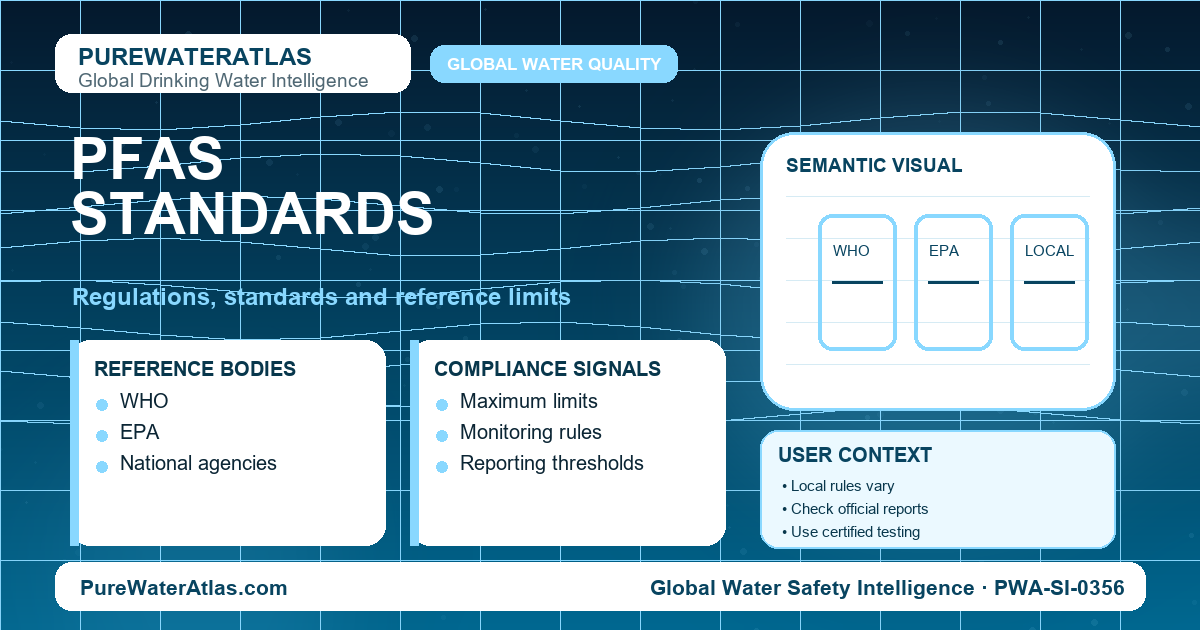
A key international reference in any global water crisis overview who guidelines discussion is the World Health Organization’s Guidelines for Drinking-water Quality. These guidelines are not global laws, but they are highly influential and widely used by countries to develop or revise national regulations. The WHO framework emphasizes preventive risk management through water safety plans, source protection, treatment barriers, monitoring, and system-wide oversight.
WHO guideline values are generally health-based reference points that help national authorities establish practical standards suited to local conditions. Importantly, the WHO approach recognizes that improving water safety is often a staged process. In low-resource settings, the immediate priority may be reducing the most severe microbial risks even when full long-term infrastructure goals have not yet been reached.
EPA Standards
In the United States, the Environmental Protection Agency plays a central role in drinking water regulation. A global water crisis overview epa standards perspective is useful because EPA rules are often studied internationally as examples of enforceable, legally binding requirements. Under federal law, the EPA establishes maximum contaminant levels, treatment techniques, monitoring rules, and action frameworks for public water systems.
EPA standards address a wide range of contaminants, including microorganisms, disinfectants, disinfection byproducts, inorganic chemicals, organic chemicals, and radionuclides. The EPA also oversees rules related to lead and copper, surface water treatment, groundwater protection, consumer confidence reporting, and emergency response obligations. State agencies commonly implement and enforce these standards, while public water systems must demonstrate ongoing compliance.
Safe Limits and Risk Management
The idea of global water crisis overview safe limits is more complex than simply identifying a universal “safe” number for every contaminant. Limits are often based on estimated health risks, uncertainty factors, analytical detection capability, treatment feasibility, and exposure assumptions. For microbial hazards, standards may focus on treatment performance rather than only measured concentrations, because direct detection can be difficult and contamination can change rapidly.
This means that safe limits should be understood as part of a broader risk-management system. For some contaminants, extremely low concentrations may still be monitored because long-term exposure matters. For others, action levels trigger investigations, treatment optimization, or public notification even when immediate illness is unlikely. Good regulation uses both numeric thresholds and preventive controls.
Compliance and Enforcement
A strong global water crisis overview compliance framework requires more than published rules. Effective compliance depends on operator training, accredited laboratories, reliable data systems, inspections, funding, and enforcement authority. When systems fail to meet standards, regulators may require corrective action plans, operational changes, infrastructure upgrades, penalties, or public notifications.
Compliance also includes documentation and transparency. Utilities often must keep records of sampling, treatment performance, violations, and consumer communications. Public reporting allows communities to understand whether their water system is meeting legal expectations and where improvements are needed.
Water Rules Beyond Drinking Water
A broad global water crisis overview water rules perspective includes more than finished tap water. Water governance also involves:
- Source water protection regulations
- Industrial discharge permits
- Wastewater treatment standards
- Agricultural runoff controls
- Groundwater withdrawal permits and allocation rules
- Reuse standards for reclaimed water
- Emergency response and resilience planning requirements
- Environmental flow protections for ecosystems
These broader rules matter because drinking water safety depends heavily on what happens upstream and throughout the watershed. If contamination is poorly controlled at the source, treatment becomes more difficult, expensive, and sometimes less reliable.
Challenges in Global Harmonization
Although many nations draw from WHO recommendations and shared scientific evidence, complete standardization across the world is unlikely. Countries differ in climate, hydrogeology, infrastructure, institutional capacity, and major contamination risks. A realistic global approach therefore combines common principles with local adaptation. The most important goals are protecting health, improving access, strengthening monitoring, and creating enforceable pathways for continual progress.
Conclusion
The global water crisis is a complex challenge involving scarcity, contamination, inequity, infrastructure stress, and climate pressure. Safe water depends not only on natural availability but also on effective governance, sound engineering, regular testing, public transparency, and enforceable standards. Regulations help convert scientific knowledge into practical protections by defining contaminant limits, treatment expectations, monitoring rules, and accountability systems.
An informed understanding of global water crisis overview regulations shows that standards from institutions such as the WHO and EPA are not abstract bureaucratic tools. They are part of the public health foundation that helps prevent disease, reduce toxic exposure, guide utilities, and inform communities. At the same time, standards alone are not enough. Success also requires investment in infrastructure, source protection, sanitation, operator training, emergency preparedness, and fair access to treatment technologies.
As water pressures continue to grow, the most effective responses will be integrated and preventive. They will link science, policy, treatment, and community trust. Whether the priority is microbial safety in underserved areas, lead reduction in aging cities, or climate resilience in drought-prone regions, the central lesson is consistent: protecting water requires both strong rules and the capacity to implement them well.
Read the full guide: Global Water Quality Guide
Explore more in this category: Global Water Quality Articles