Reviewed against sources available through September 6, 2026.
Testing water quality is not a matter of finding one device that declares water “safe” or “unsafe.” A test answers a defined question about a particular contaminant, indicator or property. A bacteria test does not rule out lead. A lead result does not reveal nitrate. A normal pH or total dissolved solids reading does not prove that water is microbiologically or chemically safe.
For the broader PureWaterAtlas overview of the testing field, methods and analysis, see How to Test Drinking Water: Complete Guide to Water Testing and Analysis. This cornerstone focuses on the practical decision process: what to test, how to collect the sample, how to interpret the result and what to do next.
The defensible approach is to identify the water source, understand the reason for testing, select the relevant analytes, use a suitable analytical method and compare the results with standards or guidance applicable where you live. Sample collection is part of that process: collection, preservation, storage, measurement, quality control and reporting can all affect the validity of a result.
Quick Answer: How to Test Water Quality
- Identify the source. Determine whether the water comes from a public system, private well, rainwater tank or another decentralized supply.
- Define the concern. Are you conducting routine well testing, investigating household plumbing, responding to flooding or repairs, or following up on a local advisory or nearby contamination?
- Check existing information. Public-system customers should review available utility and regulatory monitoring before purchasing tests. In the United States, this may include the utility’s Consumer Confidence Report. Well owners should examine well records, local health guidance and relevant nearby land uses.
- Choose specific analytes. Depending on the source and risk, these might include microbial indicators, lead, nitrate or nitrite, arsenic, PFAS, volatile organic compounds, pesticides or other locally relevant contaminants.
- Choose an appropriate method. Home kits can screen selected parameters, but performance differs by kit and analyte. Health-relevant, disputed or consequential findings generally warrant a qualified laboratory using a method suitable for the target analyte.
- Follow the sampling instructions exactly. Use the container, location, timing, preservation and delivery procedure specified by the laboratory, utility or responsible authority. Do not substitute a generic collection routine.
- Interpret the result in context. Check the units, reporting limit, applicable local standard and whether the result represents one tap, one moment or a wider supply.
- Respond to the identified problem. Confirm unexpected findings when appropriate, consult the relevant authority or qualified professional, reduce exposure if advised, and select treatment only after identifying the contaminant or water-quality problem. Retest after corrective action.
No finite panel establishes the absence of every untested hazard. A credible result is always limited to the analytes, sample, method and reporting limits involved.
Start With the Question, Not the Test Kit
“How is my water quality?” is too broad to define a test. Better questions include:
- Does this private well show evidence of fecal contamination?
- Could plumbing be contributing lead at this tap?
- Should a well near a locally identified source be tested for a particular chemical?
- Did flooding, a repair or another event change the water?
- Does a taste, odor or color change require targeted investigation?
- Does a treatment system continue to reduce the contaminant for which it was installed?
Each question can require a different sample location, container, holding time, analytical method and interpretation. The US Environmental Protection Agency explains that drinking-water analytical methods encompass sample collection, preservation, storage, measurement, quality control and reporting. Methods also have analyte-specific measurement ranges. This is why sampling is part of measurement quality rather than a clerical step performed before the “real” analysis.
The distinction between a contaminant and an indicator is equally important. Total coliforms can indicate a possible pathway for contamination; they do not provide an inventory of every pathogen. pH can reveal whether water is acidic or alkaline under the test conditions; it does not detect bacteria, lead, arsenic or organic chemicals. Total dissolved solids, or TDS, estimates or measures a broad dissolved-ion property depending on the method; it does not identify which substances are present or establish potability.
Step 1: Identify Your Water Source and Risk Profile
Public water system
A public system generally conducts monitoring under the rules that apply in its jurisdiction. Start with those records because they may already contain much more systematic data than a one-time household test. In the United States, the EPA’s Consumer Confidence Reports resource helps customers find and understand annual reports from community water systems.
System-level monitoring does not answer every household-level question. Water may encounter service lines, building pipes, fixtures or other plumbing after it leaves the monitored distribution system. Lead is a prominent example: the EPA notes that plumbing differences can make risk household-specific and that testing is needed to confirm lead in drinking water. A utility report and a household tap sample therefore answer different questions.
If a public-system customer has no specific concern, existing monitoring is usually the logical starting point. Targeted household testing becomes more relevant when there is a plumbing concern, an unresolved sensory change, a local notice, unusual work on the system or another defined reason.
Private well
A private well owner is responsible for arranging testing and responding to results. Testing priorities should reflect local geology, well condition, surrounding activities, previous results and recent events. No universal panel captures every risk in every well.
For private wells in the United States, the Centers for Disease Control and Prevention recommends testing at least annually for total coliforms, nitrate, TDS and pH, with additional tests selected for local risks and circumstances. This is a US recommendation, not a universal legal rule. Local or national health and environmental authorities may recommend a different schedule or panel.
That four-item baseline must also be interpreted correctly. Total coliform testing is an indicator-based microbiological check. Nitrate is a specific chemical test. TDS and pH are useful general indicators, but normal values cannot rule out microbial contamination, metals, PFAS, pesticides, volatile organic compounds or other untested hazards.
Rainwater, Tank Water, and Other Decentralized Supplies
For rainwater, stored water and other decentralized supplies, begin by mapping the complete system: source, collection surfaces or intake, storage, treatment, distribution and points of use. Then consult the standards and public-health guidance that apply locally. The appropriate tests depend on the system and its potential contamination pathways; a generic drinking-water strip cannot characterize every possible risk.
If the supply is used for drinking, a qualified laboratory or local authority can help define a panel suited to the source and intended use. Where the supplied evidence does not establish a universal schedule or panel for these systems, local guidance should control.
Household Plumbing and Lead and Copper Risks
Plumbing-related testing is location- and protocol-sensitive. Samples from different taps or samples collected after different water-use conditions may answer different questions. For lead, EPA advises consumers to use a certified laboratory and follow the sampling directions supplied by the laboratory or utility. Do not invent a universal flushing or stagnation procedure: the correct collection method depends on the purpose of the test.
If copper or another plumbing-related metal is a concern, ask the laboratory or relevant authority which analytes and sampling protocol fit that concern. A result from one tap should not automatically be treated as a complete assessment of every outlet in a building.
Event-triggered testing
Testing should also respond to events. Examples include flooding, repairs, changes to a well or plumbing system, an official advisory, a sudden change in appearance, taste or odor, or information about contamination nearby. The event helps determine the target: microbiological testing may be relevant after a contamination pathway is suspected, while a notice identifying a chemical calls for a method that measures that chemical.
Sensory changes can justify investigation, but sensory normality does not establish safety. Conversely, an unpleasant aesthetic property does not by itself identify a health hazard. Use the observation to frame the next question rather than treating it as a diagnosis.
Step 2: Check What Is Already Known
Utility and Regulatory Reports
Public-water customers should review their provider’s current monitoring report, notices and contact information. In the United States, a Consumer Confidence Report can show the regulated contaminants reported by a community system and provide context about the source. It does not necessarily cover every emerging contaminant or determine what happens inside a particular building.
Outside the United States, look for the equivalent publication from the supplier, municipality, health agency or water regulator. Names, reporting cycles, legal limits and enforcement structures vary by jurisdiction.
Local Health and Environmental Advisories
Official advisories can identify the affected area, contaminant or event and specify what residents should do. Follow those instructions rather than substituting a home test that may not measure the stated hazard. If an advisory recommends laboratory analysis, use the laboratories or methods accepted by the responsible authority.
WHO drinking-water guidance supplies a global scientific and risk-management framework, but it is not one universal legal code. National and local authorities use scientific guidance to develop standards suited to their legal and environmental context. Results therefore need to be compared with the benchmark applicable to the place and purpose of the test.
Well records and nearby land use
Well construction and maintenance records, earlier analytical reports and local environmental information can make testing more focused. Nearby land uses or known releases may indicate contaminants worth discussing with a health department, environmental agency or laboratory. Proximity alone does not prove that a particular well is contaminated, and a broad but shallow home panel may be less useful than a targeted laboratory test.
Step 3: Choose the Right Testing Method
Visual and Sensory Observations
Look for unexpected color, particles, cloudiness, odor or taste, and record when and where the change occurs. Compare hot and cold water only if doing so is safe and useful to the investigation, and note whether the issue affects one fixture or the entire property. These observations help describe a problem, but they are not a substitute for contaminant analysis.
Do not taste water to investigate a suspected contamination event or official warning. When immediate safety instructions have been issued, follow the responsible authority’s directions.
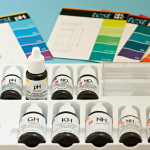
Test Strips and Colorimetric Kits
Test strips and color-based kits can be practical screening tools for selected parameters when the product is designed for the analyte and range of interest. Their performance is not uniform. Results can be affected by storage, expiration, lighting, timing, color interpretation, interferences and sampling technique.
The San Francisco Public Utilities Commission notes that home-kit performance varies by parameter and brand and that sampling and interpretation can introduce errors. A concerning or health-relevant screening result should not be dismissed, but it may need confirmation by a qualified laboratory. Likewise, an apparently normal strip result says nothing about contaminants the kit did not measure and may not rule out concentrations below the kit’s useful range.
Digital pH, TDS, and Conductivity Meters
Digital meters are useful for the properties they are designed and maintained to measure. They may help track pH, conductivity or TDS-related changes over time, but they do not identify most individual contaminants. A TDS or conductivity value combines the influence of dissolved ions without revealing whether a health-relevant substance is present. Low, typical or stable readings are not proof of safe drinking water.
Meter condition, calibration, cleanliness, temperature compensation and user technique can influence readings. Even a technically sound reading remains limited to that parameter.
Mail-in sampling kits
A mail-in kit is mainly a sample-collection and logistics package; its quality depends on the laboratory, method, containers, preservation, shipping conditions and reporting. Before ordering, verify which analytes will actually be measured, whether the laboratory holds the recognition required in your jurisdiction, whether the reporting limits are appropriate for the intended comparison and how quickly samples must arrive.
“Lab tested” is not, by itself, enough information. The laboratory must use a method suitable for the analyte, and the sample must remain valid through collection and transport.
Certified and Accredited Laboratory Analysis
Use a certified or otherwise appropriately accredited laboratory when the result will guide health decisions, confirm a screening result, investigate a regulated contaminant, document compliance or support an expensive corrective action. In the United States, EPA explains that laboratories supporting public-water compliance use approved contaminant- and rule-specific methods. Certification scope matters: recognition for one type of analysis does not necessarily cover every analyte.
For household testing, ask the relevant state, tribal or local authority how to locate a laboratory accepted for the target contaminant. EPA’s drinking-water laboratory certification resource explains the US certification framework. International readers should use their national or regional accreditation and regulatory systems.
What Should You Test For?
Bacteria and E. coli
Microbiological testing commonly uses indicator organisms rather than attempting to identify every possible pathogen. For broader context, see the PureWaterAtlas Water Microbiology guide. For US private wells, CDC recommends at least annual total-coliform testing. CDC also explains that a positive fecal-coliform or E. coli indicator suggests fecal contamination but does not identify pathogenic E. coli strains. The result signals a contamination concern and need for an appropriate response; it is not a full pathogen inventory.
Microbiological sampling is especially sensitive to container sterility, handling, preservation and delivery time. Obtain the container and instructions from the laboratory. Avoid touching the inside of the bottle or cap, and do not improvise sample preparation.
Lead and copper
Lead cannot be confirmed by taste, appearance, pH or TDS. The PureWaterAtlas lead testing guide explains lead-specific sampling and detection in greater depth. Because service lines and household plumbing differ, results may vary among buildings and taps. EPA’s Protect Your Tap guidance recommends testing to determine whether lead is present and following the laboratory’s collection instructions.
Define the question before sampling: a protocol intended to investigate a particular fixture may differ from one intended for another plumbing assessment. If copper is also a concern, request that analyte specifically and use the sampling and interpretation guidance provided by the laboratory or local authority.
Nitrate and nitrite
Nitrate and nitrite require specific chemical analyses. For a contaminant-specific treatment of this topic, see Nitrate Contamination in Drinking Water: Testing and Detection Methods. For US private wells, CDC recommends annual nitrate testing. EPA’s US public-water regulatory framework also specifies contaminant-specific sampling and analytical requirements for nitrate and nitrite. Those requirements are US compliance rules, not universal legal standards.
International readers should compare results with their applicable national or local requirements. Do not convert a test into a pass/fail judgment using an unlabeled internet threshold from another jurisdiction.
Arsenic and other metals
Arsenic is not ruled out by clear water, normal taste, pH or TDS. PureWaterAtlas also provides a dedicated guide to arsenic testing and detection methods. It requires an arsenic-specific analytical method. EPA’s framework for US public-water compliance illustrates that arsenic sampling and analysis are contaminant-specific. Other metals likewise need to be named in the laboratory order; a result labeled “metals” is meaningful only when the report identifies the elements measured, methods, units and reporting limits.
Whether arsenic or another metal belongs in a household panel depends on the source, geology, local records, plumbing question and applicable guidance. Ask the local authority or qualified laboratory for a risk-based panel rather than assuming that every location needs the same list.
PFAS
PFAS testing is a specialized analytical task rather than a function of ordinary strips or TDS meters. See the dedicated PFAS testing and detection guide for the contaminant-specific analytical context. If PFAS is identified in a local notice, source-water assessment or other credible concern, consult the responsible authority about the relevant compounds, accepted laboratory methods and applicable jurisdictional benchmarks. The supplied evidence does not support treating one universal PFAS panel or threshold as appropriate everywhere.
VOCs, Pesticides, and Local Industrial Contaminants
Volatile organic compounds, pesticides and industrial chemicals cover many distinct analytes. Testing should be guided by a known release, nearby activity, official notice, source assessment or professional recommendation. Asking for a generic “chemical test” may not include the compound of concern.
Tell the laboratory what prompted the investigation. It can then explain whether its scope includes the target compounds and which containers and handling procedures are required. Do not transfer samples into household containers or select a method solely because it produces a long list of results.
pH, TDS, hardness, turbidity and chlorine
These measurements can be useful, but they answer limited questions:
- pH describes acidity or alkalinity under the test conditions. It can support an investigation but does not prove potability.
- TDS or conductivity reflects a broad dissolved-ion property. It does not identify individual contaminants or rule out microbes and many chemicals.
- Hardness describes a water property relevant to scaling and use; it is not a complete health test.
- Turbidity describes cloudiness or light scattering. It does not identify the particles or establish the absence of dissolved contaminants.
- Chlorine measurements can answer a disinfectant-related operational question but do not constitute a complete safety panel.
A multiparameter kit may measure several of these indicators accurately enough for screening and still leave major health-relevant questions unanswered.
Water Testing Decision Table
| Situation | Target analytes or information | Is DIY useful? | Laboratory need | Why and next step |
|---|---|---|---|---|
| Public-system customer with no specific change | Utility and regulatory monitoring data first | Limited | Not automatically | Review the current local report; test only unresolved or household-specific concerns. |
| Possible lead from household plumbing | Lead; other plumbing-related metals if indicated | DIY collection may be possible under supplied instructions | Use an appropriately qualified laboratory | Sampling protocol affects what the result means. Follow laboratory or utility directions. |
| Routine US private-well check | Total coliforms, nitrate, TDS and pH; add local risks | Indicators may be screened at home | Use qualified analysis for health-relevant results | This is CDC’s US baseline recommendation, not a universal panel. |
| Positive or concerning home-kit result | The same named analyte using a suitable method | Useful as initial screening | Often appropriate for confirmation | Check kit range and technique; avoid major decisions from an uncertain screen alone. |
| Flood, repair or suspected contamination pathway | Tests selected for the event, potentially including microbial indicators | Only if endorsed for the purpose | Often appropriate | Follow health-authority or laboratory instructions; the event determines the panel. |
| Nearby chemical release or official advisory | The chemical or analyte group named by the authority | Usually limited | Use an accepted targeted method | Follow the advisory rather than substituting a broad consumer strip. |
| Taste, odor or color change | Begin with system information and targeted investigation | Observations and selected indicators can help | Needed if a contaminant must be identified | Sensory changes do not identify the cause or quantify health risk. |
| Concern about arsenic, PFAS, VOCs or pesticides | Specific compounds selected from local risk information | Ordinary home meters are insufficient | Qualified laboratory analysis | Confirm scope, methods and reporting limits before ordering. |
| Checking treatment performance | The contaminant or property the treatment is intended to address | Sometimes useful for operational indicators | Appropriate for health-relevant verification | Compare paired or scheduled results according to professional instructions and retest over time. |
How to Collect a Water Sample Correctly
A sophisticated instrument cannot rescue a sample that was collected for the wrong purpose, contaminated during handling, stored incorrectly or delivered too late. EPA’s explanation of analytical methods explicitly includes sample collection, preservation, storage, quality control and reporting. Treat the laboratory’s sampling instructions as part of the method.
- Contact the laboratory before collecting. Confirm the analytes, appropriate methods, reporting limits, cost, turnaround expectations and recognition required for your purpose.
- Use the supplied containers. Containers may be selected or prepared for particular analyses. Do not rinse, replace or add anything unless instructed.
- Confirm the sampling location and purpose. A source sample, entry-point sample and kitchen-tap sample can answer different questions. Lead sampling may depend particularly on the protocol.
- Follow the exact preparation instructions. Do not apply a generic rule about flushing, removing aerators or disinfecting a faucet. Such steps can be appropriate for one method and wrong for another.
- Avoid accidental contamination. Keep caps and bottle interiors protected and follow any hygiene or sterile-handling directions.
- Record the requested details. Date, time, location, sampler identity and relevant conditions may be needed to interpret or validate the sample.
- Preserve and transport as directed. Follow instructions for temperature, light protection, packaging and delivery. Different analytes can have different requirements.
- Maintain documentation where needed. Regulatory, legal or property-related testing may require formal custody and collection procedures. Ask before sampling.
If an instruction is unclear, stop and contact the laboratory. Guessing can produce a number that looks precise but does not answer the intended question.
How to Read a Water Test Report
Units
Always compare results and benchmarks expressed in compatible units. A decimal value without its unit is not interpretable. Do not move decimal places or convert units unless the conversion is verified. If the report’s unit differs from the applicable standard, ask the laboratory or responsible authority for help.
Detection and Reporting Limits
Analytical methods cannot quantify every substance down to zero. Reports may include a detection limit, reporting limit or another method-specific threshold. These terms are not automatically interchangeable. The laboratory should explain what each qualifier means on its report.
A method must be capable of measuring at a range suitable for the intended comparison. A result below a kit’s useful range may be reassuring only within that limited context; it is not evidence that the analyte is literally absent.
ND and less-than values
“ND” generally communicates that the analyte was not detected under the method and reporting conditions. It does not prove that none exists. A result shown as less than a value likewise means the laboratory did not report a quantified concentration above the stated boundary. Read the laboratory’s definitions and qualifiers rather than assuming universal notation.
Guideline vs legal limit
A health-based guideline, treatment target, operational value and enforceable legal standard are not necessarily the same thing. WHO’s 2026 drinking-water guidelines provide a scientific basis for national standard setting and risk management; they are not a single global legal code. EPA and CDC materials cited here provide US regulatory or public-health examples and must not be treated as the law in every country.
Use the benchmark applicable to your jurisdiction, water source and purpose. Public-system compliance determinations may also rely on prescribed sampling locations, schedules and calculations that cannot be reproduced by comparing one household sample with a number.
Uncertainty and repeat testing
Every measurement has limitations. Consider sampling quality, method scope, reporting limits, quality-control qualifiers and whether the result is consistent with earlier data. A surprising result may warrant confirmation, but repeating a test should not become a reason to ignore an official warning or delay exposure-reduction instructions from a competent authority.
What to Do If a Result Is High or Positive
- Read the report and qualifiers completely. Confirm the analyte, units, sample location, date and comparison benchmark.
- Contact the laboratory. Ask whether the result passed quality-control checks and whether confirmation is recommended.
- Use the correct authority. Public-system customers can contact their supplier and local regulator. Private-well owners can contact the relevant health or environmental agency. Follow any active advisory.
- Assess immediate exposure. Obtain contaminant-specific advice, especially where vulnerable household members or an acute event may be involved. The supplied evidence does not support one universal response for every contaminant.
- Investigate the source. Determine whether the issue is source water, the well, treatment equipment, distribution plumbing or one fixture.
- Choose corrective action for the identified problem. Treatment technologies do not remove every contaminant. The Water Treatment Systems guide can help readers compare treatment approaches after the problem has been identified. Do not buy equipment merely because a general meter reading looks unusual.
- Retest. Verify that repairs, source changes or treatment work under actual conditions. Continue any maintenance and follow-up schedule specified by the responsible professional or authority.
Confirmation is not always the first priority. If an official advisory instructs residents to avoid or alter use of the water, follow it while arranging any requested testing. A consumer kit should not be used to overrule an official notice.
How Often Should You Test?
Testing frequency depends on the supply and risk. Public systems monitor under their jurisdictional programs, while customers use system reports and conduct household-specific testing when warranted. A one-time household sample is not a substitute for system monitoring.
For US private wells, CDC recommends at least annual testing for total coliforms, nitrate, TDS and pH. It also recommends considering additional testing based on local conditions and events. Readers elsewhere should follow their national or local guidance rather than adopting the US schedule automatically.
Test outside the routine schedule when there is a defined trigger, such as an advisory, flooding, repairs, a change to the well or plumbing, changed sensory characteristics, known contamination nearby or a need to verify treatment. Retest after corrective work to determine whether it addressed the identified issue.
Common Water-Testing Mistakes
- Calling a normal TDS result proof of safety. TDS does not identify individual substances and does not rule out microbes or many chemicals.
- Treating pH as a potability test. pH is an indicator, not a comprehensive health assessment.
- Assuming a “multi-parameter” kit tests everything important. Count the named analytes and examine the useful ranges; unlisted contaminants remain untested.
- Using the wrong sample protocol. Generic flushing, cleaning or container practices can change the question being measured.
- Comparing results with a foreign or unlabeled threshold. Legal standards and guidance differ by jurisdiction and purpose.
- Interpreting ND as absolute zero. ND is limited by the method and its detection or reporting capability.
- Ordering a broad panel without checking its contents. A long list may still omit the locally relevant contaminant.
- Assuming public-system data describes every household tap. Building plumbing can create household-specific issues, including lead risk.
- Buying treatment before diagnosis. Equipment should be selected for a confirmed contaminant or defined water-quality problem.
- Failing to retest. Installation or repair alone does not demonstrate that the intended correction works.
A Practical Testing Plan
For public-water customers
- Read the current utility and regulatory reports and any active notices.
- Define what remains unanswered, such as lead at a particular tap or a localized sensory change.
- Contact the supplier, local authority or qualified laboratory for the correct analytes and sampling protocol.
- Interpret household results separately from system-wide compliance data.
- Use contaminant-specific corrective action and verify it by retesting.
For private-well owners
- Review well records, previous results, local geology and nearby activities.
- Follow the testing schedule recommended by the authority where you live. In the United States, CDC’s baseline is annual total coliforms, nitrate, TDS and pH.
- Add targeted analytes for local risks, advisories or events.
- Use a qualified laboratory for microbiological and health-relevant chemical results.
- Keep reports so trends and changes can be assessed, and retest after corrective action.
For a specific contamination concern
- Identify the named contaminant or event from a credible source.
- Ask whether an official sampling program already exists.
- Select a laboratory whose scope includes the analyte and an appropriate method.
- Follow the supplied collection and transport instructions exactly.
- Compare the result with the locally applicable benchmark and seek contaminant-specific advice.
Frequently Asked Questions
Can I test drinking water quality at home?
You can screen selected properties or analytes at home if a suitable kit exists. Results remain limited to that kit’s scope, range and performance. Laboratory analysis is preferable when a finding affects health decisions, confirms contamination, requires a specialized method or must satisfy an official purpose.
What is the best single test for water quality?
There is no best single test for all water-quality risks. The appropriate test depends on the source and concern. Microbial indicators, lead, nitrate, arsenic and PFAS require different analytical questions and methods.
Does a low TDS reading mean water is safe?
No. TDS does not identify individual contaminants and cannot rule out pathogens, lead, arsenic, PFAS or many organic chemicals. It is an indicator, not proof of potability.
Can clear, odorless water still contain contaminants?
Appearance and odor cannot rule out the analytes discussed in this guide. Testing must target the contaminant of concern.
Should I test public tap water?
First review the supplier’s monitoring information and notices. Additional testing can be appropriate for household-specific plumbing concerns, unresolved changes or a local event. In the United States, start with the utility’s Consumer Confidence Report.
How do I test for lead?
Use a qualified laboratory and follow its or the utility’s sampling directions. Lead risk can vary by building and tap, and the protocol affects what the result represents. Do not substitute a universal collection routine.
What should a private-well owner test annually?
In the United States, CDC recommends at least annual testing for total coliforms, nitrate, TDS and pH, plus additional tests based on local risks and events. This is a US recommendation; other jurisdictions may specify different panels or schedules.
What does “not detected” mean?
It means the analyte was not detected under the stated method and reporting conditions. It does not necessarily mean absolute zero. Check the report’s limit and laboratory definitions.
Should I install a filter before testing?
Not solely on the basis of a vague concern or general meter reading. Identify the contaminant or defined water-quality problem first, then select corrective action suited to it. Test again to verify performance.
Are WHO drinking-water guidelines legally binding everywhere?
No. WHO guidelines provide a scientific foundation and risk-management framework that can inform national standards. Applicable legal requirements are established by national or local jurisdictions.
What is the most important sampling rule?
Follow the analyte-specific instructions from the laboratory, utility or responsible authority. Container choice, sample location, preparation, preservation, storage and delivery can all affect validity.
Bottom line: Begin with the source and the risk, not with the number of tests printed on a package. Use the Drinking Water Safety guide for the broader safety framework. Use existing monitoring where available, select named analytes, collect samples under the correct method, interpret results under the applicable jurisdiction and match any corrective action to the problem actually identified.
Read the full guide: Water Testing Guide
Explore more in this category: Water Testing Articles