Introduction
The global water crisis is often discussed in terms of drought, scarcity, and infrastructure failure, but it is also a public health, environmental, and social stability issue. A strong global water crisis overview warning signs perspective helps people recognize that water problems are not limited to places with visibly dry rivers or severe emergencies. In many communities, the earliest indicators appear in more subtle ways: changes in taste or odor, discoloration, unreliable service, rising rates of illness, stressed ecosystems, and increasing costs of treatment and delivery.
Water is essential for drinking, sanitation, food production, industry, and ecosystem health. When quality declines or access becomes unreliable, the effects can spread quickly. Families may be forced to use unsafe sources, schools and clinics may struggle to maintain hygiene, farmers may lose crops, and local economies may weaken. In severe cases, water insecurity contributes to migration, conflict, and long-term health burdens.
This article provides an educational overview of the symptoms, warning signs, and red flags associated with the global water crisis. It explains what the crisis is, where it comes from, how it affects health and safety, and when testing becomes necessary. It also addresses common misconceptions and summarizes the role of standards and regulation. Readers seeking broader context can explore additional resources in global water quality, the complete guide, and related material in water science.
What It Is
The global water crisis refers to the combined challenge of inadequate access to safe water, declining water quality, overuse of water resources, aging or insufficient infrastructure, and the growing pressure of climate change. It is not one single problem. Instead, it is a network of connected issues affecting households, cities, agriculture, ecosystems, and public health systems across the world.
In some regions, the crisis is primarily about quantity: there is not enough water to meet human and environmental needs. In other areas, water may be physically present but unsafe to drink because of contamination by microbes, chemicals, sediment, or industrial waste. A river, reservoir, or groundwater source may appear abundant while still being unsuitable for consumption without treatment.
A useful global water crisis overview warning signs framework considers both access and quality. Key dimensions include:
- Availability: Whether enough water exists seasonally and over the long term.
- Accessibility: Whether people can reliably reach or receive water.
- Safety: Whether water is free from harmful pathogens and contaminants.
- Affordability: Whether households can pay for safe water and sanitation.
- Reliability: Whether supply systems function consistently without frequent disruption.
- Sustainability: Whether current use can continue without damaging future supplies or ecosystems.
Warning signs can emerge at each of these levels. A household may notice rust-colored water from old pipes. A village may experience longer dry seasons and lower well levels. A city may face algae blooms in reservoirs, forcing costly treatment upgrades. A country may see groundwater depleted faster than it can recharge. Each of these signals points to deeper system stress.
For readers who want a broader background, the global water crisis overview complete guide offers a wider foundation for understanding these interconnected pressures.
Main Causes or Sources
The global water crisis results from multiple drivers acting together. In many places, the problem is not caused by one event but by years of cumulative stress. Recognizing these sources is essential for interpreting risk indicators and choosing the right response.
Climate Change and Weather Extremes
Climate change is intensifying the water cycle. Some regions experience longer droughts, reduced snowpack, shrinking glaciers, and less predictable rainfall. Others face heavier storms and flooding that overwhelm sanitation systems and contaminate water supplies. Even where total annual rainfall remains similar, changing timing and distribution can disrupt storage, farming, and treatment systems.
Common global water crisis overview risk indicators linked to climate stress include:
- Repeated low reservoir levels
- Earlier snowmelt and reduced summer streamflow
- Saltwater intrusion in coastal aquifers
- Frequent flood-related contamination events
- Longer periods of water restrictions
Overuse of Groundwater and Surface Water
Many regions withdraw water faster than rivers, lakes, and aquifers can recover. This overuse is often driven by irrigation, urban growth, industrial demand, and population pressure. Groundwater depletion is particularly concerning because aquifers may take years or centuries to recharge. As water levels drop, wells may fail, pumping costs rise, and water quality may worsen due to concentration of dissolved minerals or intrusion of contaminated water.
Pollution from Agriculture
Agriculture is a major contributor to water contamination. Fertilizers can introduce excess nitrogen and phosphorus, which promote algal blooms and degrade lakes, rivers, and reservoirs. Animal waste can carry bacteria, viruses, and parasites. Pesticides may enter groundwater or surface water through runoff and leaching. Sediment from erosion can cloud water, reduce reservoir capacity, and transport attached contaminants.
These issues are especially important in a global water crisis overview visible signs context. Algae blooms, murky water, foam, fish kills, and excessive aquatic weed growth may all be signs of nutrient pollution or ecosystem imbalance.
Industrial Contamination
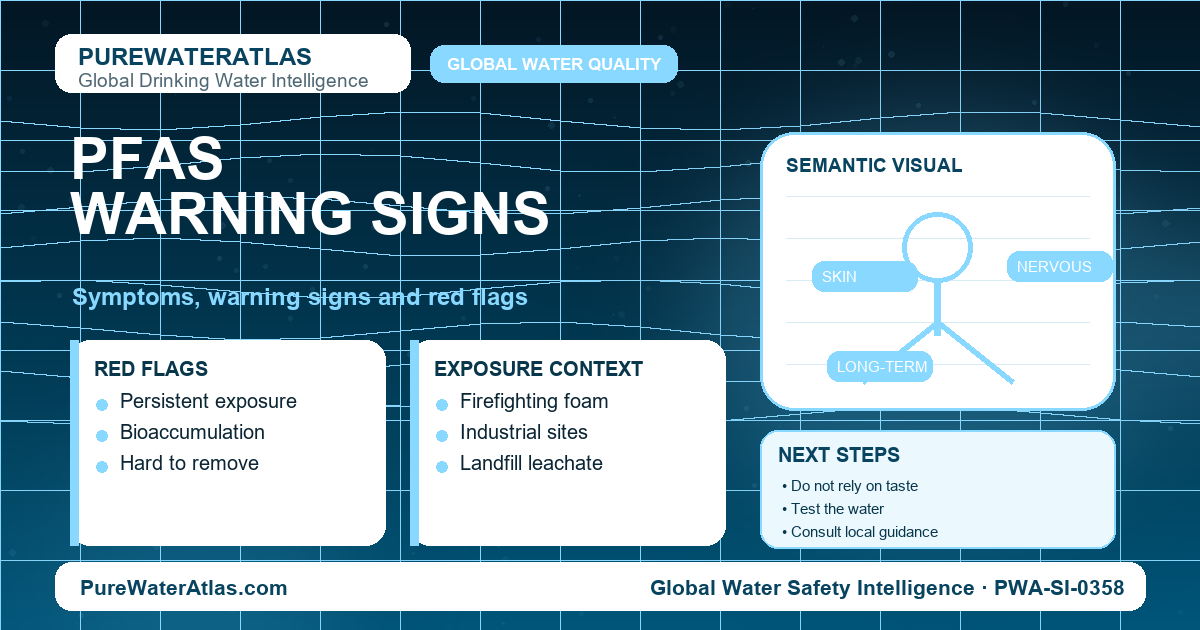
Mining, manufacturing, energy production, and waste disposal can release heavy metals, solvents, petroleum products, PFAS, and other hazardous substances. Industrial pollution may be obvious, such as a visible spill, or hidden, such as groundwater contamination discovered years later. Legacy contamination from older facilities remains a serious problem in many locations.
Industrial pollutants can be difficult to remove and may persist for long periods. Even low concentrations can become serious when exposure is repeated over time.
Failing or Inadequate Infrastructure
Aging pipes, poorly maintained treatment plants, leaking distribution systems, and inadequate sanitation all contribute to water insecurity. In low-resource settings, limited infrastructure may leave communities dependent on unsafe surface water or shallow wells. In wealthier areas, old lead service lines, corroded plumbing, and combined sewer overflows can still create serious risks.
When infrastructure weakens, early warnings often appear in household water quality. Pressure fluctuations, discoloration after pipe work, metallic taste, recurring boil-water advisories, or unusual sediment may indicate underlying distribution problems.
Population Growth and Urbanization
As cities expand, demand for water rises. Informal settlements may lack proper piped service or sanitation. Urban growth can pave over recharge areas, increase runoff, and place more pressure on treatment systems. Rapid expansion without infrastructure investment often leads to intermittent supply, contamination risks, and inequitable access.
Ecosystem Degradation
Wetlands, forests, floodplains, and healthy watersheds help store, filter, and regulate water. When these systems are degraded by deforestation, land conversion, erosion, or wetland destruction, water supplies become more vulnerable to pollution and extremes. Poor watershed health can increase sediment, reduce infiltration, worsen floods, and diminish water quality.
For a closer look at major drivers, readers can consult causes and sources.
Health and Safety Implications
Unsafe water affects health through both immediate and long-term pathways. The most urgent threats often involve infectious disease, but chemical contamination and chronic exposure can also cause serious harm. A thorough global water crisis overview health symptoms discussion includes gastrointestinal illness, skin irritation, neurological effects, developmental concerns, and indirect impacts such as food insecurity and poor hygiene.
Short-Term Health Symptoms
Microbial contamination from bacteria, viruses, and parasites is one of the most common water-related dangers. Symptoms may include:
- Diarrhea
- Vomiting
- Abdominal cramps
- Nausea
- Fever
- Dehydration
These symptoms can become severe quickly in infants, older adults, pregnant individuals, and people with weakened immune systems. Where sanitation is poor or treatment is unreliable, outbreaks of waterborne disease can spread rapidly.
Chronic and Chemical Exposure Risks
Some water contaminants do not cause immediate symptoms, which is one reason the crisis can be underestimated. Lead, arsenic, nitrate, fluoride at excessive levels, industrial chemicals, and certain disinfection byproducts may contribute to health problems after repeated exposure. Depending on the contaminant, effects may include:
- Developmental and learning problems in children
- Kidney or liver stress
- Thyroid disruption
- Cardiovascular effects
- Certain cancers
- Reproductive concerns
Because many chemical risks are invisible, relying only on appearance is not enough. Clear water is not always safe water.
Taste, Odor, and Consumer Complaints
A global water crisis overview taste and odor perspective is important because people often first notice problems through their senses. Taste and odor changes do not always mean water is unsafe, but they should never be ignored. Common complaints include:
- Metallic taste: Possible corrosion, iron, manganese, or plumbing issues
- Chlorine smell: Disinfection residual, sometimes normal but worth evaluating if unusually strong
- Rotten egg odor: Often associated with hydrogen sulfide or certain bacterial activity
- Earthy or musty odor: May relate to algae, organic compounds, or source water changes
- Salty taste: Possible salinity intrusion, mineral content, or treatment concerns
While taste and odor are not definitive safety tests, they are practical warning signs. A sudden or persistent change deserves attention, especially if it affects multiple taps or neighboring homes.
Visible Signs in Water and Infrastructure
Households and communities often notice contamination through appearance before receiving laboratory confirmation. A global water crisis overview visible signs checklist may include:
- Brown, red, yellow, or orange water
- Cloudiness or turbidity
- Oily sheen or unusual foam
- Black specks, sediment, or scale
- Blue-green algae in lakes or reservoirs
- Staining on fixtures or laundry
- Corrosion on pipes, taps, or tanks
Some visible changes may be aesthetic rather than toxic, but aesthetic problems often reveal deeper treatment, distribution, or source water issues. For example, turbidity can shield microbes from disinfection, and corrosion can signal conditions that increase metal leaching.
Indirect Health and Safety Effects
The water crisis also harms health indirectly. When safe water becomes scarce or expensive, people may reduce handwashing, use unsafe storage methods, or turn to lower-quality sources. Hospitals and clinics may struggle with sanitation. Crop loss and livestock stress can affect nutrition and livelihoods. Children may miss school to collect water or due to waterborne illness. Fire protection and emergency response can also be weakened when water systems fail.
For more on health impacts, see health effects and risks and related resources in drinking water safety.
Testing and Detection
Testing is one of the most important tools for identifying water problems early. Because many dangerous contaminants cannot be seen, smelled, or tasted, laboratory analysis and structured monitoring are essential. A practical global water crisis overview when to test approach combines routine testing with additional checks when warning signs appear.
When to Test
Water should be tested when there is a reasonable possibility that quality has changed or is uncertain. Situations that justify testing include:
- Changes in taste, odor, or appearance
- After flooding, storms, or wildfire impacts
- After plumbing repairs, well repairs, or construction nearby
- When a household uses a private well
- During pregnancy or when preparing infant formula
- If unexplained gastrointestinal illness occurs
- When a local advisory or contamination event is announced
- When a property is newly purchased or rented
Private well owners have a particular responsibility to test regularly because they are usually not covered by continuous municipal monitoring.
What to Test For
The right panel depends on location, source type, land use, and known risks. Common targets include:
- Total coliform and E. coli: Indicators of microbial contamination
- Nitrate and nitrite: Especially important in agricultural areas and for infants
- Lead and copper: Important in older plumbing systems
- Arsenic: Common in some geologic settings
- Iron and manganese: Often linked to staining, taste, and sediment
- pH, hardness, and total dissolved solids: Useful for corrosion and treatment decisions
- PFAS, pesticides, or industrial chemicals: Where local risk factors exist
Field Indicators and Monitoring Systems
Testing does not always begin in a laboratory. Utilities, watershed managers, and public health agencies often rely on field indicators such as turbidity, residual disinfectant, conductivity, dissolved oxygen, temperature, and algal activity. Remote sensing, smart metering, and automated monitoring are also improving early detection of system stress.
At the household level, basic screening tools can sometimes identify pH, hardness, or certain contaminants, but home kits are not a substitute for certified laboratory analysis when health risks are suspected.
Interpreting Results Carefully
A result above a guideline does not always mean an immediate emergency, and a single clean result does not guarantee long-term safety. Interpretation should consider sampling method, lab quality, seasonal variation, and source conditions. Trend data are often more informative than one isolated sample. Repeated testing helps determine whether a problem is persistent, intermittent, or already resolved.
The most effective response combines observation with data: if people notice unusual water and testing confirms contamination, action should be timely and specific to the source of the problem.
Prevention and Treatment
Addressing the water crisis requires both large-scale policy action and practical local solutions. Prevention is generally more effective and less costly than reacting after contamination or depletion becomes severe.
Source Protection
Protecting watersheds, wetlands, aquifers, and recharge zones is one of the strongest defenses against water decline. Prevention strategies include:
- Reducing agricultural runoff through better fertilizer and manure management
- Controlling erosion and restoring stream buffers
- Preventing industrial discharge and improving waste management
- Limiting overpumping of groundwater
- Protecting forests and wetlands that regulate water flow and quality
Infrastructure Improvement
Modernizing treatment plants, storage systems, and distribution networks reduces leakage, contamination, and service interruptions. Replacing aging lead service lines, controlling corrosion, and improving sewer systems are especially important public health measures. In many regions, non-revenue water from leaks represents a major avoidable loss.
Household and Community Treatment
Where centralized treatment is insufficient or unavailable, point-of-use and point-of-entry technologies can reduce exposure. Depending on the contaminant, options may include:
- Boiling for microbial concerns during emergencies
- Activated carbon for some taste, odor, and organic compounds
- Reverse osmosis for certain dissolved contaminants
- Ultraviolet disinfection for microorganisms when water is adequately pretreated
- Water softening or oxidation/filtration for hardness, iron, or manganese
No single treatment works for every problem. The choice must match the contaminant, water chemistry, maintenance capacity, and verified performance standards.
Conservation and Demand Management
Water efficiency reduces pressure on stressed systems. This includes leak repair, efficient irrigation, drought-tolerant landscaping, industrial recycling, and appliances that use less water. Conservation does not solve contamination by itself, but it helps preserve limited supplies and reduce ecological stress.
Emergency Planning
Communities should prepare for contamination events, drought, floods, and treatment failures. Effective planning includes backup supplies, public notification systems, boil-water protocols, mutual aid agreements, and clear guidance for schools, healthcare facilities, and vulnerable populations.
Common Misconceptions
Misunderstandings can delay action and increase risk. Several myths are especially common in discussions of the global water crisis.
“If Water Looks Clear, It Must Be Safe”
This is false. Many contaminants are invisible. Microbes, lead, arsenic, nitrate, and many industrial chemicals may be present without obvious color, smell, or taste changes.
“Bad-Tasting Water Is Always Dangerous”
Not always. Some taste and odor issues are aesthetic and not immediately harmful. However, sudden or persistent changes should still be investigated because they may indicate treatment changes, source contamination, corrosion, or algal compounds.
“The Water Crisis Only Affects Dry Regions”
Also false. Water-rich areas can face contamination, failing infrastructure, flooding, sewage overflows, harmful algal blooms, and unequal access. Quantity and quality problems both matter.
“Municipal Water and Well Water Face the Same Oversight”
Public systems are usually monitored under regulatory frameworks, while private wells often depend on owner action. Well users must be proactive about testing and maintenance.
“Boiling Solves Every Water Problem”
Boiling can kill many pathogens, but it does not remove metals, salts, nitrate, or many chemical pollutants. In some cases, boiling may even concentrate certain dissolved substances as water evaporates.
“Water Problems Are Obvious Before They Become Serious”
Often they are not. Slow groundwater depletion, chronic chemical exposure, pipe corrosion, and ecosystem stress can develop quietly for years. That is why risk indicators, monitoring, and regular testing matter.
Regulations and Standards
Regulations and standards are essential tools for protecting public health, though they vary by country and region. They generally define acceptable contaminant limits, treatment requirements, monitoring frequency, reporting rules, and emergency response procedures. Strong standards help utilities and regulators identify problems before they become widespread public health emergencies.
Why Standards Matter
Water standards provide benchmarks for action. They help answer questions such as:
- What level of a contaminant is considered unsafe?
- How often should water be tested?
- Which treatment processes are required?
- How must the public be notified about violations?
Without standards, it becomes harder to compare results, enforce accountability, or prioritize infrastructure investment.
Limits of Regulation
Standards are necessary, but they are not enough by themselves. Enforcement capacity, funding, laboratory access, technical expertise, and political will all affect whether regulations are effective in practice. Some emerging contaminants may remain unregulated for years while evidence develops. In addition, rural and informal communities may lack the resources needed to meet even well-designed standards.
Global Perspective
International organizations, national governments, and local agencies all play roles in water governance. Global guidance often informs local law, but implementation depends on context. The best systems combine enforceable rules with transparent monitoring, public education, source protection, and infrastructure support.
Readers interested in broader context can continue exploring resources in global water quality, drinking water safety, and water science.
Conclusion
The global water crisis is not only about empty reservoirs or severe drought headlines. It is also about contamination, failing infrastructure, ecosystem decline, inequitable access, and slow-moving health risks that may first appear as subtle warning signs. A practical global water crisis overview warning signs approach encourages people to pay attention to changes in taste, odor, appearance, supply reliability, and health patterns while also recognizing that many hazards are invisible without testing.
Early awareness matters. The most important red flags include unusual taste or smell, discoloration, turbidity, recurring illness, falling well levels, algal blooms, service interruptions, corrosion, and contamination after storms or floods. These signs do not always confirm danger, but they should trigger evaluation rather than dismissal.
Long-term solutions depend on stronger infrastructure, better source protection, regular monitoring, sound regulation, public education, and more resilient water management. At the household level, testing and informed treatment choices can reduce exposure. At the community and global level, prevention, investment, and equitable governance are critical.
Understanding the symptoms, warning signs, and risk indicators of water stress helps people respond sooner and more effectively. In a world facing climate instability, pollution pressures, and growing demand, recognizing those signals is one of the first steps toward protecting health, safety, and sustainable water access for all.
Read the full guide: Global Water Quality Guide
Explore more in this category: Global Water Quality Articles