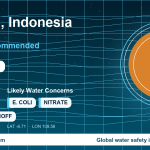
Tanjung Pinang, Indonesia: tap water is best treated as a utility supply that usually needs household treatment before drinking, especially for visitors, private-well users, and homes with storage tanks.
Quick Answer
| Water safety score | 62 / 100 |
|---|---|
| Risk level | Caution Recommended |
| Can tourists drink the tap water? | No for most short-term visitors. Use sealed bottled water, properly maintained dispenser water, or boiled water for drinking. |
| Resident advice | PDAM Tirta Kepri water is generally preferable to untreated shallow wells, but residents should use point-of-use protection for drinking and cooking, especially after outages, pressure drops, turbidity events, or storage-tank use. |
| Main water source context | Tanjung Pinang relies mainly on rain-dependent surface-water storage on Bintan Island, with the Sei Pulai reservoir system commonly identified as a key raw-water source. |
| Water authority | PDAM Tirta Kepri, also referred to as Perumda Air Minum Tirta Kepri, is the principal local drinking-water utility associated with piped supply. |
| Filter recommendation | Use sediment filtration plus activated carbon and a microbiological barrier such as boiling, UV, or reverse osmosis depending on source-water quality and test results. Brackish wells require desalination-capable treatment such as RO. |
Overall verdict: caution recommended. Tanjung Pinang has an organized piped-water system, but public, recent, neighborhood-level tap-water quality reporting is limited. Treated PDAM water should not be assumed potable at every tap without recent testing, safe storage, and appropriate household treatment.
Why Tanjung Pinang Is Different
Tanjung Pinang is a coastal city on Bintan Island in Indonesia’s Riau Islands Province. That island setting matters for drinking-water safety. Unlike cities supplied by large mainland river basins, Tanjung Pinang depends heavily on limited local freshwater storage. The local supply picture is shaped by rainfall, reservoir levels, treatment performance, pressure reliability, and what happens inside homes, hotels, tanks, refill containers, and building plumbing.
The practical question in Tanjung Pinang is not simply “tap water or bottled water?” Many households and visitors may encounter several water options: PDAM piped water that is boiled or filtered, shallow private wells that may taste brackish, rainwater storage, refill-gallon water from depots, trucked water during shortages, and sealed bottled water. Each has a different risk profile. PDAM water is generally the more organized supply option, but distribution interruptions and household storage can change water quality before it reaches a glass.
Because the city is coastal and densely settled in places, shallow groundwater can plausibly face salinity and sanitation-related risks. At the same time, public citywide contaminant mapping is limited, so this profile does not claim that every neighborhood has the same issue or that every PDAM connection has identical quality. The safest approach is to treat source, building, and storage conditions as part of the water-safety decision.
Where Does Tanjung Pinang’s Tap Water Come From?
Tanjung Pinang’s piped-water supply is associated mainly with surface-water storage on Bintan Island. The long-established Sei Pulai reservoir system is commonly identified as a key raw-water source for the local PDAM supply. This reservoir context is important because the system is rain-dependent and can be vulnerable to low water levels during dry periods. When reservoir levels fall, supply hours, water pressure, and household storage practices may become more important for water quality at the tap.
The broader Bintan water-supply picture also includes supplementary or regional infrastructure, including sources such as Gesek or Sei Gesek and larger SPAM development. Public documentation, however, does not provide a simple tap-by-tap source map for every part of the city. That means a resident should not assume that one neighborhood’s water conditions are proof of another neighborhood’s tap-water quality.
Key infrastructure includes raw-water intakes, treatment works, the Sei Pulai reservoir or waduk system, regional Bintan SPAM infrastructure, distribution mains, service connections, intermittent-pressure areas, household roof tanks, ground tanks, and refill-water depots. In Tanjung Pinang, these downstream components can be as important as the original raw-water source. Water that leaves a treatment facility in acceptable condition can still pick up sediment, lose disinfectant protection, or become contaminated if pressure drops, tanks are dirty, or containers are poorly handled.
Who Manages Drinking Water in Tanjung Pinang?
The main local drinking-water utility associated with piped supply is PDAM Tirta Kepri, also referred to as Perumda Air Minum Tirta Kepri. The utility context covers Tanjung Pinang and nearby Bintan-area service. Local public-service and administrative context is also available through the Government of Tanjung Pinang City and municipal statistics from BPS Kota Tanjungpinang.
Regulation of drinking-water quality in Indonesia is based on national health standards, including Ministry of Health Regulation Permenkes No. 2 Tahun 2023, which covers environmental health quality standards and health requirements for water. Raw-water and SPAM infrastructure also involve Indonesian public works and water-resources agencies, including regional authorities such as Balai Wilayah Sungai Sumatera IV Batam and the Directorate General of Human Settlements.
The key limitation is transparency at the point of use. Some city-level information is available on the utility, geography, and raw-water context, but recent public tap-water quality tables for Tanjung Pinang are limited. Treatment-plant performance should not be treated as proof that water remains potable after distribution, household tanks, or building plumbing.
Main Local Water Concerns
- Dry-season reservoir stress: Sei Pulai and related surface-water storage are rain-dependent. Dry periods can lower reservoir levels and may lead to reduced supply hours or pressure management.
- Pressure interruptions: When distribution pressure is low or intermittent, sediment movement and contamination risk can increase, particularly when household tanks are used.
- Turbidity after rain or repairs: Heavy rainfall, reservoir disturbance, pipe repairs, and service restoration can increase visible cloudiness or sediment.
- Coastal salinity: Brackish taste and salinity are credible concerns for shallow wells and some non-piped sources on Bintan Island.
- Microbial contamination: E. coli and other microbial risks are most relevant where water is stored in tanks, plumbing has low or negative pressure, wells are untested, or refill containers are poorly sanitized.
- Iron and manganese aesthetics: Staining, discoloration, or metallic taste may occur in some groundwater or distribution contexts, although public citywide contaminant mapping is limited.
- Premise-plumbing metals: Lead is not identified as a documented citywide source-water issue, but older building plumbing, brass fittings, and long stagnation times can create localized risk.
For Travelers
Short-term visitors should not drink untreated tap water in Tanjung Pinang. Use sealed bottled water, boiled water, or a trusted purifier. Tap water is generally a utility water option for washing, showering, and handwashing, but it should not be assumed safe to drink from a bathroom tap in a hotel or guesthouse.
For brushing teeth, use bottled or boiled water if you are a short-term visitor, immunocompromised, pregnant, traveling with young children, or prone to stomach illness. Many residents may brush with tap water, but that does not mean the risk is low for visitors who are not accustomed to local water and storage conditions.
Use ice only in established hotels, restaurants, or cafes where treated water and hygienic handling are plausible. Avoid ice from informal street sources when the water source is unknown. Better hotels and restaurants may provide bottled water or dispenser water, but travelers should ask whether dispenser water is commercially supplied and whether filters or UV systems are maintained.
During dry-season shortages, ferry transfers, and island excursions, carry bottled water. If boiling water, bring it to a rolling boil and store it in a clean, covered container. If using a travel filter, choose one designed for bacteria and protozoa; where viruses are a concern, add chemical disinfection or UV. PureWaterAtlas has a practical guide to boiling water purification and a separate guide to UV water purification.
For Residents
Residents connected to PDAM Tirta Kepri should treat tap water as a managed utility supply that may still need point-of-use protection for drinking and cooking. This is especially important in homes with roof tanks, ground tanks, intermittent supply, infants, elderly residents, immunocompromised people, or frequent service interruptions.
A practical household setup starts with sediment filtration, followed by activated carbon and then a microbiological barrier such as boiling, UV, or reverse osmosis depending on the source and test results. If the source is a brackish well, ordinary carbon filtration is not enough; salinity requires desalination-capable treatment such as reverse osmosis.
For PDAM tap water, residents should periodically test for E. coli or total coliform, turbidity, pH, free chlorine residual, color, odor, and TDS, especially after outages or pipe repairs. For private wells, test before using the water for drinking, with attention to E. coli, total coliform, chloride, TDS, nitrate, iron, manganese, pH, and turbidity. Homes with infants or pregnant residents should prioritize microbiological testing and nitrate testing when using private wells or refill sources of uncertain quality.
Older or poorly documented plumbing can change water after it leaves the public network. Lead is not a proven citywide source-water problem in Tanjung Pinang, but premise plumbing can contribute metals. Flush stagnant water in the morning and consider first-draw and flushed lead samples if the building has old pipes, old fixtures, brass fittings, or persistent metallic taste.
Household tanks are a major point-of-use risk in island cities with intermittent supply. Keep tanks covered, screened from insects and animals, cleaned every 6 to 12 months, and disinfected after contamination, flooding, or long stagnation. Do not drink tank water untreated if sediment, slime, odor, or recent low-pressure events are present.
Relevant Contaminants and Water-Quality Issues
For Tanjung Pinang, the most relevant water-quality topics are linked to reservoir conditions, intermittent pressure, storage tanks, wells, and premise plumbing. Turbidity is important because cloudiness can rise after heavy rainfall, pipe disturbance, or service restoration. Sediment is relevant to first-flush water after pressure changes and to buildup in household tanks.
E. coli is the key microbial indicator for private wells, tank water, and untreated tap water risk. Chlorine residual is useful because it indicates whether disinfectant protection may remain in the piped system. Iron and manganese may explain staining, discoloration, or taste in some groundwater or distribution contexts. Lead should be considered mainly as a building-plumbing issue, not as a confirmed citywide raw-water problem.
How to Verify Your Water Quality
The most reliable way to decide whether a specific Tanjung Pinang tap is drinkable is to test the water at the point of use, not only at the source or treatment plant. The PureWaterAtlas guide to water testing explains how to choose tests and interpret results. The broader Drinking Water Safety framework is useful for deciding whether a source, distribution system, storage tank, or building plumbing introduces risk.
For treatment choices, compare options in the PureWaterAtlas Water Purification guide. For microbial risk, review Water Microbiology. You can also compare Tanjung Pinang with other destinations using the Global Water Quality Checker and look up specific issues in the Contaminants Search Engine.
Residents using refill-gallon water should choose depots that visibly maintain treatment equipment, sanitize containers, and provide recent inspection or quality information. Refill water can be a practical option, but its safety depends heavily on depot hygiene, treatment maintenance, and container handling.
Official and Technical Sources
- PDAM or Perumda Air Minum Tirta Kepri — local utility context for piped water service in Tanjung Pinang and surrounding areas.
- Government of Tanjung Pinang City — city identity and local public-service reference point.
- BPS Kota Tanjungpinang — official municipal and geographic context.
- Permenkes No. 2 Tahun 2023 — Indonesian national health regulation for environmental health quality standards and water requirements.
- Balai Wilayah Sungai Sumatera IV Batam — regional water-resources and reservoir infrastructure context.
- Ministry of Public Works and Housing, Directorate General of Human Settlements — SPAM and drinking-water infrastructure context.
- ANTARA News Riau Islands — local reporting context on shortages, dry-season pressure, and public-service issues.
- World Health Organization drinking-water fact sheet — general public-health basis for safe drinking-water principles.
- WHO/UNICEF Joint Monitoring Programme Indonesia household water data — national household water-service context, not a substitute for Tanjung Pinang tap testing.
Bottom Line
Tanjung Pinang’s tap water deserves caution, not panic. The city has an organized PDAM supply linked to Bintan Island surface-water storage, especially the rain-dependent Sei Pulai reservoir context, but public neighborhood-level tap-water quality data are limited. For travelers, untreated tap water is not recommended for drinking; use bottled, boiled, or reliably treated water. For residents, PDAM water is generally preferable to untreated shallow wells, but drinking water should be protected with testing, filtration, boiling, UV, or RO as appropriate. The biggest local risks are dry-season pressure problems, turbidity after rain or repairs, storage-tank contamination, brackish wells, and localized building-plumbing issues. Verify water quality at the tap before treating it as potable.
Read the full guide: Global Water Quality Guide
Explore more in this category: Global Water Quality Articles